
How To
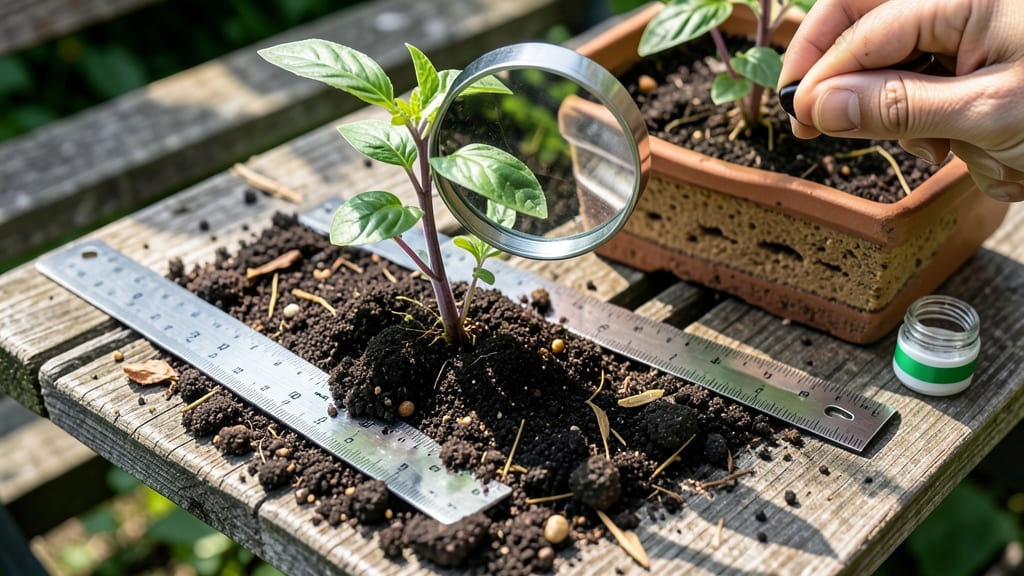
Loam soil texture, the gardener's gold standard, blends equal parts sand, silt, and clay (40% each) to create a crumbly, nutrient-rich medium that holds moisture without suffocating roots. Its balanced structure promotes aeration, prevents compaction, and supports microbial activity—making it ideal for everything from vegetable gardens to lawns.
This perfect balance isn't just about numbers—it's about function. 🌱 The 40% sand component ensures proper drainage, while the 40% silt retains water and nutrients, and the 20% clay holds onto essential minerals.
Together, they create a soil that's neither too dense nor too loose, giving plants the stable foundation they need to thrive. Most commercial potting mixes mimic this texture, but natural loam often outperforms them because of its living microbial ecosystem.
What makes loam truly special is how it adapts to different plant needs. Vegetables like tomatoes and peppers love its moisture retention, while flowers and lawn grasses benefit from its excellent aeration. The key is maintaining that 1:1:1 ratio—any deviation can lead to problems like waterlogging or nutrient deficiencies.
For gardeners working with heavy clay or pure sand, amending with organic matter like compost is the easiest way to achieve this ideal texture.
💡 In This Article
- How Loam Soil Structure Supports Root Health
- Improving Garden Soil to Achieve Loam-Like Texture
How loam soil structure supports root health
Loam's magic lies in its three-dimensional structure, where each particle type plays a unique role. The sand particles (0.05-2mm) create air pockets for oxygen flow, preventing suffocation that occurs in dense clay soils.
Meanwhile, the silt particles (0.002-0.05mm) act like tiny sponges, holding water and nutrients near root zones without becoming waterlogged. The clay particles (<0.002mm) bind essential minerals like potassium and phosphorus, creating a nutrient reservoir that slowly releases as plants need it.
This balance creates optimal porosity—typically 45-55% pore space—where 25% is air-filled and 20-30% water-filled. The remaining 50-55% solid material provides physical support for roots while maintaining flexibility.
For comparison, pure sand has 90% air space but drains too quickly, while clay soils can have less than 10% air space, leading to root suffocation.
Loam's crumbly structure (visible when squeezed—it should break apart easily) allows roots to penetrate with minimal resistance, reducing energy plants expend on breaking through compacted layers.
The chemical benefits are equally impressive. Loam's cation exchange capacity (CEC)—its ability to hold and release nutrients—sits at 10-30 meq/100g, perfect for most plants. This capacity comes from the clay fraction, which carries negative charges that attract positively charged nutrient ions (like calcium and magnesium).
The organic matter in loam further enhances this by providing additional exchange sites and serving as food for beneficial microbes. These microorganisms break down organic material, releasing nutrients in forms plants can absorb—a process that's 2-3 times more efficient in loam than in sterile potting mixes.
Consider what happens during a rainstorm: loam absorbs water rapidly through its macropores (larger air spaces) while preventing runoff through its micropores (smaller water-holding spaces). This dual mechanism ensures roots stay hydrated without sitting in stagnant water, which can lead to root rot.
The same structure works in drought conditions—loam releases stored moisture gradually, preventing sudden wilting that occurs in sandy soils. This buffering capacity is why loam supports consistent growth throughout seasonal fluctuations.
For visual proof, dig a small hole in healthy garden soil. If it crumbles easily between your fingers and feels slightly damp but not sticky, you're likely working with loam.
The dark brown to black color indicates organic matter content (typically 5-10% by volume), while the slightly gritty texture confirms the sand component.
This visual test reveals why loam feels different from other soil types—it's neither powdery like sand nor dense like clay, but has a velvety smoothness that gardeners instantly recognize.
What most gardeners overlook is how this structure affects root architecture. Plants in loam develop 20-30% more extensive root systems compared to those in poor-quality soils because roots can explore easily without encountering physical barriers.
The combination of optimal oxygen levels, consistent moisture, and available nutrients creates ideal conditions for root hairs to proliferate—these tiny structures are where 90% of a plant's water and nutrient uptake occurs.
This biological efficiency is why vegetables like carrots and potatoes grow straighter and larger in loam, while flowers like roses bloom more prolifically.