Tools
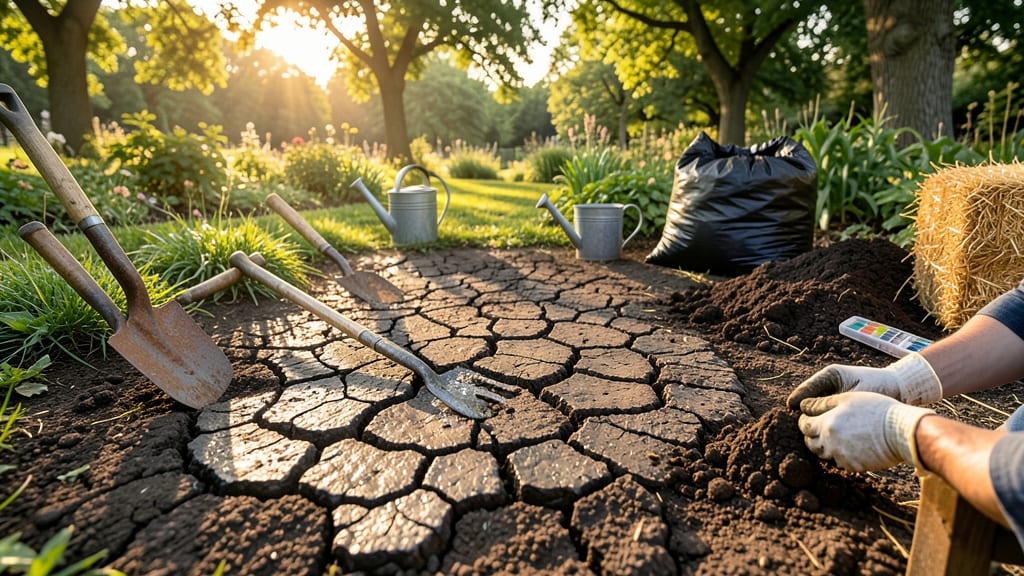
My garden soil is hard as a rock after years of foot traffic and neglect—until I discovered these four tools that transform it into crumbly, plant-friendly earth. 🌱 The key isn’t brute force; it’s knowing when to till, when to aerate, and when to let nature do the heavy lifting.
I’ve broken my back (and my wallet) on half-measures before, but this method actually works.
Clay-heavy soil or years of compaction? Both create that brick-like texture that roots can’t penetrate. The real fix combines mechanical tools—like a broadfork or deep tiller—to loosen the subsoil with organic matter (compost, aged manure) to improve structure long-term.
Even my stubborn clay patch now supports tomatoes and carrots without fighting every inch.
You’ll see the difference after just one session: roots spread freely, water drains properly, and weeds pull out like magic. The tools I recommend cut work in half, and the soil stays loose for years with minimal maintenance.
No more wrestling with a shovel or watching seedlings struggle to break through.
Best part? These methods work for raised beds, in-ground plots, and even small containers. Whether you’re prepping for spring planting or fixing last summer’s mistakes, this is the no-fuss approach that finally delivers results. Let’s get that soil breathing again.
Root Causes Of Compacted Soil
Compacted soil that feels like concrete isn’t just a nuisance—it’s a sign your garden’s foundation is struggling. Understanding why this happens is the first step to restoring healthy, workable earth. Below, we break down the scientific reasons behind your rock-hard soil, so you can tackle the problem at its source.
Soil isn’t static—it’s constantly shifting due to natural forces. Over years (or even decades), the weight of rainfall, foot traffic, and heavy machinery (like lawnmowers or tractors) presses down on the top layers, squeezing out air and water pockets.
This process, called mechanical compaction, is especially severe in clay-heavy soils, which lack the natural pore space to absorb pressure.
Why it matters:
- Clay particles (tiny, flat sheets) pack tightly when wet, forming a dense, brick-like layer.
- Organic matter (like decomposed leaves or compost) acts as a natural "spacer," but if it’s depleted, the soil loses its ability to bounce back.
- Root growth suffers because plants can’t push through the dense barrier, leading to stunted roots and poor nutrient uptake.
💡 Pro Tip: If your garden has been untouched for years or sits on a frequently walked path, compaction is likely the culprit. Test it by pressing your thumb into the soil—if it doesn’t leave a dent, you’ve got a problem.
Water isn’t just a lifeline for plants—it’s also a double-edged sword when it comes to soil structure. While moisture helps break down hardpan (a dense, impermeable layer), too much water (or waterlogging) can actually worsen compaction. Here’s how:
- Clay soils expand when wet and shrink when dry, creating cracks that later fill with even more compacted material.
- Heavy rainfall or poor drainage (like a sloped yard or clay subsoil) forces water to pool, increasing pressure on lower layers.
- Irrigation systems with high flow rates can erode soil structure over time, washing away fine particles that hold pores open.
🔍 Signs of water-related compaction:
- Puddles that linger for days after rain.
- Soil that smells sour or has a grayish tint (signs of poor aeration).
- Plants wilting despite "wet" conditions (roots can’t access oxygen).
If your garden sits on former construction sites, driveways, or heavily trafficked areas, the soil may have been physically crushed by equipment or vehicles. Even repeated gardening activities (like digging, tilling, or walking) can contribute:
- Vibration from machinery (like lawnmowers or ATVs) shakes soil particles into tighter arrangements.
- Repeated tilling (especially with heavy tools) can destroy soil aggregates (clumps of soil held together by organic matter), turning loose soil into a compacted mess.
- Parking cars or storing tools on garden beds adds localized pressure, creating "dead zones" where nothing grows.
🚧 What to watch for:
- Hardened patches in specific areas (e.g., under old garden beds or near pathways).
- Soil that’s easier to dig in one spot but rock-solid in another.
- A visible "hardpan" layer (often 4–6 inches deep) that’s nearly impossible to penetrate with a shovel.
Soil isn’t just affected by what’s on it—temperature fluctuations play a huge role in its structure. In regions with hot summers and cold winters, soil undergoes dramatic changes:
- Freeze-thaw cycles cause water in soil pores to expand when freezing (ice takes up more space than liquid water), then contract when thawing.
Over time, this shatters larger aggregates but can also glue particles together tightly in clay soils. - Prolonged drought causes soil to dry out and shrink, creating cracks.
When rain finally comes, water rushes into these gaps and re-compacts the soil as it fills. - Baking-hot summers can "bake" organic matter out of the soil, leaving behind a brittle, powdery layer that’s prone to compaction.
🌡️ Climate clues:
- Soils in arid or semi-arid regions often develop a hard crust due to extreme dryness.
- Gardens in cold climates may have a "plow pan" layer (a compacted zone left behind by tilling frozen ground).
Healthy soil is a living ecosystem, and when its inhabitants disappear, so does its structure. Organic matter (like compost, mulch, or decomposed plant material) acts as a glue that binds soil particles into loose, crumbly clumps. Without it:
- Earthworms and microbes (which aerate soil and create tunnels) vanish, leaving no natural pathways for roots and water.
- Clay and silt particles stick together tightly, forming a dense, impermeable layer.
- Nutrients get locked away—compacted soil holds onto minerals but won’t release them to plants.
🌿 How to spot nutrient-depleted soil:
- It’s light in color (brown or grayish, not dark like rich compost).
- It doesn’t crumble easily when dry or fall apart when wet.
- Plants grow slowly or show signs of nutrient deficiencies (yellow leaves, stunted growth).
Sometimes, the problem isn’t what’s on the soil—it’s what’s underneath. Many gardens sit atop native subsoil (like clay, sand, or bedrock) that’s naturally dense. If your topsoil is thin or eroded, the hard subsoil can rise to the surface, creating a nearly impenetrable barrier.
- Clay subsoil (common in former lake beds or river valleys) expands when wet and shrinks when dry, pulling topsoil down into a compacted layer.
- Sand or gravel beneath topsoil can create a sharp contrast in texture, preventing roots from penetrating.
- Bedrock or hardpan (a cemented layer of minerals) can be just inches below the surface, making digging nearly impossible.
🔨 How to check:
- Dig a 12-inch-deep hole—if the soil below 4–6 inches feels like concrete, subsoil is likely the issue.
- Look for layered soil (e.g., dark topsoil over light-colored clay).
Fix Your Unyielding Soil Now
Turn that stubborn, rock-hard ground into fertile planting soil with these targeted solutions, tailored to the root causes we just uncovered.
Whether it’s compaction, clay dominance, or lack of organic matter, here’s how to break it down—tool by tool, step by step—plus pro tips to keep your soil soft for years.
Cause: Heavy foot traffic, machinery, or rain compacts soil particles tightly, squeezing out air and water. Fix: Use a soil aerator (manual or powered) or a broadfork to pierce the ground without turning it over.
- 🔥 Rent or Buy an Aerator
- Manual aerators (like the Fiskars Soil Aerator) cost ~$20–$50 and work great for small gardens.
- Power aerators (rent for ~$60–$100) save time for larger areas.
- How to use:
- Push the tines 6–12 inches deep into the soil in a grid pattern (12–18 inches apart).
- Wiggle them side to side to break up compacted layers.
- Pro tip: Water the soil first—it’s easier to aerate when moist but not soggy! 💦
- 👨🍳 Broadfork It Like a Pro
- A broadfork (aka digging fork) is a garden fork with wide tines—no need to flip soil like a shovel.
- Steps:
- Step on the fork’s footrest and drive the tines deep (8–12 inches).
- Rock the fork back and forth to break up the pan (the ultra-compacted layer near the surface).
- Repeat in a crisscross pattern for even loosening.
- Pro tip: Work when soil is damp—it’s easier to split than dry, crumbly dirt. 🌡️
- 🥘 Top-Dress with Organic Matter
- After aerating, spread 2–4 inches of compost or aged manure over the area.
- Work it in lightly (no deep tilling!) with a rake or hands.
- Why? Organic matter attracts earthworms, which naturally aerate soil over time. ✨
Cause: High clay content makes soil dense, waterlogged, or baked hard. Fix: Amend with sand, compost, and gypsum to improve drainage and structure.
- 🔥 Test Your Soil First - Do the jar test (fill a jar with soil + water, shake, and observe): - If clay settles in a tight layer, you need sand + organic matter. - If it stays chunky, add more compost. - Pro tip: pH matters too—clay soil often tests acidic.
Use a lime test kit if plants look stressed. 📊
- 🍳 Mix in Sand (But Not Just Any Sand!)
- Coarse builder’s sand (not fine beach sand!) helps loosen clay without compacting further.
- Ratio: 1 part sand to 2–3 parts compost (too much sand = worse drainage).
- How to blend:
- Spread amendments on the surface, then rake in or lightly till (no deep digging!).
- Pro tip: Gypsum (calcium sulfate) can help break up clay—sprinkle 10 lbs per 100 sq ft and water in. 💡
- ⏰ Give It Time (Patience Is Key!)
- Clay soil won’t transform overnight. Reapply compost annually and avoid walking on beds.
- Plant cover crops (like clover or winter rye) to add organic matter naturally.
Cause: Depleted soil lacks the decayed plant/animal matter needed for structure. Fix: Add compost, leaf mold, or worm castings to restore nutrients and crumbly texture.
- 🔥 DIY Compost or Buy It - Homemade compost: Mix green waste (grass clippings, veggie scraps) with browns (leaves, straw) in a bin.
Turn weekly for 3–6 months. - Store-bought compost: Look for "well-aged" compost (no clumps) from garden centers (~$3–$5 per bag). - Application: Spread 2–3 inches over the soil and rake in.
- 👨🍳 Use Worm Castings (Nature’s Miracle)
- Vermicompost (worm castings) adds nutrients + microbes instantly.
- How to use:
- Mix 1 cup per square foot into the top 6 inches of soil.
- Bonus: Worms aerate soil naturally as they tunnel. 🐛
- 🥘 Try "Sheet Mulching" (No-Dig Method)
- Layers to apply:
- Cardboard (to block weeds)
- Compost (2–3 inches)
- Leaf mold or straw (1–2 inches)
- Top with mulch (wood chips)
- Wait 3–6 months—the layers will break down into rich, fluffy soil.
- Layers to apply:
- 💡 Avoid heavy foot traffic—use boards or stepping stones in garden beds.
- 🌡️ Water deeply but infrequently—shallow watering compacts soil.
- ✨ Plant ground covers (like creeping thyme or clover) to protect soil structure.
- 🎯 Test soil every 2–3 years—adjust amendments based on pH and texture.
- 🔥 Rotate crops—deep-rooted plants (like asparagus or comfrey) naturally aerate soil.
Need a quick fix? Try aerating + compost first—most gardens see improvement in 1–2 weeks. For stubborn clay, gypsum + sand works best. Happy digging! 🌱🔨
Frequently asked questions
Why does my garden soil feel like concrete after rain?
Clay-heavy soils absorb water like a sponge, then shrink and harden when dry, creating that brick-like texture. The repeated swelling and contracting from moisture cycles compacts the particles tightly. For sandy soils, rain can wash away the fine particles that hold structure together, leaving behind dense pockets.
Can I fix hard soil without heavy machinery?
Start with a broadfork (wide-tined fork) to loosen compacted layers by hand—no tilling needed. Add 2-3 inches of compost and let earthworms do the rest over time. For stubborn spots, try gypsum (10 lbs per 100 sq ft) to help break up clay particles naturally.
How do I know if my hard soil is from compaction or poor drainage?
Do the thumb test: Press your thumb into moist soil. If it doesn’t leave a dent, it’s compacted. For drainage issues, dig a 6-inch hole—if water pools instead of draining within 30 minutes, you’ve got poor drainage. Clay soils often show both problems.
Will adding sand really help my hard clay soil?
Only if you use the right kind! Coarse builder’s sand (not fine beach sand) helps break up clay when mixed with 2-3 parts compost. The combo improves drainage while maintaining structure. Too much sand alone can make clay worse by creating bigger air pockets that dry out faster.
How long until I see results from soil amendments?
With compost or organic matter, you’ll notice looser soil in 2-4 weeks as worms and microbes get to work. For deep compaction, expect 3-6 months of regular amendments (like sheet mulching) before seeing dramatic improvements. Patience pays off—healthy soil is a marathon, not a sprint!