
How To
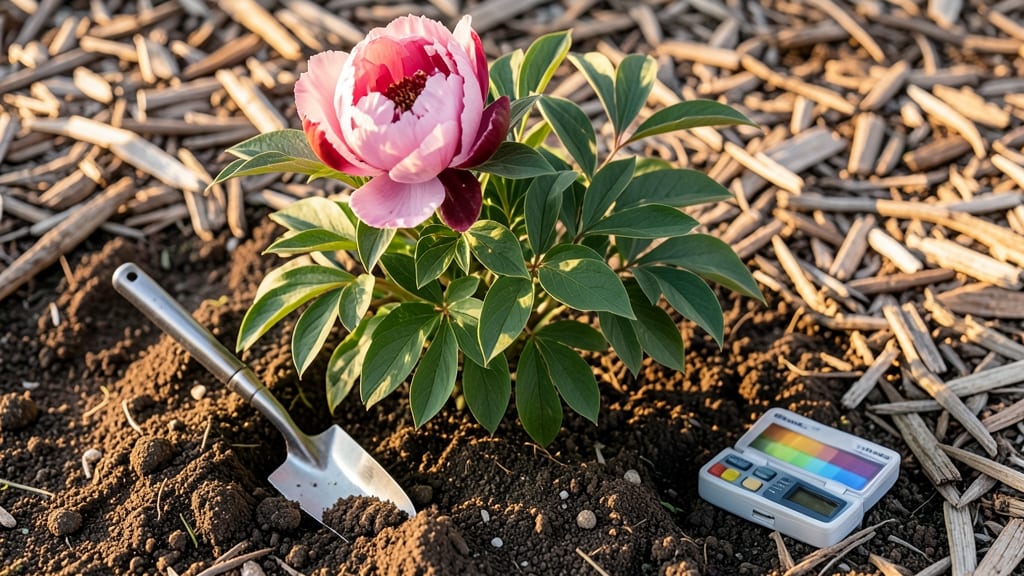
The perfect peony soil type is a well-draining loam that mimics their natural habitat—rich, fertile, and free of compaction.
If your peonies 🌸 are struggling to bloom year after year, chances are their soil isn’t quite right. Too much clay or sand can stunt growth, leaving you with weak stems and sparse flowers. But with the right mix, you’ll unlock vibrant blooms that last all season.
Peonies thrive in soil that’s 60% loam, 20% sand, and 20% organic matter, with a pH between 6.5 and 7.5. That balance ensures proper drainage while holding enough moisture to keep roots happy.
Heavy clay? Amend it with compost and perlite. Sandy soil? Add leaf mold or peat moss to retain nutrients.
In this guide, I’ll walk you through testing your soil, the best amendments for your climate, and how to prepare it for planting in early spring. Get it right, and your peonies will reward you with bold, long-lasting blooms for decades.
The ideal peony soil composition: why loam is non-negotiable
Peonies are diva plants—they demand perfect soil to reward you with those lush, romantic blooms. In their native habitats across China and Mongolia, peonies thrive in well-draining loam with a specific mineral balance.
Recreate these conditions, and your peonies will flourish; ignore them, and you’ll struggle with weak stems and poor flowering. The magic number? A 60-20-20 mix of loam, sand, and organic matter.
Loam isn’t just dirt—it’s a perfectly balanced blend of sand, silt, and clay that holds moisture while allowing excess water to drain. Peonies hate soggy roots but also despise dry, compacted soil. Think of it like a goldilocks zone: not too heavy, not too light, but just right.
The pH level matters too—peonies prefer slightly acidic to neutral soil, between 6.5 and 7.5. Test your soil before planting, or you might waste years waiting for blooms that never come.
Here’s the science: Sand improves drainage, silt retains nutrients, and clay holds moisture. The ideal peony soil is 60% loam (that’s your silt-clay-sand trio), 20% coarse sand (like builder’s sand), and 20% organic matter (compost or well-rotted manure).
This mix mimics the forest floors where peonies evolved, giving them the stability they crave.
To test your soil’s texture, grab a handful when it’s moist but not wet. Squeeze it—if it crumbles easily, you’ve got loam. If it turns to dust, it’s sandy; if it forms a hard clod, it’s clay.
Peonies will thrive in loam because it balances aeration and moisture retention. If your soil fails the test, don’t panic—amendments like compost, perlite, or sand can transform even the worst garden beds into peony paradises.
Beyond texture, pH balance is critical. Peonies prefer a slightly acidic to neutral pH (6.5–7.5). Test your soil with a home pH kit or send a sample to your local cooperative extension service.
If your soil is too acidic (<6.0), add lime; if it’s alkaline (>8.0), mix in sulfur or peat moss. Ignoring pH can lead to nutrient deficiencies, stunted growth, or even root rot.
One common mistake is assuming peonies tolerate heavy clay because they’re hardy. But clay soil compacts easily, cutting off oxygen to roots and causing waterlogged conditions. The fix? Dig in 3–4 inches of sand and compost before planting.
For sandy soil, which drains too quickly, mix in peat moss or coconut coir to retain moisture. The goal is to mimic the natural forest floor where peonies grow wild.
Pro tip: Peonies are long-lived perennials, often living for decades. Invest time in soil prep now, and you’ll reap rewards for years. Start by digging a hole twice as wide as the peony root but only 1–2 inches deep—peonies hate being buried too deep.
Mix the excavated soil with compost and sand, then place the root 1–2 inches below soil level with the eyes (buds) facing upward.
After planting, mulch with 2–3 inches of organic mulch (like shredded bark) to retain moisture and regulate soil temperature. Avoid fresh wood chips, which can tie up
How to amend your soil for peonies: step-by-step mixing guide
Peonies thrive in well-draining, nutrient-rich loam, but most garden soils need adjustments to reach this ideal. Whether you're dealing with heavy clay that bakes in summer or sandy soil that drains too quickly, the key is balancing texture and organic matter.
Start by testing your soil's drainage—if water pools after 30 minutes, you need more sand or perlite. If it drains within seconds, incorporate organic compost to retain moisture.
For clay-heavy soils, aim for a 30% sand mix combined with 20% compost and 10% perlite. This creates air pockets while maintaining nutrients. Sandy soils, on the other hand, benefit from 50% compost and 10% peat moss to improve water retention.
Always work amendments into the top 12 inches of soil, where peony roots thrive.
Common Soil Prep Mistakes to Avoid
- Over-amending with fresh manure (burns roots)
- Skipping pH testing (peonies hate acidic soil)
- Compacting soil after amending (use a fork)
- Ignoring drainage layers (always add gravel at bottom)
- Planting too deep (keep crowns at soil level)
Layering is crucial for peonies. Begin with a 3-inch base layer of coarse sand or gravel to prevent waterlogging. Next, mix equal parts garden soil and compost (50/50 ratio) for the middle layer.
Top with 2 inches of leaf mold or coco coir to retain moisture without suffocating roots. This three-layer system mimics peonies' natural woodland understory habitat.
Timing matters—amend soil 6-8 weeks before planting to let microbes break down organic matter. In cool climates (Zones 3-5), tackle this in early spring; in warm zones (6-9), prepare soil in late summer.
Always water amendments deeply after mixing to activate decomposition. For existing peonies, work amendments into the outer soil ring (avoid disturbing roots).
After amending, mulch with 2-3 inches of straw to protect soil structure and regulate temperature. Avoid wood chips near peony crowns—they can compact and trap moisture. Re-test soil drainage annually, especially after heavy rains or droughts.
With the right mix, your peonies will reward you with sturdy stems and abundant blooms for decades.
Remember: Peonies are long-lived perennials—investing time in soil prep now pays off for years. Even a 10% improvement in soil quality can double your bloom count. Happy digging!