
Neem Oil
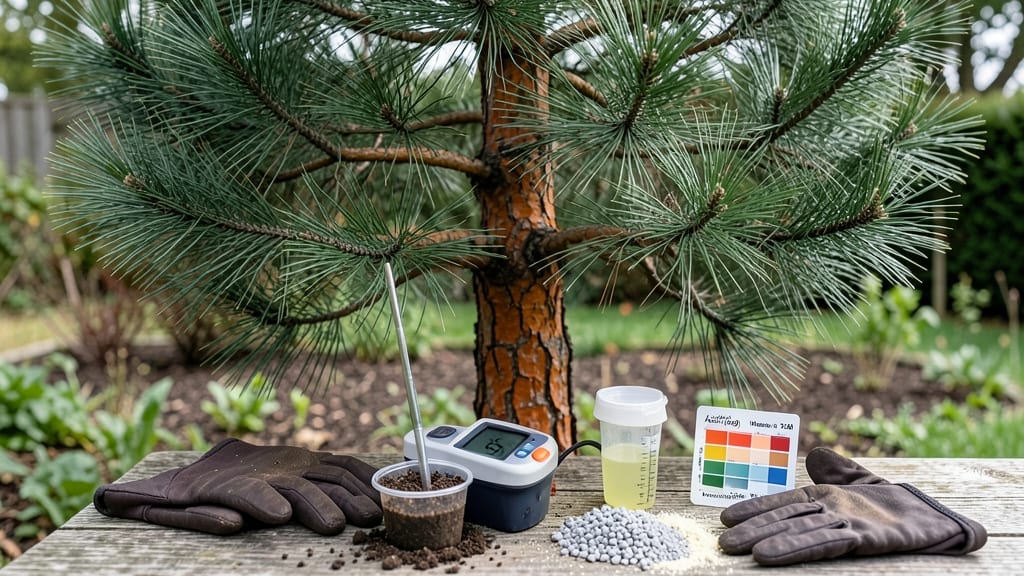
The ideal pine tree soil pH for fast growth and vibrant needles is between 4.5 and 6.0, a range that keeps roots happy and nutrients flowing.
Struggling with yellowing pine needles or stunted growth? The secret might be hiding in your soil’s pH—pine trees thrive in a narrow range that most gardeners overlook. Too alkaline, and your 🌲 won’t absorb iron or manganese, even if you’re fertilizing.
Getting the pH right isn’t just about adding lime or sulfur—it’s about understanding how your local soil behaves. Sandy soils drain too fast, while clay holds moisture (and acidity) like a sponge.
I’ll show you how to test your soil in 3 easy steps and adjust it without burning your tree’s roots.
Once you’ve got the pH dialed, we’ll tackle the fastest fixes for common issues like chlorosis (those ugly yellow patches) and slow growth. Think of it as a soil tune-up—your pine tree’s performance will thank you for it.
Optimal pine tree soil pH range for healthy growth and needle retention
Pine trees are finicky about their soil conditions, and pH is the foundation of their health. Most pine species thrive in acidic to slightly acidic soil, with an ideal range of 4.5 to 6.0.
When soil pH strays outside this window, nutrient deficiencies, chlorosis (yellowing needles), and stunted growth become common problems. Understanding your pine tree’s pH needs is the first step to preventing these issues and ensuring vibrant, long-lasting foliage.
Soil pH directly impacts nutrient availability—pine trees need high levels of iron, manganese, and aluminum, which are only accessible in acidic conditions. For example, a pH above 6.5 can lock out these essential nutrients, even if they’re present in the soil.
Meanwhile, a pH below 4.0 can lead to toxic aluminum buildup, damaging delicate root systems. Balancing pH isn’t just about numbers; it’s about creating the perfect environment for your tree to flourish.
Not all pine species have identical pH preferences. Southern pines like loblolly and slash pine prefer the lower end of the range (4.5 to 5.5), while white pines and jack pines tolerate slightly higher pH levels (5.5 to 6.0).
Knowing your specific pine species helps tailor soil adjustments for optimal growth. Regional soil variations also play a role—northern climates often have naturally acidic soils, while southern or alkaline-heavy areas may require more aggressive amendments.
Testing your soil’s pH is simpler than you think. Grab a soil pH test kit (digital or liquid-based) from your local garden center. For accurate results, collect soil samples from multiple spots around your tree’s dripline, about 4–6 inches deep.
Mix the samples in a clean bucket, then follow the kit’s instructions. If your pH reads below 4.5, your pine tree may suffer from aluminum toxicity, while readings above 6.0 suggest nutrient lockout.
Digital meters provide instant readings, but for precision, send samples to a local extension office for lab analysis.
Regional soil pH can vary dramatically. In the Pacific Northwest, naturally acidic soils (pH 5.0–5.5) are common, making them ideal for pines.
Conversely, Midwestern or alkaline-heavy soils (pH 7.0+) often require sulfur amendments to lower pH. Even urban areas with compacted or amended soils (like those with old limestone bedrock) can throw off pH balance.
If you’re unsure about your soil type, a simple home test or professional analysis will give you clarity before making adjustments.
When pH is too high, pine trees exhibit classic signs of chlorosis, where needles turn yellow between the veins while the veins remain green.
This happens because the soil’s alkalinity binds essential nutrients like iron and manganese, making them inaccessible. Poor root development is another red flag—roots struggle to absorb water and nutrients efficiently in alkaline conditions.
On the flip side, overly acidic soils (pH < 4.5) can cause root burn and needle browning due to aluminum toxicity, even though the tree appears to love acidic conditions.
Adjusting soil pH takes patience and the right amendments. To lower pH, incorporate elemental sulfur
How to adjust soil pH for pine trees: step-by-step acidification and liming guide
Pine trees are finicky about their soil pH, preferring a 4.5–6.0 range. If your needles look pale or growth stalls, your soil might be too alkaline or acidic. The good news? Adjusting pH is easier than you think.
Whether you need to lower pH for acid-loving pines or raise it for over-acidified soil, I’ll walk you through the best methods—including organic hacks for urban gardeners.
Before diving in, test your soil with a home pH kit (costs under $10) or send a sample to your local extension office. For pines, aim for 5.0–5.5—this is where they absorb nutrients like iron and manganese most efficiently.
If your soil is off, here’s how to fix it without harming your tree’s roots.
Lowering Soil pH (Acidification)
| Method | Pros | Cons |
|---|---|---|
| Elemental Sulfur | Slow-acting (3–6 months), organic-friendly, lowers pH by 1–2 points. | Requires reapplication; can burn roots if overused. |
| Pine Needles | Free, natural, improves soil texture. | Slow results (6+ months); may attract pests if piled too thick. |
| Peat Moss | Improves drainage, holds moisture, lowers pH by 0.5–1 point. | Not sustainable; can compact over time. |
Raising Soil pH (Liming)
| Method | Pros | Cons |
|---|---|---|
| Wood Ash | Fast-acting (1–2 weeks), free if you have a fireplace. | Highly alkaline—use sparingly (1 lb per 100 sq ft max). |
| Lime (Calcium Carbonate) | Long-lasting (1–2 years), precise pH adjustment. | Can raise pH too quickly; may lock out nutrients like iron. |
| Crushed Oyster Shells | Adds calcium, improves soil structure, raises pH gently. | Slow results (3–4 months); limited availability. |
For container-grown pines (common in urban areas), mix amendments directly into the potting soil. Use 1 part peat moss to 3 parts potting mix to lower pH, or sprinkle ½ teaspoon of lime per gallon of soil to raise it.
Re-test pH every 3–6 months, as containers dry out faster and pH shifts quickly.
If your soil is extremely alkaline (pH 7.5+), start with elemental sulfur at 2 lbs per 100 sq ft and re-test in 3 months. For highly acidic soil (pH 4.0–), wood ash is risky—opt for pine needles or composted leaves instead.
Remember, pines hate sudden pH swings, so adjust gradually over 1–2 growing seasons.
Pro tip: Mulch with pine bark or oak leaves to maintain acidity naturally. This also suppresses weeds and retains moisture—perfect for drought-prone areas. Just avoid cedar mulch, which can inhibit growth due to natural oils.
🌲