
Container Gardens
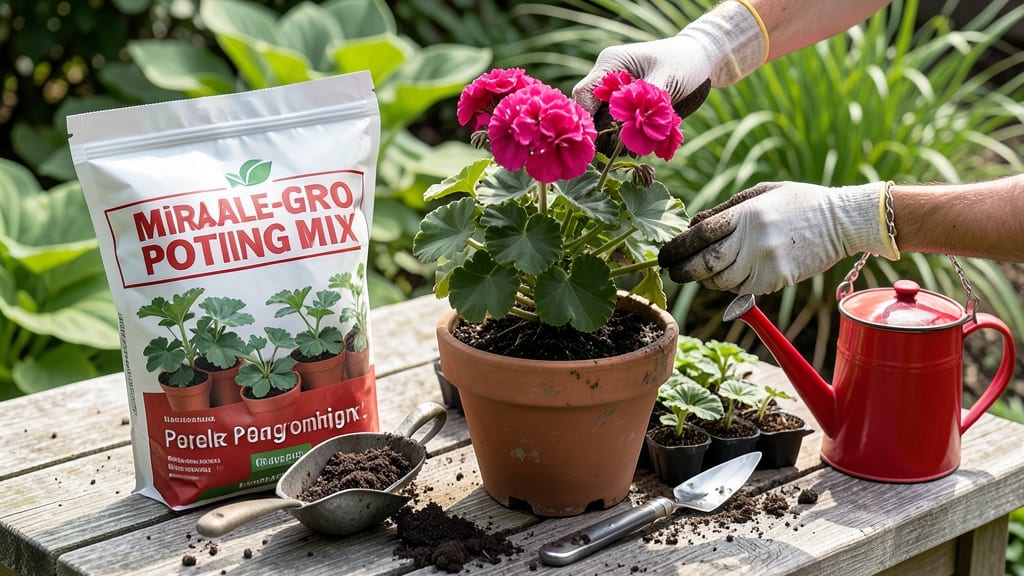
Your potted plants deserve potting soil for containers that holds just enough moisture without drowning their roots. 🌱 The right potting mix keeps herbs thriving, succulents plump, and vegetables producing—while regular garden soil will suffocate them in weeks.
I learned this the hard way when my basil turned yellow after just two waterings. The secret lies in the blend: 50% peat or coconut coir for moisture retention, 30% perlite or vermiculite for aeration, and 20% compost or worm castings for nutrients.
Store-bought mixes like Miracle-Gro Potting Mix or Fox Farm Ocean Forest work well, but you can customize your own for specific plants—cactus mixes need extra grit, while veggies prefer richer blends. What you’ll notice first is roots that stay healthy, not rotten.
Plants drink water efficiently, and you’ll water 30-50% less than with heavy garden soil. The texture stays light and fluffy, so you can stick your finger in without hitting compacted dirt. For beginners, stick to pre-mixed bags—just avoid anything labeled "garden soil."
Experienced gardeners can tweak ratios: add more perlite for succulents or extra compost for heavy feeders like tomatoes. The key is balance: too much peat dries out plants; too much compost bakes roots.
📚 In This Guide
- What you need
- Instructions
- Tips and common mistakes
- Wrapping up and next steps
What you need
- ● Potting soil (base): 60-70% of the mix (e.g., pro-mix or cocopeat—3-5 gallons for a 12-inch container).
- ● Organic matter: 20-30% (e.g., compost, worm castings, or peat moss—1-2 cups per gallon of soil).
- ● Perlite or vermiculite: 10% (for aeration—½ cup per gallon of soil).
- ● Slow-release fertilizer: 5-10% (e.g., osmocote or fish emulsion—1 tbsp per gallon).
- ● Mixing container: A large wheelbarrow, bucket, or clean trash bin (5+ gallons).
- ● Measuring tools: A kitchen scale or measuring cups for precision.
- ● Gloves & mask: To protect against dust and sharp materials (e.g., perlite).
- ● Watering can or hose: For adjusting moisture levels post-mix.
- ● Container with drainage holes: Ensure it’s clean and ready for planting!
- ● Hydrogel crystals: For extra moisture retention (1 tsp per gallon).
- ● Mycorrhizal fungi: Boosts root health (follow package instructions).
- ● Coir fiber: Improves water retention (replace peat moss if preferred).
- ● Slow-release moisture beads: For drought-prone plants.
How to create a moisture-retentive potting mix for container plants
Here's my foolproof blend that keeps roots happy without turning your pots into soggy messes.
🌱 Step 1: Choose Your Base Components
Start with 50% high-quality potting mix—this is your foundation. I recommend a peat-based or coco coir blend for its excellent moisture retention. Avoid garden soil; it compacts in containers and suffocates roots. The potting mix should feel light and airy, like a fluffy cloud when you squeeze it.
Next, add 25% perlite or vermiculite for aeration. Perlite is better for moisture control, while vermiculite holds water slightly longer. I prefer perlite for most container plants because it prevents that dreaded waterlogged feeling. Sift these amendments through a fine mesh to avoid clumping—nothing worse than uneven texture in your mix.
💧 Step 2: Add Moisture-Retentive Amendments
For moisture retention, incorporate 20% worm castings or compost. These organic boosters improve water-holding capacity while feeding beneficial microbes. I like to use worm castings because they're sterile and won't introduce pathogens. Mix them thoroughly into the base components until the blend looks uniformly dark and crumbly.
Add 5% coconut coir or peat moss if your base mix isn't already moisture-rich. These ingredients act like tiny sponges, holding water near roots where plants can access it. The coir will give your mix a slightly fibrous texture—this is normal and actually improves drainage.
☀️ Step 3: Customize for Your Plant Type
For succulents and cacti, reduce the moisture-retentive ingredients to 10% and increase perlite to 35%. These plants despise soggy roots, so we're creating a fast-draining blend. Tap the mix gently into your container—it should feel almost gritty, with visible air pockets between particles.
For moisture-loving plants like ferns or calatheas, boost the moisture-retentive portion to 30% and reduce perlite to 20%. Add a handful of hydrogel crystals (about 2% of the total mix) to these blends. These crystals absorb and release water as needed, acting like a built-in irrigation system. Your finished mix should feel damp but not wet when squeezed.
✂️ Step 4: Test and Adjust Your Mix
Fill a small container with your mix and water it thoroughly. After 15 minutes, check the moisture level by pressing your finger 1 inch deep. The soil should feel damp but not dripping. If water pools on top, you've added too much moisture-retentive material—mix in more perlite. If it feels dry, add a bit more coir or worm castings.
For a final test, plant a small cutting or seedling. After 3 days, check the soil again. If the top inch feels dry, your mix drains too quickly. If it's still damp after 5 days, you've got excellent moisture retention. Adjust the ratios slightly if needed—this is where experience comes in. I always keep a notebook by my workbench to track what works best for different plant types.
Tips & tricks for perfect container potting mixes
These pro-level insights will help you customize your blend for different plant needs while avoiding common pitfalls that turn soil into a waterlogged mess.
Ingredient Intel: When mixing your 50% high-quality potting mix with 25% perlite, use a clean, dry bucket or wheelbarrow to avoid cross-contamination from old soil. I've seen gardeners accidentally introduce weeds or pathogens by mixing directly in dirty containers. For the 20% worm castings, sift them through a fine mesh to remove any large chunks—those can create air pockets that disrupt moisture uniformity. The goal is a blend that looks like crumbly chocolate cake, not sandy beach mix.
Customization Secret: For moisture-loving plants like ferns, the 30% moisture-retentive mix with 2% hydrogel crystals creates a self-watering effect. Here's the trick: soak the hydrogel beads in water first, then squeeze out excess before mixing. This prevents your blend from becoming too wet during the initial watering test. The crystals should feel like firm jelly when squeezed—they'll expand to 100x their size when hydrated in the pot.
Testing Technique: That 15-minute moisture check after watering is your quality control moment. Press your finger 1 inch deep—if water beads appear on the surface, you've got too much moisture-retentive material. For a quick fix, add 5-10% more perlite and remix thoroughly. I keep a small notebook by my mixing station to track which plant types need adjustments—my calatheas love that extra 5% coir, while my succulents rebel against anything beyond 10% moisture content.
Pro Tips for Potting Soil For Containers
- These pro-level insights will help you customize your blend for different plant needs while avoiding common pitfalls that turn soil into a waterlogged mess.
- Ingredient Intel: When mixing your 50% high-quality potting mix with 25% perlite, use a clean, dry bucket or wheelbarrow to avoid cross-contamination from old soil.
- Customization Secret: For moisture-loving plants like ferns, the 30% moisture-retentive mix with 2% hydrogel crystals creates a self-watering effect.
Frequently asked questions
Got questions about potting soil for containers?
You’re not alone—here are answers to the most common ones to help your potted plants thrive!
What’s the difference between potting soil and garden soil?
Potting soil is specially formulated to be lightweight and well-draining, while garden soil is heavier and may compact, suffocating roots in containers. Potting mixes often include perlite, vermiculite, or coconut coir to improve aeration and moisture retention—perfect for confined spaces!
Can I reuse old potting soil from last year?
Reusing soil isn’t ideal unless it’s sterilized (baked or treated with hydrogen peroxide). Old soil can harbor disease, pests, or depleted nutrients. Refresh it by mixing in 20-30% new potting mix or compost for a nutrient boost.
How often should I water plants in potting soil?
Potting soil dries out faster than garden soil—check moisture by sticking your finger 1-2 inches deep. Water when the top layer feels dry, but avoid soggy soil (containers drain poorly). Self-watering pots or moisture-retentive mixes can help maintain consistency.
Is it okay to mix regular soil with potting soil?
Mixing can work if your garden soil is sandy or loamy, but avoid clay-heavy soil (it compacts). For best results, blend 50% potting mix with 50% compost or perlite to balance drainage and nutrients. Test drainage first—if water pools, add more perlite!
Why does my potted plant wilt even with wet soil?
Overwatering or poor drainage can suffocate roots, causing wilting. Check for:
- Root rot (smelly, mushy roots)
- Compacted soil (add perlite or sand)
- Clogged drainage holes (clean or repot)
What’s the cheapest way to make DIY potting soil?
Combine:
- 50% coconut coir or peat moss (moisture retention)
- 25% compost or worm castings (nutrients)
- 25% perlite or coarse sand (drainage)
Wrapping up and next steps
Choosing the right potting soil for containers is the secret to happy, thriving plants that brighten up your space! 🌱 A moisture-retentive mix ensures your greens stay hydrated while preventing root rot—perfect for container gardening.
Whether you’re a newbie or a seasoned green thumb, the key is balancing drainage, nutrients, and organic matter.
Now that you’re armed with the know-how, it’s time to roll up your sleeves and get planting! Start with a small container or a favorite houseplant, and watch your garden flourish. Happy growing! 🌿