
Tools
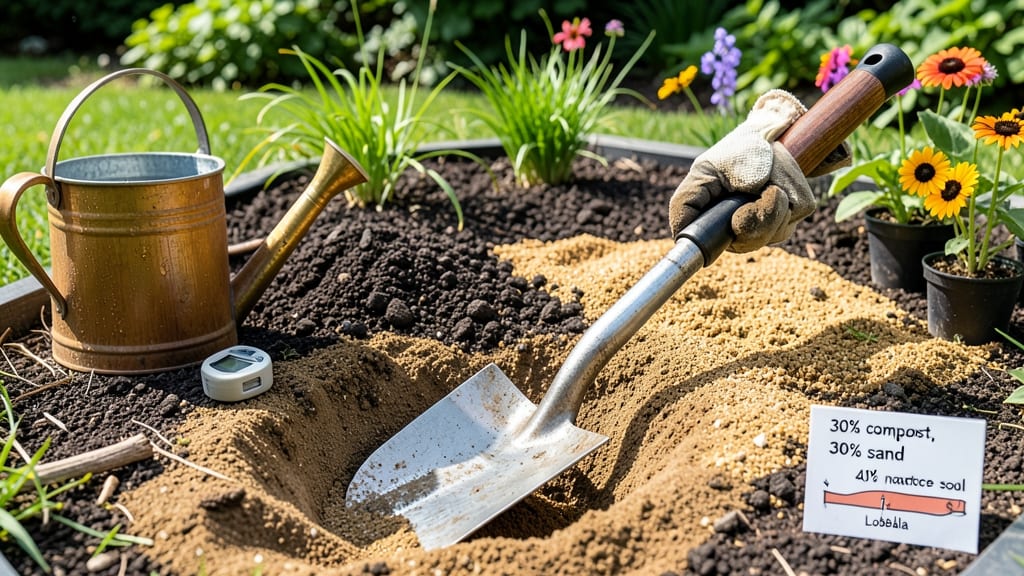
A rain garden soil mix requires a layered approach combining 40% native topsoil, 30% coarse sand or gravel for drainage, 20% compost for nutrients, and 10% perlite or peat moss to retain moisture while preventing compaction. This blend supports deep-rooted plants and handles seasonal flooding.
A rain garden soil mix thrives on its ability to balance water absorption and nutrient retention. The coarse sand or gravel layer acts as a natural drainage system, preventing waterlogging that can suffocate roots during heavy rains.
Meanwhile, the compost layer introduces beneficial microbes that break down organic matter, releasing nutrients gradually.
This layered approach mimics wetland ecosystems, where plants naturally adapt to fluctuating moisture levels. 🔥 For best results, test your native soil first—amending with biochar or coconut coir can further improve moisture retention in clay-heavy areas.
When selecting amendments, prioritize materials that enhance porosity without compacting the soil. For example, leaf mold improves structure over time, while worm castings add microbial diversity. Avoid peat moss if local regulations restrict its use, opting instead for sphagnum peat alternatives like coconut coir.
The key is creating a living soil ecosystem that supports both water movement and root growth, even when saturated for extended periods.
💡 In This Article
- Why Layering Matters in Rain Garden Soil
- Best Soil Amendments for Rain Garden Plants
Why layering matters in rain garden soil
The layered structure of rain garden soil isn't just about mixing ingredients—it's about recreating the natural hydrology of wetlands. The bottom layer of coarse sand or gravel (about 30% of the mix) acts like a drainage sponge, allowing excess water to percolate downward while preventing it from pooling around roots.
This mimics how natural wetlands have a gravelly subsoil that prevents waterlogging during heavy rains. The particles in gravel (typically 1/4 to 3/8 inch in diameter) create air pockets that improve oxygen flow to roots, which is critical since waterlogged soil can suffocate plant roots within 24-48 hours. 🔥
Above the gravel, the native topsoil layer (40%) provides the structural foundation where most root systems establish themselves. Unlike regular garden soil, rain garden soil relies on this topsoil to retain essential nutrients while still allowing water to move through it.
The key here is the soil's texture and organic matter content—ideal rain garden soil should have a loamy texture with 5-10% organic matter to hold moisture without becoming impermeable. Think of it like a well-drained sponge: it soaks up water during storms but releases it gradually to plants.
Sand alone won't hold nutrients, so the 20% compost layer becomes the powerhouse of this system. This isn't just any compost—it should be well-aged and rich in microbial life. When water moves through this layer, it carries dissolved nutrients downward to where roots need them most.
The microbes in compost also break down organic matter, releasing nutrients in a slow, steady process that matches plant uptake rates. This microbial activity is what transforms a simple soil mix into a living ecosystem capable of supporting deep-rooted native plants like coneflowers or switchgrass. 🌱
The top 10% perlite or peat moss might seem small, but it plays a crucial role in moisture retention and aeration.
Perlite's porous structure (expanded to 4-8 times its original size when heated) creates tiny air pockets that prevent soil compaction, while peat moss holds 15-20 times its weight in water.
Together, they create a buffer zone that prevents surface crusting—a common problem in clay-heavy soils that can block water infiltration. This top layer also helps maintain a more consistent moisture level, which is especially important during dry spells when rain gardens need to support plants between storms.
What makes this layered approach so effective is how each component plays a specific role in the water cycle. The gravel handles the heavy rain events, the compost layer filters and stores nutrients, and the topsoil provides the stable foundation.
This mimics how natural wetlands function, where water moves through different soil layers at different rates. For example, during a 1-inch rain event, a properly layered rain garden can absorb 90% of the water within 24 hours, compared to just 30-50% in unamended clay soil. 💧
One common mistake is assuming all rain garden soils need the same mix. In sandy soils, you might reduce the gravel to 20% and increase compost to 30% to improve water retention.
Conversely, in clay soils, you'd boost the gravel to 40% and add 10% biochar to help break down organic matter. The key is always testing your native soil first—simple jar tests can reveal whether you need more drainage or more organic matter.
This customization ensures your rain garden soil mix works as hard as the plants you're growing.