
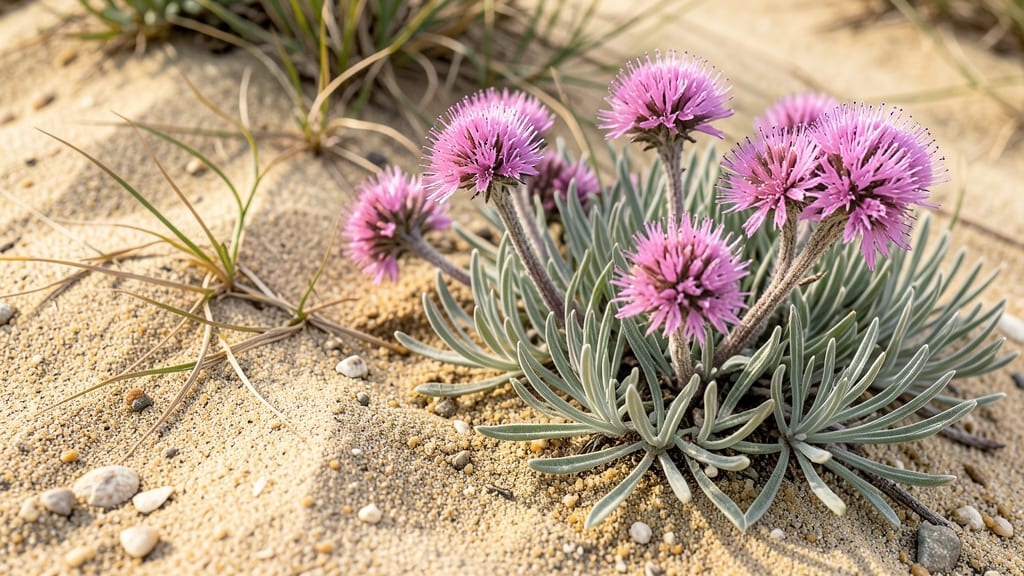
Sandy Soil Plants: Drought-Tolerant Species That Thrive Without Extra Care

Companion Plants

Sandy Soil Plants: Drought-Tolerant Species That Thrive Without Extra Care

Growing plants in sandy soil can feel like trying to hold water in your hands—it drains too fast and leaves nutrients behind. But the right sandy soil plants 🏜️ don’t just survive; they thrive with almost no extra effort.

If your garden looks more like a desert than a lush landscape, you’re not alone. Many gardeners assume sandy soil is a lost cause, but native and drought-resistant species actually prefer its fast-draining nature. The key? Choosing plants that evolved to handle these conditions.

In this guide, I’ll share 10 top-performing sandy soil plants—from low-maintenance shrubs to vibrant ground covers—that need little water, few amendments, and almost no fuss. You’ll also learn how to boost your soil’s fertility without overworking it, so your garden stays green even in dry spells.

Ready to turn your sandy patch into a low-stress, high-reward garden? Let’s get started with the best drought-tolerant picks for your region.

Top 10 drought-resistant plants perfect for sandy soil conditions

If your garden sits on sandy soil, you know the struggle—water drains faster than a sieve, and nutrients wash away before roots can use them. But don’t despair! The right drought-resistant plants thrive in these conditions by developing deep roots or waxy leaves to conserve moisture.

These hardy species don’t just survive; they flourish with minimal care, making them perfect for low-maintenance landscapes.

Sandy soil’s fast-draining nature actually benefits plants adapted to arid climates. Native species like coastal shrubs and desert perennials have evolved to store water efficiently, while ground covers suppress weeds while retaining just enough moisture.

Below, I’ve curated a list of the top 10 plants that will transform your sandy patch into a vibrant, water-wise garden without extra fuss.

Plant Type Sun Needs Water Needs Mature Size Notes
Russian Sage (Perovskia atriplicifolia) Full Sun Drought-Tolerant 3–5 ft tall Silvery foliage, lavender blooms; deer-resistant.
Yarrow (Achillea millefolium) Full Sun Very Low 1–3 ft tall Long-blooming, attracts pollinators, great for cut flowers.
Sea Oats (Uniola paniculata) Full Sun Low 4–6 ft tall Native grass; stabilizes soil, wildlife-friendly.
Lantana (Lantana camara) Full Sun Drought-Tolerant 1–5 ft tall Colorful clusters, attracts butterflies, spreads easily.
Rosemary (Rosmarinus officinalis) Full Sun Very Low 2–6 ft tall Edible, fragrant, evergreen; prune to shape.
Agave (Agave spp.) Full Sun Extreme Drought 1–10 ft tall Succulent, architectural, low-maintenance.
Black-Eyed Susan (Rudbeckia hirta) Full Sun Low 1–3 ft tall Cheerful yellow blooms; self-seeds readily.
Sand Cherry (Prunus pumila)

How sandy soil affects plant growth and what to do about it

Sandy soil drains too quickly, leaving plants thirsty and nutrient-starved. The coarse particles create large air pockets, making it hard for roots to anchor properly. Without intervention, even drought-tolerant sandy soil plants struggle to thrive.

The good news? With the right amendments and techniques, you can transform this challenging soil into a productive growing medium.

One of the biggest issues is nutrient leaching. Water flows through sandy soil so fast that essential minerals like nitrogen and phosphorus wash away before roots can absorb them. This creates a nutrient desert where plants can't access what they need to grow strong.

Additionally, the low water retention means frequent irrigation is often necessary, which can be frustrating for busy gardeners.

⚠️ WARNING: Sandy Soil Pitfalls ⚠️

⚠️ Overwatering Risks

Sandy soil's rapid drainage tricks gardeners into thinking plants need more water. In reality, overwatering causes root rot by suffocating roots with excess moisture. Always check soil moisture 2 inches deep before watering again.

⚠️ Nutrient Burn Danger

Adding high-salt fertilizers to sandy soil can burn plant roots. The coarse particles prevent proper dilution, concentrating salts around roots. Always use organic amendments like compost tea or worm castings instead.

⚠️ Erosion Threats

Without organic matter, sandy soil erodes easily during heavy rains or wind. Bare patches form quickly, leaving plants vulnerable. Use mulch and ground covers to protect soil structure.

To combat these challenges, start with organic matter amendments. Mix in 2-3 inches of compost or well-rotted manure into the top 6 inches of soil. This improves water retention by up to 30% while adding essential nutrients.

For even better results, combine compost with peat moss or coconut coir, which hold moisture without compacting like clay-based amendments.

Mulching is another game-changer for sandy soil. Apply a 3-inch layer of organic mulch like straw, pine needles, or shredded leaves around plants. This creates a moisture barrier that reduces evaporation by 50% while gradually breaking down to enrich the soil.

Just be sure to keep mulch 2 inches away from plant stems to prevent rot.

For established problems, consider hydrogel crystals mixed into the soil. These super-absorbent polymers hold up to 500 times their weight in water, releasing it slowly to roots.

They're especially helpful for container gardens or high-value plants like roses and vegetables. Use them sparingly—just 1 teaspoon per plant—to avoid creating a waterlogged pocket.

Finally, choose plants that naturally thrive in sandy conditions. Native grasses like buffalo grass or sea oats develop deep roots that access moisture efficiently. Pair them with drought-tolerant shrubs like rosemary or lavender, which flourish in poor soil.

With these strategies, your sandy soil can support a lush, low-maintenance garden without constant amendments.

★★★★★4.5(5 reviews)
Categories Companion Plants