
How To
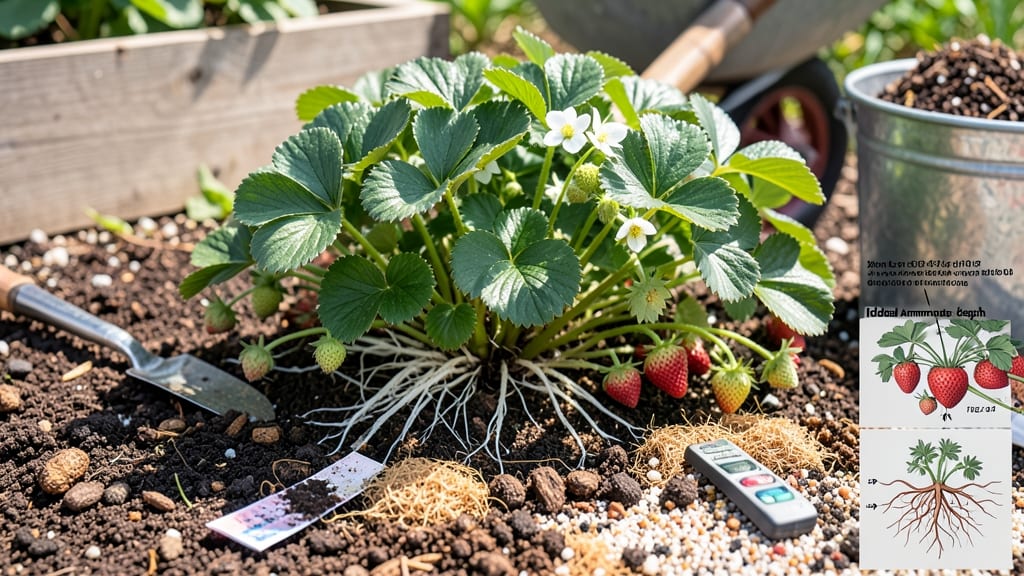
Your strawberries won’t taste like store-bought until you amend the soil—soil amendments for strawberries start with a pH test and a handful of organic goodies. 🌱 I learned the hard way when my first batch turned out tart and underwhelming, despite my best pruning efforts.
The secret lies in mimicking their natural woodland habitat: slightly acidic soil packed with organic matter that holds moisture without drowning roots.
Start with compost or well-rotted manure—strawberries crave nitrogen for leafy growth but need phosphorus and potassium for sweet, plump fruit. Mix in sand or perlite if your soil feels heavy, and test your pH: aim for 5.5 to 6.5.
If your soil’s too alkaline, sulfur or peat moss brings it down; if it’s too acidic, a sprinkle of lime (yes, even for acid-lovers) helps. Organic options like coffee grounds or pine needles add acidity naturally over time.
After amending, let the soil settle for 2-4 weeks before planting. You’ll see the difference in first-year harvests: brighter red fruit, fewer white shoulders, and a flavor so intense it’ll make you question why you ever bought strawberries.
The key is consistency—top-dress with compost every spring and watch your plants reward you with pounds of berries instead of a handful.
This works for in-ground beds, raised beds, or containers, though container growers should use peat moss or coconut coir instead of heavy amendments. In cooler climates, focus on organic matter to insulate roots; in hotter areas, prioritize moisture retention with compost and mulch.
The goal? Soil so rich your strawberries taste like summer vacation.
📚 In This Guide
- What you need
- Instructions
- Tips and common mistakes
- Wrapping up and next steps
What you need
- ● Peat moss or coconut coir: 2–3 inches per planting area (improves drainage and acidity).
- ● Compost: 1–2 gallons per square foot (adds organic matter and nutrients).
- ● Sulfur (elemental or gypsum): 1–2 pounds per 100 sq ft (lowers pH for acid-loving strawberries).
- ● Balanced fertilizer (10-10-10 or 5-10-10): 1–2 cups per 100 sq ft (provides essential NPK).
- ○ Wood ash (optional but helpful): ½ cup per plant (adds potassium and raises pH slightly—use sparingly!).
- ● Lime (if soil is too acidic): Test pH first! Use 5–10 lbs per 100 sq ft if needed (aim for 5.5–6.5).
- ● Garden fork or tiller: For turning soil 6–12 inches deep.
- ● pH testing kit: Digital or liquid test strips (critical for strawberries!).
- ● Gloves and protective eyewear: For handling sulfur and other amendments.
- ● Garden hose with spray nozzle: For wetting soil before amending.
- ● Wheelbarrow or buckets: For mixing amendments (1–2 per batch).
- ○ Soil test report (optional but ideal): From a local extension office for tailored advice.
- ● Test first! Strawberries hate alkaline soil—know your pH before adding lime or sulfur.
- ● Work in dry weather: Wet soil compacts and clumps, making amendments harder to mix.
- ● Layer amendments: Spread peat moss first, then compost, and top with sulfur for even distribution.
- ● Re-test after 4–6 weeks: pH changes take time—adjust if needed before planting.
Step-by-step guide to amending soil for strawberries
Boost your berries' flavor and yield with these science-backed soil tweaks.
🌱 Step 1: Test Your Current Soil pH
Strawberries thrive in acidic soil with a pH between 5.5 and 6.5. Grab a soil test kit (available at garden centers) and take samples from 6 inches deep in multiple spots around your planting area. Mix the samples together in a clean bucket—this gives you an accurate average reading. I like to test in early spring before amending, so I have time to adjust before planting.
If your soil tests higher than 6.5, you'll need to lower the pH. For readings below 5.5, you'll need to raise it slightly. The goal is that goldilocks zone—too acidic, and nutrients lock up; too alkaline, and roots struggle to absorb what they need. Most garden soils lean alkaline, so you're likely dealing with a pH adjustment downward.
💧 Step 2: Apply Organic Matter for Structure and Nutrition
Strawberries love well-draining, loose soil rich in organic matter. Spread 2-3 inches of compost evenly over the planting area and work it into the top 6 inches of soil using a garden fork. I prefer finished compost (not fresh manure) because it won't burn tender roots. For heavier clay soils, mix in 1-2 inches of coarse sand or perlite to improve drainage—strawberries hate soggy feet.
If you're planting in raised beds, fill them with a 50/50 mix of compost and native soil. This ensures proper aeration while retaining moisture. Water the amended soil thoroughly after mixing to help settle everything and activate microbial activity. You'll know it's right when the soil feels like a crumbly, moist sponge—not compacted or dusty.
☀️ Step 3: Adjust pH with Natural Amendments
For alkaline soil (pH > 6.5), sprinkle elemental sulfur at a rate of 1 pound per 100 square feet and work it into the top 6 inches. Sulfur lowers pH gradually—wait 2-3 months before planting to see full effects. I've found that peat moss (½ inch spread) also helps, though it's less dramatic. For acidic soil (pH < 5.5), mix in wood ash (sparingly—just ½ pound per 100 square feet) to raise pH slightly.
Test again after amending to confirm you've hit that 5.5-6.5 range. Strawberries are fussy about pH, and even small deviations affect flavor and yield. If you're unsure, a second test after 30 days gives you peace of mind. Avoid quick-fix amendments like vinegar—they throw off the soil ecosystem and can harm beneficial microbes.
⏰ Step 4: Maintain Soil Health Year-Round
After planting, top-dress with 1-2 inches of compost every spring and fall. This replenishes organic matter and feeds hungry roots. I also mulch with straw or pine needles (¼ inch layer) to retain moisture, suppress weeds, and keep soil slightly acidic. Avoid synthetic fertilizers—they can spike pH and burn roots. Instead, use a balanced organic fertilizer (like 5-5-5) sparingly in early spring.
Watch for yellowing leaves or stunted growth—these often signal pH issues. If leaves turn yellow with green veins, your soil is too alkaline. If they're purple or red, it's too acidic. Adjust with sulfur or lime (for extreme cases) and retest in 3 months. Healthy strawberry soil should smell earthy and fresh, not sour or chemical-like.
Tips & tricks for perfect soil amendments for strawberries
These science-backed strategies will help you create the ideal growing environment for your strawberries.
Testing Accuracy: When collecting soil samples for testing, focus on the top 6 inches of soil where strawberry roots will grow. Avoid taking samples near old plantings or where you've recently added amendments—these can skew results. I always test in multiple spots and mix them thoroughly to get an accurate reading of your entire planting area. This prevents patchy pH issues that can stunt plant growth in certain spots while others thrive.
Compost Quality Matters: The 2-3 inches of compost you're adding should be well-aged and dark in color, not fresh or light brown. Fresh manure or compost that still smells strongly can burn tender strawberry roots. For best results, use compost that's been curing for at least 6 months. You'll notice the difference in how easily the soil crumbles when moistened—proper compost creates that perfect "moist sponge" texture that strawberries love.
pH Adjustment Timing: The 2-3 month waiting period after adding elemental sulfur is crucial—this gives the sulfur time to fully convert to sulfuric acid in the soil. Don't rush planting just because you're eager to see growth. I've seen gardeners plant too soon and end up with stunted plants that struggle to absorb nutrients. For peat moss applications, you can plant sooner (after 1 month) since it works more quickly, but sulfur requires patience for full effectiveness.
Pro Tips for Soil Amendments For Strawberries
- These science-backed strategies will help you create the ideal growing environment for your strawberries.
- Testing Accuracy: When collecting soil samples for testing, focus on the top 6 inches of soil where strawberry roots will grow.
- Compost Quality Matters: The 2-3 inches of compost you're adding should be well-aged and dark in color, not fresh or light brown.
Frequently asked questions
Got questions about boosting your strawberry patch with soil amendments?
You’re not alone! Here are answers to the most common queries—so you can grow juicier, sweeter berries with confidence.
What’s the best time of year to amend soil for strawberries?
Amend your soil 4–6 weeks before planting (early spring or late fall) to let organic matter break down. For established beds, top-dress with compost or peat moss in early spring or after harvest. Avoid heavy amendments right before planting—they can compact or leach nutrients too quickly!
Can I use coffee grounds as a soil amendment for strawberries?
Yes! Coffee grounds are great for acid-loving strawberries—they lower pH and add nitrogen. But use them sparingly (mix 1–2 cups per plant with compost) to avoid mold or nitrogen burn. Pro tip: Brew used grounds first to cool them down before applying!
My strawberries aren’t sweet—could my soil amendments be the problem?
Sweetness often hinges on balanced nutrients. If your soil is too acidic (pH below 5.5), add lime; if it’s too alkaline (above 6.5), use sulfur or peat moss. Also, over-fertilizing with nitrogen (like fresh manure) can boost leafy growth at the expense of flavor. Aim for a 10-10-10 or 5-10-10 fertilizer for sweetness.
Are there budget-friendly alternatives to expensive amendments like peat moss?
Try these affordable swaps:
- Compost (homemade or store-bought) – improves texture and nutrients.
- Pine needles or oak leaves – mimic peat moss’s acidity (chop and mix into soil).
- Worm castings – boosts microbial activity and nutrient availability.
- Wood ash (sparingly!) – raises pH slightly but can overdo it.
Mix these with existing soil to avoid overwhelming your plants.
What amendments should I never use for strawberries?
Avoid these soil no-nos:
Stick to organic, slow-release amendments for the best results!
Wrapping up and next steps
Transforming your soil into the perfect home for strawberries is all about patience, precision, and a little love—and the results? Sweet, juicy, and abundant fruit worth every effort! 🌱 By balancing pH, enriching organic matter, and choosing the right amendments, you’re not just growing strawberries—you’re crafting a thriving ecosystem that rewards you season after season.
Ready to take the next step? Start small: test your soil, pick one amendment to try this season, and observe the changes. Over time, you’ll fine-tune your approach, turning your garden into a strawberry lover’s paradise. Happy growing—and may your berries be ever sweet! 🍓✨