
Propagation
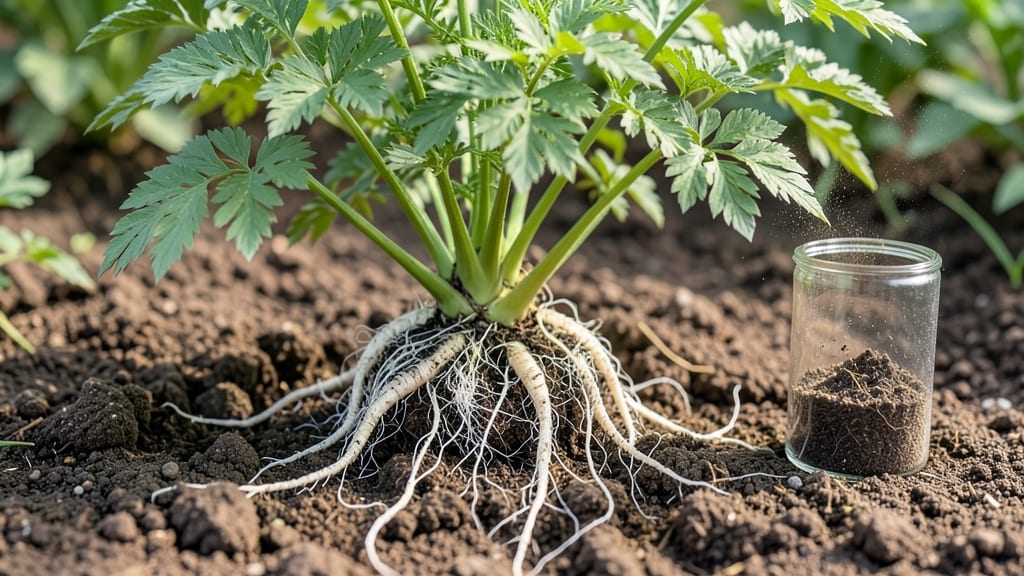
Soil and air create the perfect balance for roots to breathe, enabling oxygen exchange that fuels growth. When soil becomes too dense or waterlogged, roots suffocate, leading to rot and weak plants.
Roots need oxygen just like we need air to breathe—it powers their energy production through respiration.
The tiny air pockets in healthy soil, called pores, allow oxygen to reach root zones while also draining excess water. 🌱 Without proper aeration, roots can't absorb nutrients efficiently, which is why compacted or waterlogged soil often results in yellowing leaves or poor growth.
This balance isn't just about space—it's also about timing. For example, clay soils hold water tightly, cutting off oxygen, while sandy soils drain too quickly, leaving roots dehydrated. The ideal soil has a mix of particles and organic matter to maintain that perfect air-water equilibrium.
Understanding this relationship helps gardeners troubleshoot problems like stunted growth or wilting plants. Simple fixes like adding compost or using raised beds can make a world of difference for root health.
💡 In This Article
- How Oxygen in Soil Supports Root Respiration
- Fixing Soil Compaction for Better Root Aeration
How oxygen in soil supports root respiration
Root respiration is the biological process where roots convert oxygen and sugars into energy, releasing carbon dioxide as a byproduct—similar to how our cells use oxygen to function. This process occurs in the root zone where soil pores, filled with air, provide the necessary oxygen.
Healthy soil typically contains 25-30% air by volume, with the rest being water, minerals, and organic matter. Without adequate oxygen, roots can't produce enough energy to absorb nutrients like nitrogen or phosphorus, leading to nutrient deficiencies that show up as stunted growth or yellowing leaves.
The key to this oxygen exchange lies in soil structure. Tiny air pockets, or macropores, act like microscopic lungs, allowing oxygen to diffuse through the soil matrix. Root hairs—delicate extensions of root cells—extend into these air spaces, creating a direct interface for oxygen absorption.
For example, a single gram of healthy soil can contain up to 100 meters of root hairs, maximizing surface area for gas exchange. When soil compacts, these pores collapse, reducing oxygen availability by as much as 50% in extreme cases.
This process isn't just about oxygen—it's also about balancing moisture. Too much water displaces air, while too little dries out roots. The ideal soil maintains a 1:1 ratio of air to water in its pore spaces, creating an environment where roots can breathe and hydrate simultaneously.
For instance, loamy soils—composed of equal parts sand, silt, and clay—naturally achieve this balance, whereas clay-heavy soils often suffocate roots due to poor drainage. 🌱
Temperature also plays a role in root respiration. Cooler soils (60-70°F) slow down the process, conserving energy, while warmer soils (75-85°F) accelerate it. This is why plants in tropical climates respire more actively than those in temperate zones.
However, excessive heat can deplete oxygen faster, making proper aeration even more critical in hot environments.
Think of soil as a living ecosystem where roots, microbes, and air interact dynamically. Microbes in the soil consume oxygen too, competing with roots for this vital resource. A healthy soil microbiome actually helps by breaking down organic matter, which in turn improves soil structure and aeration.
For example, earthworms aerate soil by creating burrows that enhance oxygen flow, while fungal networks help distribute nutrients more efficiently. This symbiotic relationship underscores why organic matter—like compost or leaf litter—is essential for maintaining root health.
One striking example of this process in action is how container-grown plants suffer when their pots lack drainage holes. Without proper aeration, roots quickly become waterlogged, leading to root rot within 2-3 weeks.
This highlights how critical the soil-air balance is, even in controlled environments like potted plants or hydroponic systems. By understanding these mechanisms, gardeners can diagnose issues like poor growth or wilting by checking soil aeration first—often the simplest solution is the most effective. ✨