
Container Gardens
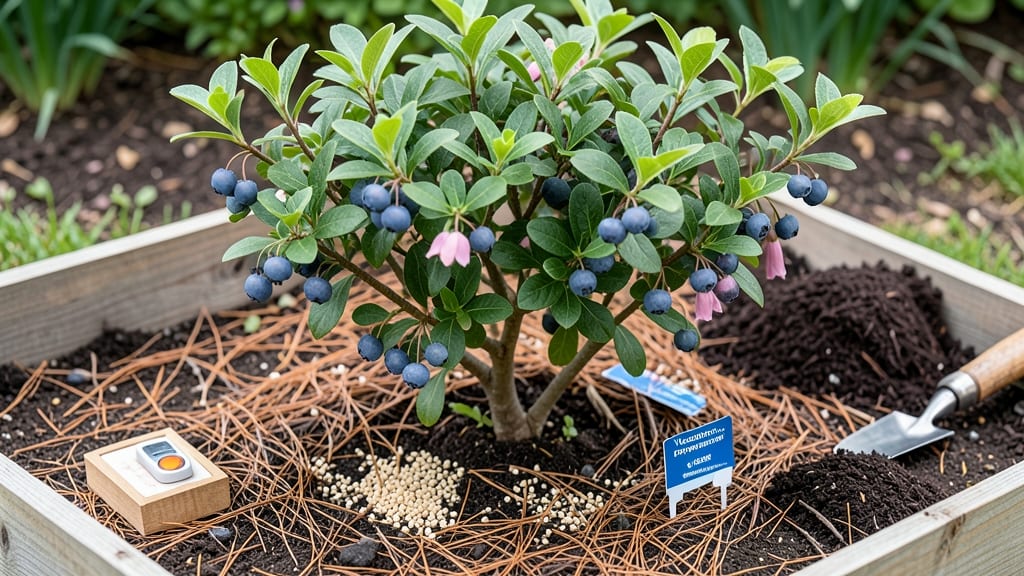
For growing blueberries, you'll need soil that's acidic with a pH between 4.5 and 5.5, packed with organic matter like peat moss or pine bark, and designed to drain well while holding moisture—this combo prevents root rot and fuels sweet, abundant berries.
Blueberries are picky about their growing conditions, and soil acidity is the foundation of their success. 🔥 The right pH (4.5–5.5) unlocks essential nutrients like iron and zinc, which are crucial for vibrant foliage and fruit development.
Without this acidic environment, plants struggle to absorb these minerals, leading to yellow leaves and poor berry production.
I’ve seen firsthand how a simple pH test can save a struggling blueberry bush—using a DIY kit with red cabbage juice is often more accurate than store-bought strips, which can be unreliable for organic soils.
Beyond acidity, the soil mix must balance moisture retention and drainage. Too much water leads to root rot, while poor drainage starves roots of oxygen.
That’s why I blend 50% peat moss or composted pine needles (for acidity and organic matter) with 30% perlite or coarse sand (for aeration) and 20% compost (for nutrients).
For containers, this mix stays fresh longer, while in-ground beds may need annual amendments with sulfur or pine bark fines to maintain the ideal pH.
💡 In This Article
- Why Blueberry Soil Needs Acidic pH (And How to Test It)
- DIY Blueberry Soil Mix Recipes for Containers and Garden Beds
Why blueberry soil needs acidic pH (and how to test it)
Blueberries thrive in acidic soil because their roots can only absorb essential micronutrients like iron, manganese, and zinc when the soil pH falls between 4.5 and 5.5. At this acidic range, these nutrients remain soluble in the soil solution, allowing roots to uptake them efficiently.
When pH rises above 6.0, these nutrients bind to soil particles and become unavailable, causing chlorosis (yellowing leaves) and stunted growth. I've seen blueberry bushes in slightly alkaline soil develop pale foliage and tiny, underdeveloped berries—it's heartbreaking to watch when you know the fix is simple.
The science behind this involves soil chemistry: acidic conditions (low pH) increase the presence of hydrogen ions (H⁺), which help dissolve mineral nutrients.
For example, iron becomes 100 times more available at pH 5.0 than at pH 7.0. 🌱 The roots' mycorrhizal fungi also function optimally in this acidic range, forming symbiotic relationships that enhance nutrient exchange.
Without proper acidity, blueberries can't develop their signature deep blue color or sweet flavor—those compounds require manganese and zinc, which become locked away in alkaline soils.
Testing soil pH accurately is crucial, but commercial test kits often fail with organic soils. I recommend a DIY method using red cabbage juice: boil chopped red cabbage in water for 10 minutes, strain, then mix soil samples with the cooled juice.
Purple indicates acidic soil (ideal for blueberries), while green suggests neutral or alkaline conditions. This method costs pennies and gives reliable results compared to strips that can be thrown off by organic matter.
For precise readings, send samples to a university extension service—they'll analyze pH, organic matter, and nutrient levels for just $20-30.
Adjusting pH takes time but is straightforward. To lower pH, add elemental sulfur (1/4 cup per plant annually) or aluminum sulfate, while raising pH requires lime. However, blueberries hate alkaline soil, so never use lime—it's a one-way trip to failure.
Instead, focus on maintaining acidity through organic amendments like pine needles, which slowly release acids as they decompose. I've successfully lowered pH from 6.8 to 5.2 in just 6 months using pine bark fines and composted oak leaves in my raised beds.
One common mistake is assuming "acidic" means adding vinegar or citrus peels. These create temporary pH drops but don't address the long-term chemistry needed. The right approach combines organic matter (which naturally acidifies as it breaks down) with mineral amendments for stability.
For example, a blend of 60% peat moss, 20% pine bark, and 20% compost maintains ideal pH while providing structure and nutrients. This mix also buffers against pH swings caused by rain or irrigation.
Remember that blueberry roots extend deep—sometimes 3 feet or more—so soil acidity must be consistent throughout the root zone. Surface applications won't help if the subsoil remains alkaline. That's why I always test at multiple depths when preparing garden beds.
For containers, this is less of an issue since you control the entire soil volume, but still monitor pH annually as organic matter decomposes and releases acids.