
How To
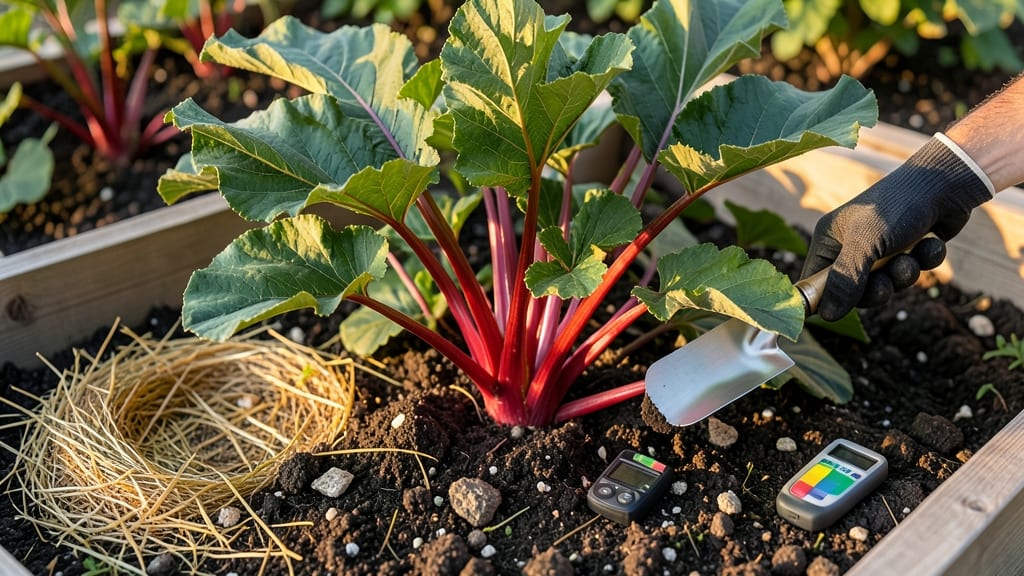
The right soil for rhubarb is the difference between a bold, crisp harvest and a sad, wilty mess. 🌱 I learned this the hard way when my first rhubarb plants struggled in heavy clay—until I fixed the drainage and pH. Rhubarb thrives in acidic loam that’s rich in organic matter but never soggy, and getting it right means fewer diseases and bigger stalks every spring.
Start with a pH of 6.0 to 6.8—too alkaline, and your plants fight for nutrients; too acidic, and you risk root rot. Work in 2-3 inches of compost and a handful of sulfur if your soil tests high.
For clay-heavy spots, mix in coarse sand or perlite to improve drainage without sacrificing moisture retention. My go-to blend? Equal parts garden soil, compost, and a bit of peat moss for that perfect balance.
Once your soil is prepped, you’ll notice the difference immediately—sturdy stems, deep green leaves, and stalks thick enough to harvest. The key is keeping it consistently moist but never waterlogged; rhubarb hates soggy feet.
Mulch with straw or wood chips to lock in moisture and keep weeds at bay. By next season, you’ll be pulling pound after pound of those tart, vibrant stalks we all love.
This method works for in-ground beds, raised beds, or even large containers—just adjust the soil mix to fit your space. And if you’re in a hot climate, a little extra organic matter helps the roots stay cool.
Trust me, your rhubarb will thank you with years of reliable harvests.
📚 In This Guide
- What you need
- Instructions
- Tips and common mistakes
- Wrapping up and next steps
What you need
- ● Topsoil: 50% of your mix (aim for loamy texture, slightly acidic pH 6.0-6.5). Tip: Test your soil’s pH with a kit—rhubarb hates alkalinity!
- ● Compost or aged manure: 30% (adds nutrients like potassium and phosphorus without overloading nitrogen). Pro tip: Avoid fresh manure—it can cause root rot! 🔥
- ○ Peat moss or coconut coir: 20% (improves drainage and retains moisture). Optional: Replace 10% with perlite for extra aeration.
- ● Garden fork or tiller: For mixing soil to a depth of 12–18 inches.
- ● Garden gloves: To keep your hands clean while handling soil amendments.
- ● pH testing kit: Essential for verifying soil acidity before planting.
- ● Wood ash or sulfur: Adjust pH if your soil is too alkaline (use sparingly!).
- ● Slow-release fertilizer (e.g., 10-10-10): Mix 1 cup per 100 sq. ft. at planting time.
- ● Mulch (straw or shredded leaves): Retains moisture and suppresses weeds.
- ● Soil moisture meter: Ensures you’re not over- or under-watering.
How to prepare ideal soil for rhubarb growth
Rhubarb thrives in well-draining, slightly acidic soil—here’s how to create the perfect foundation for healthy plants.
🌱 Step 1: Test and Amend Your Existing Soil
Rhubarb prefers a slightly acidic to neutral pH (6.0-7.0)—too alkaline causes nutrient deficiencies. Grab a small soil sample from your garden bed and test it with a home pH kit (available at garden centers). If your soil tests above 7.0, mix in sulfur or peat moss to lower the pH gradually. For every 100 square feet, work in 2-3 pounds of sulfur and 1-2 inches of peat moss into the top 12 inches of soil.
I like to spread the sulfur evenly first, then dig it in with a garden fork before adding peat moss. This ensures even distribution without clumping. Avoid over-amending—rhubarb roots are sensitive to sudden pH shifts, and you’ll see yellowing leaves if the soil becomes too acidic.
🌿 Step 2: Build a Loamy, Well-Draining Foundation
Rhubarb roots rot easily in soggy soil, so aim for a loamy texture that drains well but holds moisture. Start by removing any weeds or debris from the planting area. Then, mix equal parts garden soil, compost, and coarse sand (or perlite) into the top 12 inches of soil. For 4 plants, you’ll need about 2 cubic feet of compost and 1 cubic foot of sand per plant.
Work the amendments into the soil until it feels light and crumbly—like a well-aerated cake batter. If your soil is naturally clay-heavy, add extra sand or perlite to improve drainage. Pack the soil lightly around the planting hole to eliminate air pockets, but don’t compress it too tightly.
☀️ Step 3: Add Organic Matter for Long-Term Health
Rhubarb benefits from continuous organic matter to support its deep root system. Spread a 2-inch layer of well-aged compost or leaf mold over the amended soil and mix it in lightly. For 4 plants, use about 1-2 gallons of compost per plant. Avoid fresh manure—it can burn roots and attract pests.
Here’s the thing—rhubarb is a heavy feeder, so I top-dress the soil annually with 1-2 inches of compost in early spring. This keeps the soil fertile without overloading it with nutrients. Water the area lightly after adding compost to help it settle into the soil.
💧 Step 4: Mulch to Retain Moisture and Regulate Temperature
Mulching is non-negotiable for rhubarb—it prevents soil temperature swings and keeps roots consistently moist. Apply a 3-4 inch layer of straw or shredded leaves over the amended soil, leaving a 2-inch gap around the crown of the plant (if transplanting). For 4 plants, use about 10-12 square feet of mulch spread evenly.
I refresh the mulch layer every fall and spring to maintain its thickness. Avoid wood chips—they can compact and reduce drainage over time. If you notice the mulch breaking down too quickly, add a fresh layer before it decomposes completely.
⏰ Step 5: Monitor and Adjust Over Time
After planting, check the soil monthly for drainage issues—especially after heavy rains. If water pools on the surface, add more sand or perlite to improve drainage. Rhubarb roots thrive in consistently moist but not soggy soil, so aim to water 1-2 inches per week during dry spells.
Real talk: If your rhubarb leaves start yellowing or wilting, it’s often a sign of overwatering or poor drainage. Adjust your watering schedule to keep the soil evenly moist but never waterlogged. A simple soil moisture meter helps track this—insert it 2 inches deep near the plant to check moisture levels.
Tips & tricks for perfect rhubarb soil preparation
Creating the ideal growing environment for rhubarb takes a few strategic moves—here's how to nail it every time.
pH Precision: When testing your soil's pH in Step 1, take multiple samples from different areas of your garden bed. Rhubarb's ideal range is 6.0-7.0, but even slight variations can affect nutrient uptake. I've seen gardens where one corner tested 7.2 while another was 6.8—amend each area separately to avoid creating pH pockets that could stress your plants. Use a digital pH meter for more accurate readings than test kits, especially if you're working with borderline results.
Layering for Drainage: In Step 2, when building your loamy foundation, create a layered approach: Start with 4 inches of coarse sand at the bottom of your planting hole, then add 6 inches of the garden soil/compost mix. This prevents water from pooling at the roots while still allowing moisture retention. For heavy clay soils, add an extra 2 inches of perlite mixed into the sand layer—this creates tiny air pockets that improve drainage dramatically. Think of it like building a moisture buffer system for your rhubarb roots.
Organic Matter Timing: The annual compost top-dressing in Step 3 should happen in early spring, but there's a trick to maximize its benefits: Apply it just as new growth begins to emerge. This timing gives the compost time to break down before the plant's peak growth period. I've found that spreading compost in late winter (February-March) gives it 4-6 weeks to integrate before active growth starts. Avoid applying compost in summer—it can overheat the soil and attract pests.
Mulch Maintenance: For Step 4, don't just apply mulch once and forget about it. The 3-4 inch layer should be checked every 3 months during growing season. If you notice the mulch has broken down to less than 2 inches, add a fresh layer immediately. I keep a bag of straw handy and add about 1 inch whenever I notice thinning. This consistent coverage is crucial because rhubarb roots are sensitive to temperature fluctuations—even a 10°F swing can stress the plant. The mulch acts like a thermal blanket for your rhubarb's roots.
Pro Tips for Soil For Rhubarb
- Creating the ideal growing environment for rhubarb takes a few strategic moves—here's how to nail it every time.
- pH Precision: When testing your soil's pH in Step 1, take multiple samples from different areas of your garden bed.
- Layering for Drainage: In Step 2, when building your loamy foundation, create a layered approach: Start with 4 inches of coarse sand at the bottom of your planting hole, then add 6 inches of the garden soil/compost mix.
Frequently asked questions
Got questions about growing rhubarb?
You’re not alone—this hardy but picky plant thrives with the right soil know-how. Below, we tackle the most common queries to help you cultivate luscious, rot-resistant rhubarb like a pro.
What type of soil is best for rhubarb?
Rhubarb loves well-draining, slightly acidic to neutral loamy soil (pH 6.0–7.0). Avoid heavy clay or waterlogged spots—these cause root rot. Amend sandy or rocky soil with compost to improve moisture retention and fertility. A mix of 50% topsoil, 30% compost, and 20% perlite works wonders!
When is the best time to plant rhubarb?
Plant rhubarb in early spring or fall when soil temps are cool (50–60°F). Avoid summer planting—heat stress weakens roots. If using bare-root plants, soak roots for 2–3 hours before transplanting. Pro tip: Mulch heavily after planting to protect roots from temperature swings.
Why is my rhubarb wilting or turning yellow?
Yellow leaves or wilting often signal overwatering, poor drainage, or nutrient deficiencies. Check for:
- Root rot: Soil feels soggy? Amend with compost and improve drainage.
- Nitrogen deficiency: Add aged manure or a balanced fertilizer (10-10-10).
- Overcrowding: Rhubarb needs 3–4 feet of space; thin plants if needed.
If stems are hollow or black, remove the plant immediately—it’s likely infected with crown rot.
Can I grow rhubarb in containers?
Yes! Rhubarb thrives in large containers (at least 18" deep and wide) with drainage holes. Use a mix of potting soil + compost + perlite (60/30/10 ratio). Place pots in full sun to partial shade and water consistently—containers dry out faster. Warning: Container-grown rhubarb may produce smaller yields but is great for patios!
How often should I fertilize rhubarb?
Feed rhubarb once in early spring with a balanced fertilizer (5-10-10) or compost. Avoid high-nitrogen fertilizers after harvest—this encourages leafy growth over stalks. Organic option: Work in 2–3 inches of compost annually. Skip fertilization if using rich, well-amended soil.
Bonus Tip: Can I reuse rhubarb soil?
Rhubarb soil stays fertile for years. Just top-dress with compost yearly and rotate crops (like beans or lettuce) to prevent disease buildup. Warning: If root rot appears, sterilize the soil with solarization (cover with clear plastic for 4–6 weeks) before replanting.
Wrapping up and next steps
Growing thriving rhubarb starts with the right soil for rhubarb—a well-draining, slightly acidic loam that keeps roots happy and healthy. 🌱 By avoiding compacted or waterlogged soil and prioritizing organic matter, you’ll set the stage for a bountiful harvest.
Now that you’re armed with the knowledge, it’s time to roll up your sleeves and get planting!
Ready to take the next step? Test your soil today, amend it as needed, and watch your rhubarb flourish. Happy gardening!