
How To
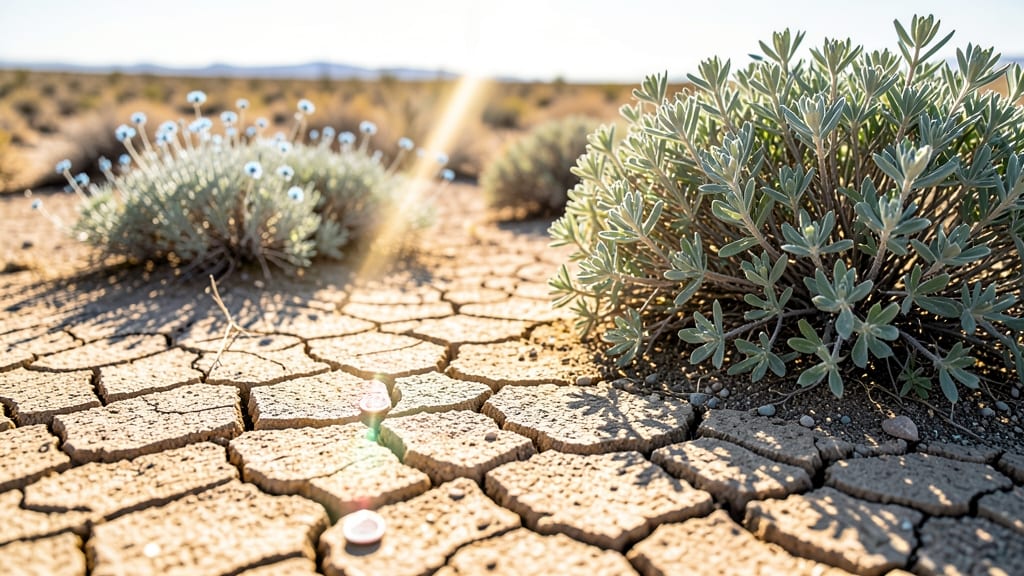
Desert biome soil is characterized by its thin, nutrient-scarce profile, often composed of coarse sand or gravel with high mineral deposits like calcium carbonate, while extreme dryness and minimal organic material create an alkaline environment that challenges plant survival.
This harsh environment isn't just a challenge—it's a defining feature of desert ecosystems. 🌵 The lack of organic material means decomposing plants and animals contribute almost nothing to soil fertility, while wind erosion strips away what little topsoil exists.
What little nutrients are present often come from mineral deposits like gypsum or sodium salts, which don't support most plant life. The alkaline pH further limits water absorption, forcing native plants to evolve deep root systems or water-storing adaptations like succulents.
Understanding this helps explain why desert landscapes appear so barren—it's not just about lack of rain, but the soil's fundamental inability to sustain most vegetation. The mineral-rich but nutrient-poor composition creates a survival-of-the-fittest scenario where only highly adapted species thrive.
💡 In This Article
- How Desert Soil Forms and Its Unique Mineral Composition
- Adapting Plants and Gardening Hacks for Desert Soil
How desert soil forms and its unique mineral composition
Desert soil formation begins with extreme aridity, where annual rainfall often measures less than 10 inches—sometimes as little as 1 inch in the driest regions like the Atacama. This lack of moisture prevents organic matter from decomposing into nutrient-rich humus.
Instead, wind becomes the dominant force, carrying fine particles away while leaving behind coarse sand and rock fragments. The result is a soil profile that can be just a few inches deep in some areas, with bedrock often exposed at the surface.
The mineral composition tells the full story of desert soil's harsh nature. Unlike temperate soils rich in organic carbon, desert soils often contain 20-40% calcium carbonate (limestone) and significant deposits of gypsum (calcium sulfate) or sodium salts from evaporated mineral-rich water.
These minerals create that signature white, chalky appearance and push the soil's pH toward alkaline levels, typically between 7.5 and 9.0. For comparison, fertile agricultural soils maintain a near-neutral pH of 6.0-7.0, allowing better nutrient availability.
Water retention becomes the defining limitation. Desert soils hold only 5-15% moisture by volume when saturated, compared to 25-40% in forest soils. The coarse texture prevents water from penetrating deeply, causing it to evaporate quickly.
This forces native plants to develop specialized adaptations like deep taproots (up to 60 feet in mesquite trees) or water-storing tissues, while microbes must operate in a high-salt, low-moisture environment that would kill most other organisms.
Consider the Mojave Desert's caliche layer—a cement-like accumulation of calcium carbonate that forms just below the surface. This impermeable layer blocks water from seeping deeper, creating a paradox where surface soil appears dry while underground water tables remain inaccessible.
The combination of these mineral deposits, alkaline pH, and physical structure makes desert soil one of Earth's most challenging growing mediums—yet precisely these conditions have shaped the resilience of its native ecosystems.
What makes this even more fascinating is how these mineral compositions vary by desert type. Coastal deserts like the Atacama contain nitrate deposits from seabird droppings, while inland deserts accumulate boron and selenium from volcanic activity.
These variations create micro-environments where only highly specialized plants can survive, demonstrating nature's ability to thrive in extreme conditions despite seemingly impossible odds.