
How To
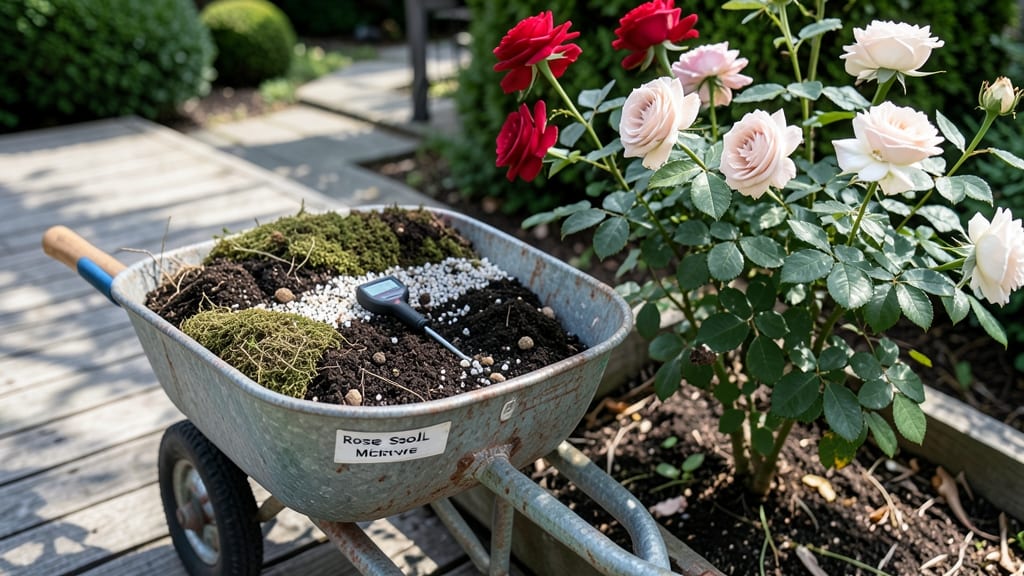
Your roses deserve soil that breathes as deeply as they bloom. ✨ The right soil mixture for roses isn’t just dirt—it’s a carefully balanced blend that keeps roots oxygenated, drains excess moisture, and feeds every bud like a five-star chef.
My first attempt with store-bought garden soil left my roses struggling, but this mix transformed them into the showstopper they were meant to be.
Start with equal parts loam, compost, and coarse sand—think of it as the rose garden’s version of a perfect latte: rich, textured, and just the right amount of grit. The loam provides structure, compost feeds the roots, and sand prevents soggy roots that invite disease.
For extra insurance, work in bone meal or rose fertilizer—about 1 cup per bushel of mix—to give those blooms the phosphorus boost they crave for strong stems and vibrant colors.
What you’ll end up with is soil that holds moisture without drowning roots, stays slightly acidic to neutral (roses love that sweet spot between 6.0 and 6.5), and crumbles like fresh-baked bread when you squeeze it.
Your roses will reward you with thicker canes, more buds, and blooms that last weeks longer than anything you’ve grown before. The secret? Less guesswork, more science—no more wilting stems or sad, sparse flowers.
This mix works year-round for new plantings or refreshing existing beds, and it’s easy to adapt for containers or in-ground gardens. Just remember: roses aren’t fussy, but they are particular.
Give them this soil, and they’ll give you back a garden that turns heads—and maybe even a few jealous neighbors peeking over the fence.
📚 In This Guide
- What you need
- Instructions
- Tips and common mistakes
- Wrapping up and next steps
What you need
- ● Garden loam (topsoil): 50% of the mix (2 parts). Choose well-draining, organic-rich loam.
- ● Compost: 30% of the mix (1.5 parts). Use well-aged, nutrient-dense compost for fertility.
- ● Perlite or coarse sand: 10% of the mix (½ part). Improves aeration and drainage.
- ● Peat moss or coconut coir: 10% of the mix (½ part). Retains moisture while preventing compaction.
- ○ Slow-release fertilizer (optional but recommended): Mix in 1 cup per 5 gallons of soil for a nutrient boost.
- ● Garden fork or trowel: For mixing and aerating the soil.
- ● Wheelbarrow or large container: To blend materials efficiently.
- ● Gloves and protective eyewear: For safety while handling soil and additives.
- ○ pH testing kit (optional): Roses thrive in slightly acidic soil (pH 6.0–6.5). Adjust with lime or sulfur if needed.
- ● Garden hose or watering can: To moisten the mix before planting.
How to create the perfect soil mix for roses
Roses demand airy, well-draining soil—here's how to blend it yourself for blooms that last.
🪴 Step 1: Gather the Base Components
Start with 2 parts garden soil (the foundation) and 1 part compost (for nutrients). I like to use well-rotted cow manure compost—it's rich but won't burn roots. For better drainage, add 1 part perlite or coarse sand (never fine sand—it compacts). Mix these dry first in a wheelbarrow or large bin.
This ratio prevents soggy roots while keeping moisture available. If your garden soil is heavy clay, increase the perlite to 2 parts instead of 1. Tap the sides of the bin gently to break up clumps—you want everything uniformly loose.
💧 Step 2: Add Organic Matter for Structure
Sift in 1 part peat moss or coconut coir (this holds moisture without suffocating roots). Then stir in ½ part bone meal (for phosphorus to fuel blooms) and ½ part greensand (for potassium). These amendments improve drainage while feeding roses over time.
Work the materials with your hands or a garden fork until you see even color and texture. The mix should resemble crumbly cake batter—light but with structure. If it feels too dense, add another handful of perlite.
☀️ Step 3: Test and Adjust for Ideal Conditions
Fill a small container with your mix and water it thoroughly. After 10 minutes, check drainage: water should flow through but not puddle at the bottom. If it drains too fast (like sand), add ½ part compost to retain moisture. If it stays soggy, mix in ½ part more perlite.
Run a handful through your fingers—it should feel light and airy, not gritty or compact. The ideal mix lets roots breathe while holding enough moisture for deep watering. This is the moment that matters: roses won't thrive in soil that's either too dense or too dry.
✂️ Step 4: Amend Existing Soil or Use as Planting Medium
For in-ground roses, dig a hole twice as wide as the root ball and half as deep. Mix your custom soil with the native soil removed (50/50 ratio) to prevent shock. For container roses, fill pots ¾ full with your blend before planting.
Real talk: don't skip this step. Roses planted in unamended soil often struggle with poor drainage or nutrient deficiencies. The first sign of trouble is yellowing leaves—usually a sign the soil isn't breathing right.
🌱 Step 5: Maintain the Soil Over Time
Top-dress with 1 inch of compost every spring and ½ inch of mulch (like pine bark) to preserve moisture. Roses need well-draining, slightly acidic soil (pH 6.0-6.5)—test annually with a soil kit. If blooms fade early, your mix may need more phosphorus.
Here's the thing—this blend won't last forever. After 2-3 years, refresh with ½ part new compost and ½ part perlite to maintain aeration. The goal is to keep roots happy so they can focus on producing those stunning blooms.
Tips & tricks for perfect rose soil blends
A few simple tricks will help you create the ideal growing environment for roses that thrive all season long.
Base Ratio Refinement: When mixing your 2 parts garden soil to 1 part compost, sift both components first to eliminate large clumps. This prevents compacted pockets that can suffocate roots. I've found that pre-sifting also helps distribute the compost's nutrients more evenly throughout the mix—especially important when using well-rotted cow manure, which can have uneven moisture distribution.
Drainage Test Precision: That 10-minute drainage test in Step 3 is crucial—don't rush it! Use a container with drainage holes and measure exactly 10 minutes from when the water first starts flowing through. If your mix drains too quickly (like sand), the extra ½ part compost will help retain moisture without compromising aeration. For soggy mixes, perlite is your best friend—it creates those essential air pockets roses crave.
Seasonal Soil Adjustments: For spring planting, add an extra ¼ part of bone meal to your mix to give roses a phosphorus boost for vigorous new growth. In fall, reduce the bone meal to ¼ part and increase greensand to ¾ part instead—this potassium focus helps roses prepare for winter dormancy. The key is matching your amendments to the plant's seasonal needs rather than using the same blend year-round.
Container Gardening Hack: When filling pots ¾ full with your blend, press the soil lightly to eliminate air gaps at the bottom. This prevents roots from growing into empty spaces where they can't access nutrients. For containers larger than 12 inches, consider adding a 1-inch layer of gravel at the bottom first—this creates a drainage reservoir that prevents waterlogging while maintaining aeration.
Pro Tips for Soil Mixture For Roses
- A few simple tricks will help you create the ideal growing environment for roses that thrive all season long.
- Base Ratio Refinement: When mixing your 2 parts garden soil to 1 part compost, sift both components first to eliminate large clumps.
- Drainage Test Precision: That 10-minute drainage test in Step 3 is crucial—don't rush it!
Frequently asked questions
Got questions about crafting the perfect soil mixture for roses? You’re not alone—gardeners often wonder about timing, ingredients, and troubleshooting. Here are answers to the most common queries to help your roses thrive!
What’s the best ratio for a DIY rose soil mix?
A balanced mix typically includes 60% topsoil, 20% compost, 10% sand or perlite, and 10% peat moss or coconut coir. Adjust based on your climate—sandy soils need more organic matter, while clay soils benefit from extra sand for drainage. Pro tip: Test your soil’s pH (aim for 6.0–6.5) and amend accordingly!
When is the best time to amend the soil for roses?
Amend your soil in early spring (before planting) or fall (6–8 weeks before frost). Avoid mid-summer—roses are stressed by heat, and soil work can disrupt their roots. For established roses, top-dress with compost in spring to refresh nutrients without disturbing the root zone.
Can I reuse old soil from last year’s rose bed?
Yes, but refresh it! Mix in 25–50% new compost and a handful of perlite to improve aeration. If the soil looks depleted (pale, compacted, or lacking blooms), replace half with fresh topsoil. Warning: Avoid reusing soil from diseased plants—sterilize with solarization or fungicide if needed.
What if my roses aren’t blooming despite good soil?
Check these fixes:
- Sunlight: Roses need 6+ hours of direct sun daily.
- Watering: Deep water 1–2 inches per week (more in heat).
- Fertilizer: Use a balanced rose fertilizer (10-10-10) in spring and mid-summer.
- Pruning: Deadhead spent blooms and prune in late winter.
Are there store-bought alternatives to DIY rose soil?
Look for pre-mixed rose/flower blends (like Miracle-Gro Rose & Flower Mix) or organic options with compost and perlite. For containers, use a lightweight potting mix (50% peat/coir + 50% perlite). Budget tip: Combine 50% garden soil + 50% bagged compost for a cost-effective upgrade.
Wrapping up and next steps
Creating the perfect soil mixture for roses is all about balance—rich nutrients, proper drainage, and air pockets to keep roots happy. With the right blend of loam, compost, and organic matter, your roses will thrive, producing stunning blooms year after year. 🌹
Now that you’re armed with the knowledge, roll up your sleeves and give your roses the soil they deserve! Start by testing your current soil, then mix up your custom blend. Watch your garden transform as your roses reward you with vibrant, healthy growth.