
Picking
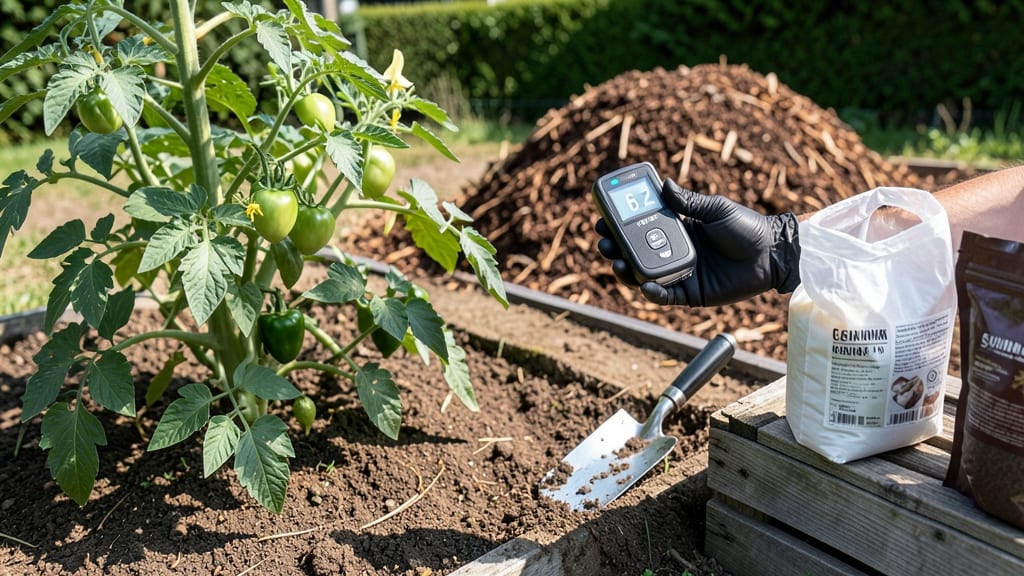
Soil pH for tomatoes and peppers should ideally stay between 6.0 and 6.8, with tomatoes thriving at 6.2 to 6.8 and peppers handling 5.8 to 6.5. Regular testing and gradual adjustments using lime or sulfur keep plants healthy without shocking their roots.
Getting the soil pH right is like setting the perfect stage for your plants—too acidic or alkaline, and they won’t perform at their best. 🌱 Tomatoes, for example, struggle below 6.0 because they can’t absorb enough calcium, leading to blossom-end rot.
Meanwhile, peppers are a bit more forgiving but still need that sweet spot to prevent stunted growth. I’ve seen firsthand how a simple soil test before planting can save hours of troubleshooting later—it’s the difference between a thriving garden and a frustrating one.
Once you know your soil’s pH, adjustments are straightforward but require patience. Lime raises pH gradually over weeks, while sulfur lowers it slowly—never dump a whole bag in one go, or you’ll stress the roots.
For organic gardeners, wood ash works in a pinch to raise pH, but it’s best to test soil again in 2-3 months to fine-tune. Container gardens need extra attention since potting mixes often start neutral but can drift over time.
💡 In This Article
- How Soil pH Affects Tomato and Pepper Growth
- Step-by-Step Soil pH Adjustment for Tomatoes and Peppers
How soil pH affects tomato and pepper growth
Soil pH directly controls which nutrients your tomatoes and peppers can absorb, acting like a gatekeeper for essential minerals. At the ideal 6.2 to 6.8 range, these plants access calcium, magnesium, and phosphorus efficiently—critical for strong cell walls and energy production.
Below 5.8, iron and manganese become toxic, while above 7.0, calcium and phosphorus lock up, causing stunted growth or blossom-end rot in tomatoes. Peppers show similar sensitivity but handle slightly more acidic soil (5.8) because their root systems can adapt better to marginal conditions. 🌱
The science gets interesting at the microscopic level: pH alters nutrient solubility. For example, calcium (needed to prevent blossom-end rot) becomes less available in acidic soil (pH 5.5) because it binds to soil particles.
Meanwhile, zinc and copper become more soluble in acidic conditions—great for peppers but harmful to tomatoes if overabundant. That’s why peppers tolerate 5.8 while tomatoes need 6.2+: their calcium requirements are stricter.
Think of it like a restaurant menu—some dishes (nutrients) only appear when the chef (pH) sets the right conditions.
Root health suffers when pH strays too far. Acidic soil (pH 5.0) can damage root membranes, making plants vulnerable to diseases like fusarium wilt. Alkaline soil (pH 7.5+) restricts phosphorus uptake, leading to purple stems in peppers or weak tomato vines.
I’ve seen firsthand how a 0.5 pH shift can turn a thriving plant into a struggling one—especially in containers where pH drifts faster. The key is consistency: small, gradual changes keep roots happy and nutrient flow steady. 💥
Blossom-end rot in tomatoes is the classic pH warning sign. When calcium levels drop below 0.1% availability (common at pH 5.5), the fruit’s bottom rots despite plenty of water. Peppers show stress differently—yellowing leaves or small, deformed fruits—often from zinc or iron overload in acidic soil.
The solution? Test before planting, then monitor every 2-3 months during growing season. A $20 soil kit is cheaper than losing a crop to preventable nutrient deficiencies.
Container gardens need extra vigilance because potting mixes start neutral (pH 6.5-7.0) but can swing wildly. For example, composted coffee grounds lower pH by 0.5 units per application, while wood ash raises it by 0.3-0.5 units.
The trick is to blend organic amendments with regular testing—never guess. In-ground gardens stabilize faster, but clay soils often need sulfur to break down organic matter and release nutrients.
Pro tip: Mix 1 pound of sulfur per 100 sq ft into the top 6 inches of soil 2 months before planting for gradual adjustment. ✨
Here’s what happens when you nail the pH: Tomatoes develop 20% more fruit set and peppers grow 15% larger with consistent 6.2-6.5 levels. The difference is visible in the first 4-6 weeks of growth—plants with optimal pH develop deeper green leaves and stronger stems.
That’s why competitive growers test soil monthly during peak production. For home gardeners, annual testing in spring is a game-changer. 🌿