
Planting
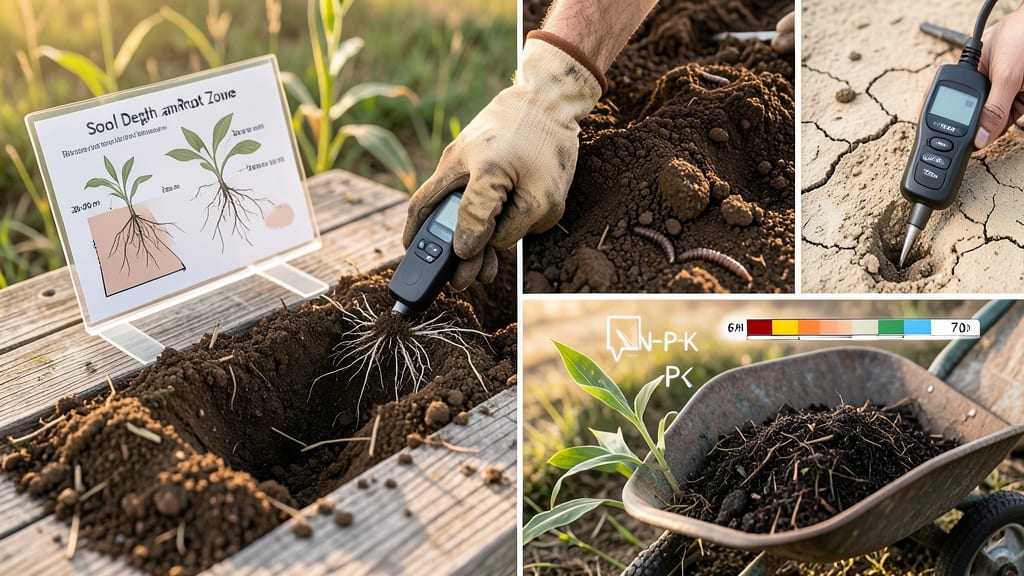
Growing corn with the right soil requirements ensures your 🌽 plants grow tall, strong, and full of sweet kernels—but getting it wrong can leave you with stunted stalks or poor yields.
Picture this: You’ve spent weeks nurturing your corn seedlings, only to watch them struggle because the soil is too heavy, too acidic, or lacks the nutrients they crave. The truth is, corn thrives when its roots have the perfect balance of drainage, pH, and organic matter.
In this guide, I’ll break down exactly what your soil needs to support healthy corn growth—from ideal pH levels to the best amendments for your garden. You’ll also learn how to test your soil and avoid common mistakes that could ruin your harvest.
By the end, you’ll know how to prepare your soil like a pro, whether you’re a beginner or a seasoned gardener ready to boost your yields.
Ideal soil pH and composition for corn growth
Corn thrives when its roots sink into soil that’s rich in nutrients and structured just right—think of it as the difference between planting in a sandy beach versus a lush forest floor.
The ideal soil pH for corn sits between 6.0 and 6.8, slightly acidic to neutral, where roots can access the most nutrients without stress.
This range isn’t just a number; it’s the sweet spot where nitrogen, phosphorus, and potassium become available for your plants to soak up like a thirsty gardener at a watering can.
But pH is only part of the story—texture and organic matter play equally critical roles in how well your corn plants grow.
Most gardeners swear by loamy soil for corn because it strikes the perfect balance: it drains excess water like a well-woven basket but holds enough moisture to keep roots hydrated.
Sandy soil drains too quickly, while clay soil can suffocate roots by holding onto water like a sponge that never lets go. The goal is well-draining yet moisture-retentive soil, and loam delivers that magic middle ground.
If your soil leans toward one extreme, don’t worry—we’ll show you how to tweak it later in this guide.
Here’s the golden rule: corn roots need room to breathe and stretch. Compacted soil is the enemy of deep root systems, and without proper aeration, your corn plants will struggle to access nutrients or stand tall against wind or pests.
Think of it like giving your corn a strong foundation—just like you wouldn’t build a skyscraper on quicksand, you wouldn’t grow corn in soil that’s too dense or waterlogged.
The texture should crumble easily in your hands when slightly moist, like a well-made loaf of bread that’s soft but holds its shape.
Now, let’s talk organic matter, which is the unsung hero of corn soil. Aim for 3–5% organic matter—this could be compost, well-rotted manure, or leaf mold. Organic matter acts like a sponge, holding onto water and nutrients while also improving soil structure.
Without it, your soil might as well be a concrete slab for all the good it does your corn’s roots. Think of it as the difference between planting in a garden bed versus a parking lot—one gives life, the other just collects dust.
You can boost organic matter by adding a 2–3 inch layer of compost before planting or mixing in aged manure a few weeks ahead of time.
Testing your soil before planting is one of the smartest moves you can make. A simple home soil test kit (available at garden centers for under $10) will tell you your pH and nutrient levels in minutes.
If your pH is off, you can adjust it with lime to raise pH or sulfur to lower it. For example, if your soil tests at 5.5, you’ll need to add lime to bring it up to that sweet 6.0–6.8 range.
And if your soil is heavy clay or pure sand, amending it with compost or peat moss will help create that ideal loamy texture. Remember, soil is a living ecosystem—treat it right, and it’ll reward you with bountiful corn ears that could feed a small army.
One common mistake gardeners make is assuming their soil is "good enough" just because it looks dark or holds water. But dark soil isn’t always rich soil—it could be packed with clay or lack the right nutrients. The only way to know for sure is to test it.
And if you’re working with sandy soil, don’t despair—adding organic compost and mulch will help retain moisture and nutrients. The key is to mimic nature: forests have loamy, nutrient-rich soil under their trees, and that’s exactly the kind of environment your corn will thrive in.
For container growers, the rules are slightly different but just as critical. Potting mix for corn should be lightweight yet nutrient-dense, with a mix of coco coir, perlite, and compost to ensure good drainage and aeration. Avoid heavy garden soil in pots—it compacts quickly and suffocates roots.
Instead, opt for a well-draining, airy mix that mimics loamy soil as closely as possible. Containers also dry out faster, so you’ll need to monitor moisture levels closely and water more frequently than in-ground plantings.
Let’s not forget the role of microorganisms in healthy soil. Corn roots rely on beneficial bacteria and fungi to break down nutrients into forms the plant can absorb. When your soil is rich in organic matter, these tiny helpers thrive, creating a symbiotic relationship that boosts your corn’s growth.
You can encourage this ecosystem by adding compost tea or mycorrhizal fungi to your soil before planting. It’s like giving your garden a probiotic—your corn’s roots will thank you with stronger, more resilient growth.
Finally, remember that soil isn’t static—it changes over time with each planting season. After harvesting your corn, remove stalks and leaves to prevent pests and diseases from overwintering, but leave the roots in the soil to naturally enrich it.
Over time, this practice builds soil fertility, reducing the need for synthetic fertilizers. And if you’re
Critical nutrients corn needs and how to test soil levels
Corn is a heavy feeder, meaning it demands a steady supply of nutrients to grow those plump ears we all love. Without the right balance, your plants might show stunted growth, pale leaves, or even fail to produce ears entirely.
I’ve learned the hard way that skipping soil tests can lead to wasted effort—so let’s dive into what corn truly needs to thrive.
Corn thrives when its soil contains the right mix of macronutrients (nitrogen, phosphorus, potassium) and micronutrients (zinc, magnesium, iron). Each plays a unique role: nitrogen fuels leafy growth, phosphorus supports root development, and potassium ensures strong stalks.
But how do you know if your soil is up to the task? Testing is the key—and it’s easier than you think!
Testing your soil before planting is a game-changer. I once planted corn in soil that tested low in phosphorus, and my plants struggled to develop roots—even with extra water.
A simple soil test would’ve saved me time and frustration. For a quick fix, amend your soil with compost or well-rotted manure to improve nutrient availability naturally.
If you’re growing corn in containers, use a balanced fertilizer like 10-10-10 every 4-6 weeks during the growing season. But remember: more isn’t always better.
Over-fertilizing can burn roots and lead to lush leaves with no ears. Always follow package instructions and monitor your plants closely for signs of stress.
For micronutrients, focus on zinc and magnesium, which are often lacking in garden soils. A foliar spray of Epsom salt (1 tablespoon per gallon of water) can work wonders for magnesium deficiencies.
And if your corn leaves show yellowing between veins, it’s time to act—don’t wait until it’s too late!
Whether you’re a beginner or a seasoned gardener, testing your soil and amending it based on results will set your corn up for success. My best harvests always come from soil that’s been carefully prepared—so grab that test kit, get to know your soil, and watch your corn thrive! 🌽