
Propagation
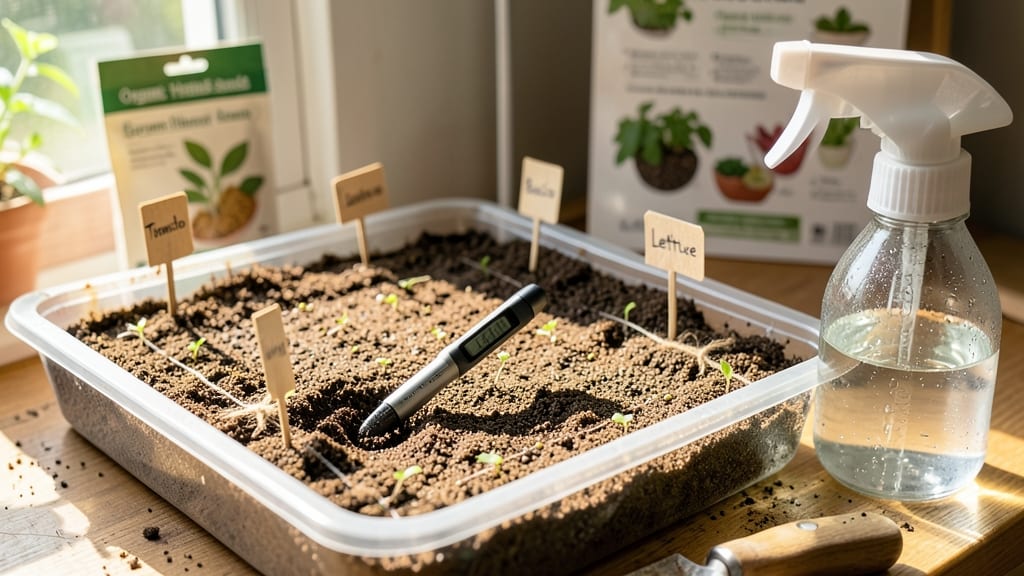
Soil temperature for seed germination determines success rates, with cool-season plants like lettuce and peas germinating best at 50–65°F (10–18°C) while warm-season crops like tomatoes and cucumbers require 65–85°F (18–29°C). Below these ranges, seeds may rot; above, they risk drying out. A soil thermometer is your best tool to track these conditions accurately.
Understanding soil temperature for seed germination isn't just about hitting a number—it's about unlocking the biochemical signals that trigger growth. 🌱 Cool-season seeds often need consistent moisture to break dormancy, while warm-season varieties rely on heat to activate enzymes that kickstart cell division.
I've seen firsthand how a 5°F (3°C) difference can mean the difference between thriving seedlings and wasted seeds. For example, broccoli seeds may take 7–14 days to sprout at 55°F (13°C) but rot within days at 40°F (4°C).
Even more critical is how temperature interacts with moisture. Warm soils dry out faster, forcing seeds to germinate quickly or risk dehydration. That's why I always recommend testing soil temperature before planting, especially in spring when ground temps can fluctuate wildly.
A simple soil thermometer ($10–$15) gives you real-time data—no more guessing games. For stubborn slow-starters, a seedling mat can raise soil warmth by 10–15°F (6–8°C) in just hours, making all the difference for heat-loving plants.
💡 In This Article
- How Soil Temperature Affects Seed Germination Science
- Adjusting Soil Temperature for Faster Germination
How soil temperature affects seed germination science
At the cellular level, soil temperature acts like a biochemical switch for seeds.
Enzymes called amylases and proteases only become active within specific temperature ranges—cool-season plants like spinach and kale trigger these enzymes at 50–65°F (10–18°C), while warm-season crops such as peppers and beans need 75–85°F (24–29°C) to break dormancy. The reason?
These enzymes control starch breakdown and protein synthesis, which are essential for the seed's first cell divisions. At temperatures below 40°F (4°C), these enzymes stall completely, leaving seeds in suspended animation.
Moisture retention plays an equally critical role. Warmer soils (70°F/21°C and above) evaporate moisture 30–50% faster than cooler soils, forcing seeds to germinate rapidly or risk drying out.
This is why warm-season seeds often sprout within 3–7 days—their survival depends on quick water uptake before the soil dries. Conversely, cool-season seeds like carrots and onions can take 14–21 days to germinate because they prioritize steady moisture over speed. The trade-off?
Too much heat (90°F/32°C+) denatures enzymes, causing seeds to rot before sprouting.
Here's what most gardeners miss: the critical threshold isn't just about warmth—it's about consistency. Seeds of warm-season plants like tomatoes need soil temps to stay above 60°F (15°C) for at least 10 consecutive days to avoid stunted growth. Below this, their root systems develop poorly, leading to leggy, weak seedlings.
For cool-season crops, fluctuations of just 10°F (5°C) daily can trigger dormancy cycles, delaying germination by weeks. That's why I always check soil temps at 2-inch depth—surface temps can be misleading, especially after sunny days.
Dormancy-breaking mechanisms add another layer. Many seeds, like those of parsnips or beets, require a period of cold stratification (32–40°F/0–4°C for 2–4 weeks) to soften their seed coats. Without this, their germination rates drop by 40–60%. The science?
Cold temperatures increase cell membrane permeability, allowing water to penetrate the seed coat more easily. Once warmed, these seeds then germinate rapidly—almost like they've been "primed" for growth. This two-phase process explains why some gardeners pre-chill seeds in the fridge before planting in spring.
Consider the example of cucumber seeds, which germinate best at 75–85°F (24–29°C). At 65°F (18°C), their germination rate drops by 50%, and below 55°F (13°C), they may never sprout. The difference comes down to ATP production—the energy currency of cells.
Warmer temps accelerate mitochondrial activity, giving seeds the metabolic boost they need to break through their seed coats. Without this energy surge, even hydrated seeds remain dormant.
For practical application, this means timing is everything. Planting warm-season crops too early in cool soils leads to seed rot, while planting cool-season crops in overheated soil causes them to bolt prematurely. The key is matching seed biology to your climate.
In Zone 5, where spring soils often sit at 45–55°F (7–13°C), I've found that using row covers can raise soil temps by 5–10°F (3–6°C)—just enough to coax early germination of peas or radishes.