
Vegetables
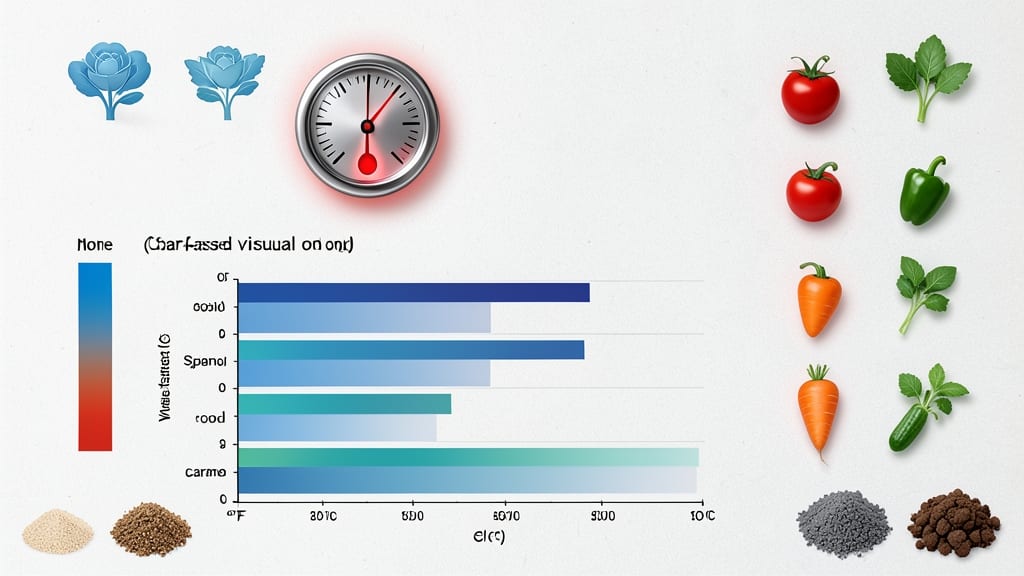
A soil temperature for planting vegetables chart shows ideal ranges of 45–65°F (7–18°C) for cool-season crops like lettuce and peas, while warm-season vegetables such as tomatoes and peppers require 60–90°F (16–32°C). Always reference a planting chart by seed type to optimize germination and avoid growth issues.
A planting chart for vegetables isn't just about numbers—it's about timing your garden's success.
Soil warmth triggers critical biological processes: enzymes activate at specific temperatures to break down seed coatings, while microbial activity in the soil ramps up to support root development. 🌱 For instance, cool-season crops like spinach and kale can germinate in 40°F (4°C) soil, but they'll grow sluggishly if temperatures climb above 70°F (21°C).
On the flip side, warm-season plants like cucumbers and squash won't even sprout below 60°F (16°C), and their roots struggle to establish in soils hotter than 85°F (29°C).
This is why regional planting guides often include both temperature ranges and frost dates—your local climate dictates when the soil will naturally reach those thresholds.
What many gardeners overlook is how quickly soil temperatures change with weather shifts. A sunny afternoon can raise ground temps by 10–15°F (5–8°C) compared to morning readings, which is why taking measurements at 10 AM (when soil is warmed but not overheated) gives the most accurate picture.
For cold climates, tools like soil warming cables or black plastic mulch can add 5–10°F (3–6°C) to the soil profile—sometimes enough to jumpstart early plantings of heat-loving crops.
💡 In This Article
- How Soil Temperature Affects Vegetable Germination and Growth
- Best Soil Warmers and Testing Tools for Precise Planting
How soil temperature affects vegetable germination and growth
Soil temperature isn't just a number—it's the catalyst that determines whether your seeds will sprout or rot in the ground. At the cellular level, enzymes called amylases and proteases become active at specific temperature thresholds, breaking down starches and proteins in the seed to fuel germination.
For cool-season vegetables like broccoli or cabbage, these enzymes peak at 50–60°F (10–15°C), which is why they germinate reliably in early spring when soil is still chilly. 🌱 In contrast, warm-season crops such as peppers and eggplants require 75–85°F (24–29°C) to trigger their germination enzymes, explaining why they often fail to sprout in cool soils.
The microbial ecosystem in the soil also shifts dramatically with temperature. Beneficial bacteria like Pseudomonas and Bacillus species multiply rapidly in the 60–75°F (16–24°C) range, creating ideal conditions for root hair development.
But when soil exceeds 85°F (29°C), these microbes become stressed, and harmful pathogens like Fusarium (a fungus) thrive instead, often leading to seedling rot. This is why even heat-loving crops like tomatoes perform poorly in scorching soils—their roots suffocate from lack of oxygen and microbial support.
Temperature extremes can also physically damage seeds. For example, freezing soil (32°F/0°C) causes ice crystals to form inside seed coats, rupturing cell membranes and killing embryos before germination.
On the other end, soils hotter than 90°F (32°C) can denature the proteins in seeds, making them unable to absorb water—a condition called thermal death. This is why direct-seeding in mid-summer often results in patchy or failed germination, even for heat-tolerant crops.
Cool-season vegetables like lettuce and peas have evolved to germinate in 40–50°F (4–10°C) soils, but their growth slows dramatically above 70°F (21°C). The reason? Their metabolic rate accelerates too quickly, causing bolting (premature flowering) or bitter flavors.
Meanwhile, warm-season crops like cucumbers and beans won't even crack their seed coats below 60°F (16°C)—their dormancy mechanisms are hardwired to wait for warmer conditions. This biological divide is why planting charts categorize crops so strictly.
Regional climate plays a huge role in these dynamics. In the Pacific Northwest, for instance, soil temperatures in early spring often hover around 45°F (7°C), perfect for cool-season crops but deadly for tomatoes.
Conversely, in the Deep South, summer soils can hit 95°F (35°C), forcing gardeners to use shade cloth or mulch to protect seedlings.
Understanding these regional patterns helps explain why a planting chart for Zone 5 might recommend waiting until May 15 for tomatoes, while Zone 8 gardeners can plant them as early as March 1.
One often-overlooked factor is soil moisture. Wet soil conducts heat differently than dry soil—moisture acts like a thermal blanket, keeping temperatures more stable. This is why clay soils (which hold moisture well) warm up more slowly than sandy soils in spring.
For precise planting, always check soil temperature 1 inch below the surface, where seeds are typically sown, rather than surface readings, which can be misleading. A simple soil thermometer (costing $10–$20) is the best tool for avoiding costly mistakes.