
Propagation
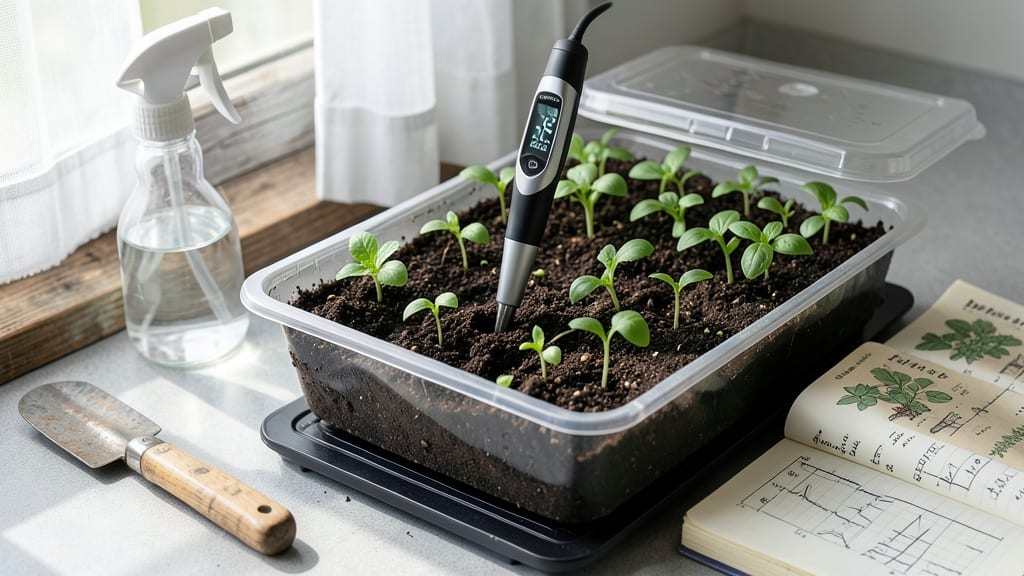
Soil temperature for seed germination determines how quickly and successfully seeds sprout, with ideal ranges from 50°F to 95°F depending on the plant. Cool-season crops like lettuce perform best at 60-70°F, while warm-season plants like tomatoes require 75-85°F for optimal growth. Always verify seed packet instructions for exact needs.
Getting the right soil temperature for seed germination isn't just about waiting for spring—it's about understanding how different plants respond to heat. 🔥 Cool-season vegetables like spinach and peas actually struggle if the soil gets too warm, often stopping germination entirely, while tropical plants like basil or okra won't even wake up below 75°F. I've learned that even a 5°F difference can mean the difference between a thriving seedling and a failed planting.
What's fascinating is how quickly seeds react to temperature changes.
For instance, tomato seeds may take 7-14 days to sprout at 75°F, but that same batch could take twice as long at 65°F. The key is monitoring your soil's warmth—especially in early spring or fall—using a simple soil thermometer or even observing how quickly your local flowers bloom as natural indicators.
💡 In This Article
- How Soil Temperature Affects Seed Germination Rates
- Adjusting Soil Warmth for Different Seed Types
How soil temperature affects seed germination rates
Seed germination begins with the activation of enzymes inside the seed, a process directly tied to soil temperature. At 50°F or below, enzyme activity slows dramatically, delaying or preventing sprouting entirely—this is why cold-sensitive seeds like cucumbers (ideal 70-90°F) often fail in early spring.
The magic happens between 60-85°F, where metabolic activity peaks, allowing cells to divide rapidly and break down stored nutrients for growth. 🔥 For example, tomato seeds may sprout in just 5-7 days at 80°F, but could take 2-3 weeks at 60°F.
Extreme temperatures work against seeds in different ways. Below 40°F, cellular membranes stiffen, blocking water absorption—the seed essentially goes dormant. Above 95°F, proteins denature and enzymes degrade, causing seeds to rot before sprouting. Even short exposures to these extremes can trigger irreversible damage.
Peas, for instance, germinate best at 60-70°F but may fail entirely if soil exceeds 80°F, a common issue in hot climates where early planting is attempted.
What's less obvious is how temperature affects seedling vigor after germination. Seeds sprouted in cooler conditions (65°F) often produce weaker, leggier seedlings that struggle to compete with weeds, while those germinated at optimal temps develop stronger root systems.
This is why professional growers use heated mats for early starts—they're not just speeding up germination, but building resilient plants from the start. 💛
Different seed types have evolved to handle specific temperature ranges based on their natural habitats. Cool-season crops like lettuce and spinach originate from regions with mild springs, so they've adapted to germinate efficiently at 55-70°F.
In contrast, tropical plants like okra or sweet potatoes come from equatorial climates where soil temperatures rarely drop below 75°F, making them impossible to grow in cold frames without artificial heat.
Even within a single species, temperature can influence germination rates dramatically. Radish seeds, for example, may sprout in just 3-5 days at 75°F but take 10-14 days at 50°F.
This variation explains why gardeners in northern climates often use row covers to warm soil by 5-10°F—the difference between a reliable crop and a failed planting. The key is matching the seed's native growing conditions to your soil's current temperature.