
How To
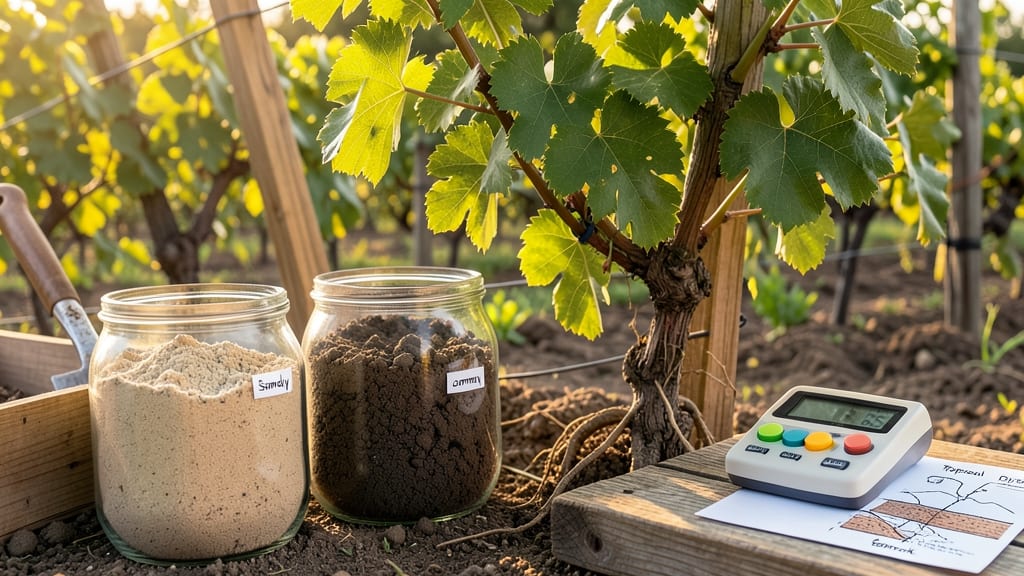
Growing grapes starts with the right soil type for grapes—well-draining sandy loam is the gold standard for happy vines and sweet fruit. 🌱 I learned this the hard way when my first attempt in heavy clay left roots drowning and leaves yellowing by midsummer.
The perfect mix keeps roots oxygenated while holding enough moisture to prevent stress, especially during fruit development.
Most garden soils need adjustment to hit that ideal balance. Sandy loam should have 60% sand, 30% silt, and 10% clay, with a pH between 6.0 and 7.0—too acidic or alkaline throws off nutrient uptake.
Organic matter like compost or aged manure (2-3 inches mixed in) improves structure without compacting. If your soil drains like a sieve or stays soggy after rain, amendments are your first step.
You’ll see the difference in stronger canes, earlier budbreak, and fewer disease issues—my vines now produce clusters so heavy they bend the trellis by August. The key is testing first: grab a handful of moist soil and squeeze—it should hold shape but crumble when prodded.
If it sticks together like clay or falls apart like sand, you’ve got work to do.
This approach works whether you’re growing table grapes, wine varieties, or muscadines. For rocky or sandy native soils, raised beds with a 50/50 mix of native soil and amended loam solve drainage while retaining nutrients.
The payoff? Vines that thrive with less fuss and fruit that tastes like sunshine. Let’s get your soil right from the start.
📚 In This Guide
- What you need
- Instructions
- Tips and common mistakes
- Wrapping up and next steps
What you need
- ● Well-draining sandy loam soil: Aim for a mix that’s 60% mineral particles (sand, silt, clay), 30% organic matter (compost, leaf mold), and 10% air/water pores. Test your soil’s pH—grapes thrive in pH 5.5–7.0.
- ● Compost or aged manure: 2–3 cubic yards per 100 sq ft to enrich fertility without compacting soil.
- ● Gravel or coarse sand: 1–2 inches mixed into the top 12 inches of soil for drainage.
- ○ Garden lime (optional but helpful): 1–2 lbs per 100 sq ft if soil pH is below 5.5.
- ● Soil test kit: To analyze pH, nitrogen (N), phosphorus (P), and potassium (K) levels.
- ● Tiller or broadfork: For aerating and mixing amendments into the soil (depth: 12–18 inches).
- ● Shovel and garden rake: For precise soil prep and leveling.
- ● Drip irrigation system or soaker hoses: Grapes need 1–2 inches of water weekly (avoid overhead sprinklers).
- ● Mulch (straw or wood chips): 2–3 inches thick to retain moisture and suppress weeds.
- ● Mycorrhizal fungi: Boosts root health—mix into planting holes.
- ● Soil moisture sensors: Monitor water levels for precision care.
- ● Trellis system: Essential for training vines (DIY or pre-made kits).
How to prepare the perfect soil for growing grapes
Grapes thrive in loose, fertile soil that drains well—here’s how to create the ideal foundation for strong vines and abundant fruit.
🌱 Step 1: Test Your Current Soil’s Drainage and Texture
Before amending, dig a hole about 12 inches deep and fill it with water. If it drains in under 4 hours, your soil is too sandy—add organic matter to hold moisture. If it takes longer than 6 hours, it’s too clay-heavy; you’ll need to loosen it with gritty amendments. Grapes hate soggy roots, so drainage is non-negotiable.
Grab a handful of damp soil and squeeze it—if it forms a tight ball that doesn’t crumble easily, you’ve got clay. If it falls apart instantly, it’s sandy. The ideal texture for grapes is a mix that holds shape slightly but breaks apart with gentle pressure. This is your target: a sandy loam that’s airy yet moisture-retentive.
🌿 Step 2: Amend Heavy Clay Soil for Better Structure
For clay-heavy soil, mix in 3-4 inches of compost and 1-2 inches of coarse sand or perlite into the top 12 inches of soil. This breaks up compaction and improves aeration. I like to work in a 50/50 blend of compost and sand—this mimics the well-draining conditions grapes love in Mediterranean vineyards.
Use a broadfork or tiller to loosen the soil to 18 inches deep, then rake the surface smooth. Avoid tilling when the soil is wet—it compacts again and defeats the purpose. If your soil is extremely dense, consider building a raised bed with a mix of 60% topsoil, 20% compost, and 20% sand—this gives you full control over texture.
☀️ Step 3: Boost Fertility with Organic Matter
Grapes need nutrient-rich soil but hate "hot" fertilizers that burn roots. Work in 3-4 inches of well-aged compost or leaf mold into the top 6-8 inches of soil. This improves moisture retention while keeping the soil loose. I also add a 1-inch layer of worm castings—they’re packed with beneficial microbes that help roots absorb nutrients efficiently.
For existing vines, spread a 2-inch layer of compost around the drip line (the area where water drips from the leaves) in early spring. Keep it 6 inches away from the trunk to prevent rot. Water deeply after amending to help organic matter integrate into the soil. You’ll know it’s working when the soil feels like a damp sponge—not sticky or powdery.
💧 Step 4: Create a Well-Draining Root Zone
Grapes’ roots need oxygen as much as water, so avoid compacting the soil after planting. If your soil is naturally heavy, mound the amended soil into a 12-inch-high ridge where you’ll plant the vine. This raises the root zone above the native clay layer, preventing waterlogging during rainy seasons.
For container-grown grapes, use a mix of 60% potting soil, 20% perlite, and 20% compost in the pot. This ensures excess water drains quickly while still holding enough moisture for roots. I always check drainage by filling the pot with water—if it pools at the bottom after 30 minutes, add more perlite or sand to improve flow.
✂️ Step 5: Maintain Soil Health Year-Round
After planting, mulch with 2-3 inches of wood chips or straw to protect the soil from erosion and suppress weeds. Keep mulch 3 inches away from the trunk to prevent rot. In late winter, top-dress the soil with 1 inch of compost to replenish nutrients lost during the growing season.
Test your soil every 2-3 years with a simple pH kit—grapes prefer a slightly acidic to neutral range of 5.5-7.0. If your soil is too alkaline, mix in sulfur or peat moss** to lower the pH gradually. Healthy soil means fewer pests, stronger vines, and sweeter fruit—so don’t skip this step.
Tips & tricks for perfect grape vine soil
These practical insights will help you create the ideal growing environment for your grapevines—no guesswork required.
Drainage Test Precision: When testing drainage in Step 1, use a clear plastic bottle with measurement markings to track exactly how long it takes for water to drain through that 12-inch hole. I've found that clay soils often take 8-10 hours to drain completely—anything over 6 hours means you need more sand or gritty amendments. For sandy soils, if water drains in under 2 hours, you'll need to add more organic matter to improve moisture retention.
Amendment Layering Strategy: In Step 2, work the compost and sand amendments into the soil in horizontal layers rather than mixing them all at once. Start with 2 inches of compost, then 1 inch of sand, repeating until you reach the 3-4 inches of compost and 1-2 inches of sand specified. This creates better soil structure and prevents compaction. For extremely dense clay, consider adding a 1-inch layer of perlite or coarse builder's sand at the bottom of your 12-inch working zone.
Organic Matter Integration Tip: After adding compost in Step 3, water the amended area thoroughly and let it sit for 24 hours before planting. This allows the organic matter to begin breaking down and integrating with the native soil. For existing vines, I've found that spreading that 2-inch layer of compost in early spring (just as buds begin to swell) gives roots the best chance to absorb nutrients during their most active growth period.
Container Drainage Check: For container-grown grapes in Step 4, don't rely solely on the 30-minute water test. After adding your 60/20/20 mix, plant a test vine in a spare container and water it daily for a week. If you notice water pooling at the bottom or the soil staying soggy, add more perlite or coarse sand to improve drainage. This real-world test gives you much more reliable results than the initial water test alone.
Pro Tips for Soil Type For Grapes
- These practical insights will help you create the ideal growing environment for your grapevines—no guesswork required.
- Drainage Test Precision: When testing drainage in Step 1, use a clear plastic bottle with measurement markings to tra...
- Amendment Layering Strategy: In Step 2, work the compost and sand amendments into the soil in horizontal layers rathe...
Frequently asked questions
about soil for grapes—because every vineyard starts with the right foundation! Here’s what growers ask most often:What’s the best soil type for growing grapes?
Sandy loam is ideal for grapes—it drains well but retains enough moisture and nutrients. Avoid heavy clay or waterlogged soils, which can stress vines. Test your soil’s pH (aim for 6.0–7.5) and adjust with lime or sulfur if needed. Soil composition makes a huge difference!
How long does it take for soil to improve for grapevines?
Soil amendments like compost or organic matter take 3–6 months to integrate fully. For major fixes (e.g., clay breakdown), plan 1–2 years of seasonal adjustments. Patience pays off—healthy soil = thriving grapes! Patience is key when prepping vineyard beds.
Can I grow grapes in rocky or poor soil?
Yes! Rocky soils (like in Champagne regions) drain exceptionally well, but amend with organic matter to boost fertility. Poor soil? Try raised beds or deep mulching. Grapes adapt, but drainage is non-negotiable—root rot is a silent killer. Work with nature, don’t fight it!
What’s the easiest way to test my soil for grapes?
Use a DIY soil test kit ($20–$50) or send a sample to a local extension office (often free!). Check for pH, organic matter, and drainage. Pro tip: Dig a hole—if water pools after 6 hours, your soil needs sand or gravel. Know your soil before planting!
Do I need to till my soil before planting grapes?
Light tilling (6–12 inches deep) helps, but over-tilling can compact soil. For organic growers, use a broadfork or cover crops to loosen soil naturally. Avoid tilling when wet—it destroys soil structure. Gentle prep keeps roots happy!
Wrapping up and next steps
Choosing the right soil type for grapes—like well-draining sandy loam—sets the foundation for thriving vines and bountiful harvests. 🌱 Whether you're a seasoned grower or just starting, understanding your soil’s texture, pH, and nutrient balance empowers you to nurture healthier plants.
With the right knowledge, you’re well on your way to crafting exceptional wine or fresh fruit!
Ready to take the next step? Test your soil today and adjust amendments as needed—your grapevines will thank you! 🍇