Tools
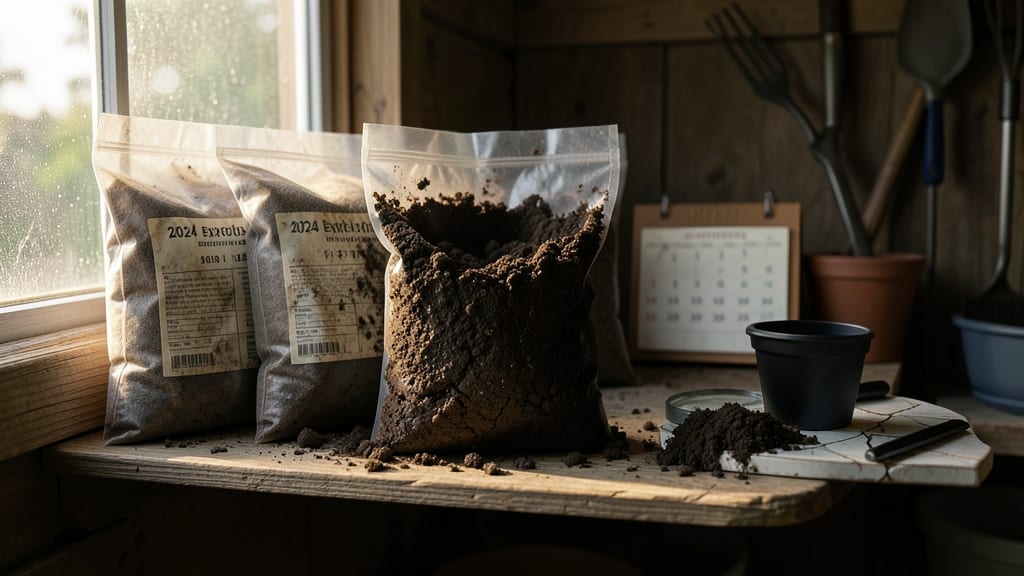
Yes, potting soil does expire over time, losing nutrients and breaking down into a dense, compacted state that stifles plant roots. Most bags last 6–12 months unopened, while opened soil degrades faster—replace it after 1–2 years or when it smells sour or repels water.
Potting soil isn't like flour or sugar—it doesn't last indefinitely.
Over time, the organic matter breaks down, nutrients dissipate, and the soil becomes compacted, making it harder for roots to breathe. 🌱 Think of it like a sponge: after months of use, it loses its ability to hold moisture properly and can even develop a sour smell from microbial activity.
I've seen potted plants struggle when kept in old soil, even with regular watering, because the root environment becomes inhospitable.
Unopened bags have a longer shelf life because they're sealed against air and moisture, but once opened, exposure to the elements accelerates the breakdown process. That's why I always check the date on my soil bags and refresh them every 1-2 years—it's the difference between thriving plants and struggling ones.
💡 In This Article
- How Potting Soil Degrades Over Time
- Signs Your Potting Soil Needs Replacement
How potting soil degrades over time
Potting soil breaks down primarily through microbial activity. The organic components—like peat moss, compost, and bark—contain carbon-based materials that decompose when exposed to moisture and air. 🌱 Microorganisms in the soil consume these materials as food, converting them into simpler compounds through a process called mineralization.
This is why fresh soil often has a rich, earthy aroma that fades over time, replaced by a stale or musty smell as decomposition progresses.
The decomposition process also alters the soil's physical structure. Initially, organic materials create air pockets that improve drainage and root penetration. But as they break down, these materials collapse into denser, more compacted forms.
For example, peat moss—which can hold up to 20 times its weight in water when fresh—loses this capacity over 6-12 months, reducing water retention by 30-50%. This compaction makes it harder for roots to expand and absorb nutrients efficiently.
Nutrient depletion is another critical factor. Fresh potting soil contains essential macronutrients like nitrogen (0.5-1.5%), phosphorus (0.1-0.5%), and potassium (0.3-1.0%), along with micronutrients.
Over time, plants absorb these nutrients during growth, and any remaining nutrients are either leached away with water or consumed by microbes. After 1-2 years, the nutrient content can drop by 50% or more, leaving plants starved even if they're watered regularly.
Moisture dynamics also shift dramatically. Fresh potting soil balances water retention and drainage, but as organic matter decomposes, the soil loses its ability to "buffer" moisture. This leads to two problems: either water runs straight through (causing root dehydration) or it pools at the bottom (leading to root rot).
The ideal moisture balance in fresh soil is like a well-wrung sponge—it holds water but doesn't drown roots. Over time, this becomes more like a damp rag that either stays soggy or dries out too quickly.
Microbial communities evolve too. Initially, beneficial microbes dominate, breaking down organic matter and cycling nutrients. But as the soil ages, harmful pathogens can proliferate in the compacted, nutrient-poor environment.
You might notice this as a sour or rotten odor, similar to how old compost smells when it's left too long without turning. This shift makes the soil less hospitable for plants and more prone to diseases like damping-off in seedlings.
Consider this real-world example: A 5-gallon bag of fresh potting mix might start with 30-40% organic matter by volume. After 18 months, that organic content could drop to 15-20%, while the inorganic components (like perlite or sand) remain unchanged.
The result? A soil that looks similar but performs like a completely different medium—one that's far less forgiving for plant roots.