
Propagation
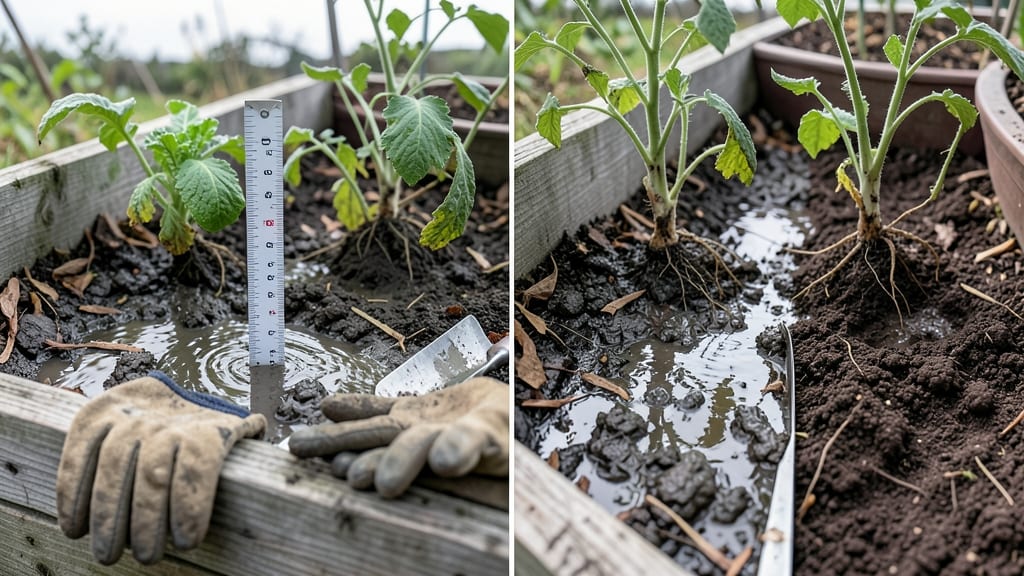
Soil that stays submerged or soil from which water drains creates opposite growing conditions: waterlogged soil starves roots of oxygen, while freely draining soil ensures proper aeration and nutrient access. These differences determine which plants thrive and how you should manage your garden's moisture levels.
The contrast between submerged or soil from which water drains defines whether roots thrive or suffocate.
When soil remains saturated, roots suffocate because water displaces oxygen in the pores, triggering anaerobic conditions that lead to root rot within days. 🌱 On the other hand, freely draining soil allows oxygen to reach roots while preventing harmful microbial buildup.
This isn't just about moisture—it's about creating the right environment for microbial activity that breaks down organic matter into nutrients. For instance, aquatic plants like water lilies naturally adapt to submerged conditions, while vegetables and ornamentals require well-drained soil to prevent stress and disease.
Understanding these dynamics helps you choose plants wisely and adjust your garden's structure. For example, adding coarse sand or perlite to heavy clay soil can transform it from a root-suffocating swamp into a thriving environment.
The key is matching your soil's behavior to the plants' needs—whether that means selecting flood-tolerant species or installing drainage solutions.
💡 In This Article
- How Water Saturation Affects Root Oxygen and Plant Survival
- Best Soil Amendments for Drainage vs Flood-Tolerant Plant Selection
How water saturation affects root oxygen and plant survival
Soil aeration begins with its pore space—the tiny air pockets between soil particles where oxygen circulates. In well-draining soil, these pores allow 20-30% air volume, creating an oxygen-rich zone for roots.
When soil stays submerged, water fills these pores, displacing oxygen and forcing roots into hypoxic conditions (oxygen levels below 5% by volume). This triggers anaerobic respiration in roots, producing toxic byproducts like ethanol and lactic acid that poison plant cells within 24-48 hours. 🌱
The damage escalates because waterlogged soil also promotes harmful microbes. Without oxygen, aerobic bacteria die off, but anaerobic bacteria and fungi thrive, releasing hydrogen sulfide and methane—gases that further stress roots.
For example, tomatoes in saturated soil show wilting within 3 days as root cells collapse from oxygen deprivation, even if the plant appears healthy above ground. The contrast is stark: a well-drained garden bed maintains 15-20% oxygen at root level, while submerged soil drops to nearly 0%.
Not all plants suffer equally—some evolved adaptations like aerenchyma, air channels in stems and roots that transport oxygen to submerged tissues. Water lilies and cattails thrive because their roots develop these porous structures, while most vegetables (like peppers or lettuce) lack this adaptation.
The key difference lies in their root zone tolerance: aquatic plants tolerate 100% water saturation, while garden plants begin stressing at 60% saturation or higher.
Even brief submersion causes long-term damage. Roots deprived of oxygen for just 6 hours show reduced growth hormones, while prolonged flooding (beyond 48 hours) leads to permanent cell death.
This explains why gardeners notice stunted growth even after drainage improves—roots may appear intact but are often 20-30% less functional due to prior oxygen starvation. The solution? Amending soil with 30-40% organic matter (like compost) creates larger pores that resist compaction.
Consider this real-world example: A 1-gallon container of clay soil holds 40% water by volume when saturated, leaving only 10% air space—insufficient for most plants. Adding 2 cups of perlite doubles the air space to 25%+, transforming it into a root-friendly environment.
The physics here are simple: water and air can't coexist in the same pore space, so drainage determines which wins.
For gardeners, the takeaway is clear: Soil structure is more critical than water quantity. A sandy loam drains freely because its large particles create 50%+ pore space, while compacted clay holds water like a sponge.
The goal? Match your soil's behavior to your plants' needs—whether that means selecting flood-tolerant species or installing French drains to redirect excess water.