
Landscaping
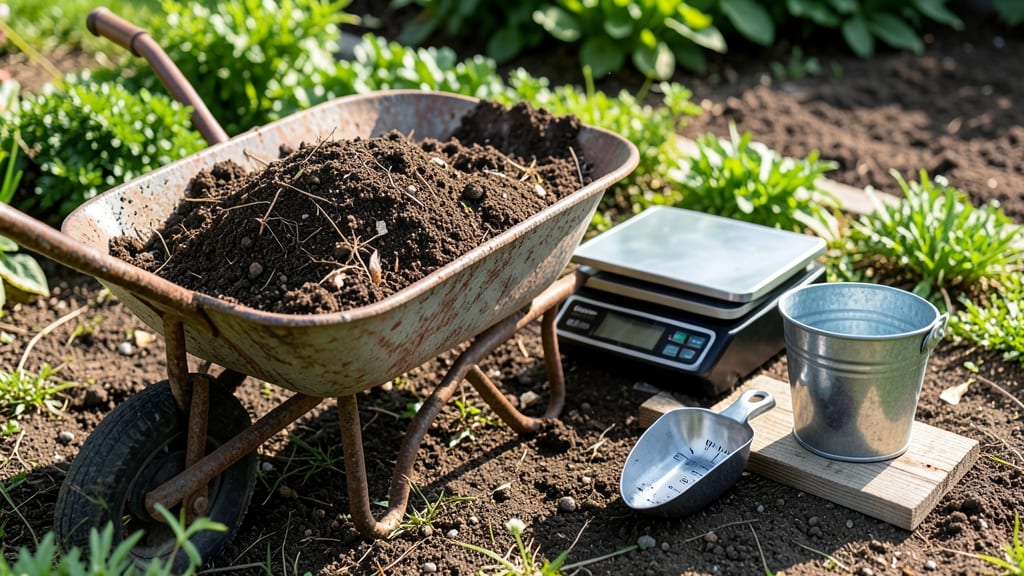
A yard of soil weighs approximately 2,000 to 2,400 pounds when dry, but moisture and compaction can increase this to 2,700+ pounds—critical for proper handling, truck capacity, and project planning in gardening and landscaping.
A yard of soil's weight shifts dramatically based on its moisture content and how tightly packed it is. 🔥 Dry, sandy soil might hover near the lower end of that range, while wet, clay-heavy soil can easily exceed 2,700 pounds.
This variation explains why contractors always overestimate truck capacity—what seems like a manageable load can quickly become unwieldy when soil gets damp. For example, a standard dump truck might handle 10 cubic yards of dry soil but struggle with just 6-8 yards if it's saturated.
Understanding these weight fluctuations helps avoid costly overages or dangerous overloading situations.
What's often overlooked is how organic matter plays into this. Soil rich in compost or decomposed plant material tends to be lighter per cubic yard because it contains more air pockets. Conversely, heavy clay soils pack tightly and absorb more water, making them significantly heavier.
When planning a project, I always recommend testing a small sample first—weighing it after drying it completely gives you a baseline to estimate your total load accurately.
💡 In This Article
- Soil Density Factors Affecting Weight per Cubic Yard
- Practical Weight Calculations for Gardening Projects
Soil density factors affecting weight per cubic yard
Soil weight varies dramatically because of its three core components: mineral content, organic matter, and pore space. Sandy soils, made up of large particles, have high porosity—meaning more air pockets—which keeps their weight closer to 2,000 pounds per cubic yard.
In contrast, clay soils pack tightly with smaller particles that hold water between them, often exceeding 2,700 pounds when saturated.
The key factor here is bulk density, which measures how much mass fits into a given volume—clay soils typically have a bulk density of 1.6-1.8 grams per cubic centimeter, while sandy soils range from 1.4-1.6 grams per cubic centimeter. 🔥
Moisture content is the wild card in these calculations. Dry soil might weigh 2,000 pounds, but add just 20% moisture by weight (which is common after rain), and that same cubic yard could jump to 2,400 pounds.
Water's density is about 1 gram per cubic centimeter, so even small increases in moisture significantly boost total weight.
For example, a clay-heavy soil from the Midwest might start at 2,200 pounds dry but swell to 2,800 pounds after absorbing water—this is why contractors in wet climates always overestimate their truck capacities.
Organic matter plays a surprising role too. Compost-amended soil contains decomposed plant material that creates additional pore space, reducing overall density. A well-composted mix might weigh 1,800-2,200 pounds per cubic yard—lighter than pure mineral soil but still fertile.
The trade-off? Organic soils compact more easily under foot traffic or machinery, which can increase their effective weight during handling. This is why landscapers often recommend mixing organic amendments with mineral soil to balance weight and fertility.
Regional soil types create even more variation. Coastal areas often have lighter, sandy soils weighing closer to 1,800-2,000 pounds, while prairie regions with heavy clay can exceed 2,700 pounds.
Even within a single yard, weight can differ by 300-500 pounds depending on how recently it was tilled or exposed to weather. For precise planning, I recommend taking soil samples from different areas of your project site—drying and weighing them gives you a realistic baseline for your specific conditions.
Understanding these factors helps explain why soil weight estimates often come with wide ranges. What seems like a straightforward 2,000-pound yard can become a 2,700-pound challenge after a rainstorm, forcing you to adjust truck loads or project timelines.
The science behind this involves how particles pack together and how water fills those spaces—both critical for anyone moving, mixing, or installing soil in landscaping projects. ✨
For practical purposes, think of soil weight like a variable ingredient in a recipe: the more moisture and clay you have, the heavier your "mixture" becomes.
This is why professional landscapers carry moisture meters and soil density tests in their toolkits—it's the difference between a smooth project and one that gets bogged down by unexpected weight. 💫