
Propagation
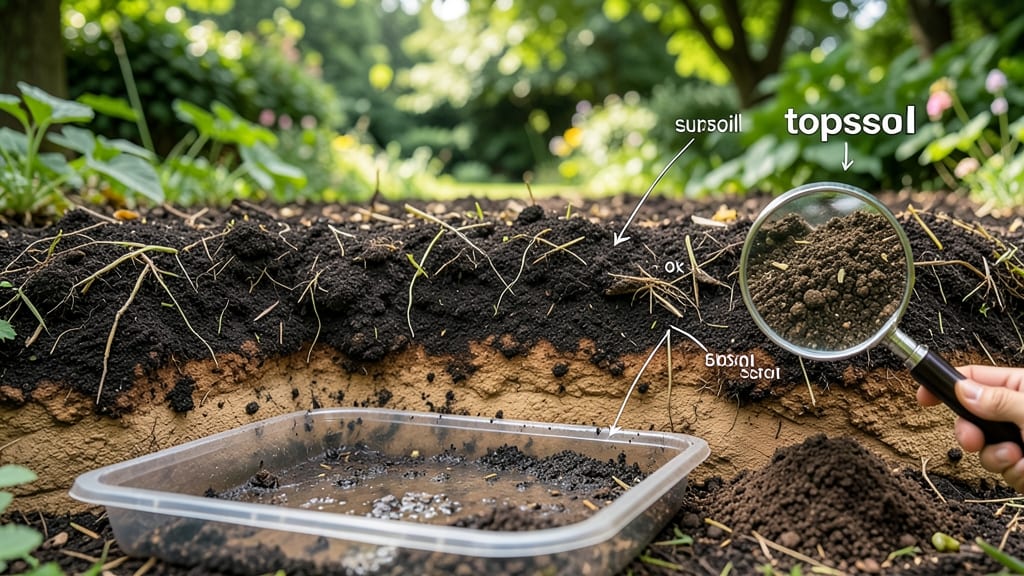
The top layer of soil is called the O horizon, composed primarily of organic matter like decomposed leaves, plants, and animal residue, essential for nutrient-rich gardening and plant growth.
The O horizon is where all the action happens for your garden's health.
This nutrient-rich layer is packed with decomposed organic materials like humus, leaf litter, and roots, creating the perfect environment for microbial life that breaks down matter into plant food. 🌱 Without it, your soil would lack the fertility and moisture retention needed for strong root development.
Think of it as the "heart" of your garden—where nutrients cycle and plants thrive.
This layer isn't just about looks; it's a living ecosystem that improves with care. Adding mulch or compost regularly helps thicken it over time, while avoiding heavy machinery prevents compaction that smothers its vital functions.
Even small gardens benefit when you prioritize this topsoil layer—it's where most plant roots feed and where beneficial fungi and bacteria live.
💡 In This Article
- Composition and Role of the O Horizon in Soil Health
- How to Improve Your Garden’s O Horizon Naturally
Composition and role of the O horizon in soil health
The O horizon is primarily made up of three distinct sublayers: the O1 layer (fresh organic matter like leaves and twigs), the O2 layer (partially decomposed material), and the O3 layer (well-decomposed humus).
This layer typically ranges from 2 to 10 inches deep, though it can be thicker in forests or compost-rich gardens.
The humus component—often called "black gold" by gardeners—contains 50-70% organic matter and acts like a sponge, holding 3-5 times its weight in water while releasing nutrients slowly to plant roots. 🌿
This layer is a powerhouse for microbial activity, hosting billions of bacteria, fungi, and earthworms per square foot. These organisms break down organic matter into simpler compounds like nitrates (for leaf growth) and phosphates (for root development).
Without this biological activity, essential nutrients would remain locked in complex molecules, unavailable to plants. For example, a single teaspoon of healthy O horizon soil can contain up to 1 billion bacteria, each working to convert organic waste into plant-available nutrients.
The O horizon's structure also improves soil aeration through its porous nature, allowing roots to breathe while preventing waterlogging. In contrast, compacted soil (often found in urban gardens) can reduce this layer's effectiveness by up to 60%, limiting root penetration and microbial movement.
The ideal O horizon has a crumbly texture, similar to moist coffee grounds, that crumbles easily between fingers—a sign of healthy organic breakdown. 💫
One often-overlooked function is its role in carbon sequestration. The O horizon stores 2-3 times more carbon than lower soil layers, helping combat climate change while enriching your garden.
This carbon storage occurs as microorganisms convert organic matter into stable compounds like humic acids, which bind nutrients and improve soil structure. Without this layer, gardens would rely on synthetic fertilizers to replace lost nutrients, creating a less sustainable growing environment.
For plant roots, the O horizon is like an all-you-can-eat buffet. The dense network of decomposed materials provides a constant supply of nutrients, while the loose texture allows roots to explore easily. Compare this to mineral-heavy layers below (like the A horizon), which lack the same nutrient diversity.
In fact, studies show that plants grown in soils with a well-developed O horizon can grow 30-50% faster due to improved nutrient availability and water retention. 🌱
Seasonal variations also affect this layer's composition. During winter, decomposition slows as microbial activity drops, while spring and summer see a surge in organic breakdown.
This natural cycle explains why fresh compost added in early spring often shows visible improvements within 4-6 weeks, as microbial populations rebound and begin processing new materials. Understanding this rhythm helps gardeners time their soil amendments effectively.