
Plants
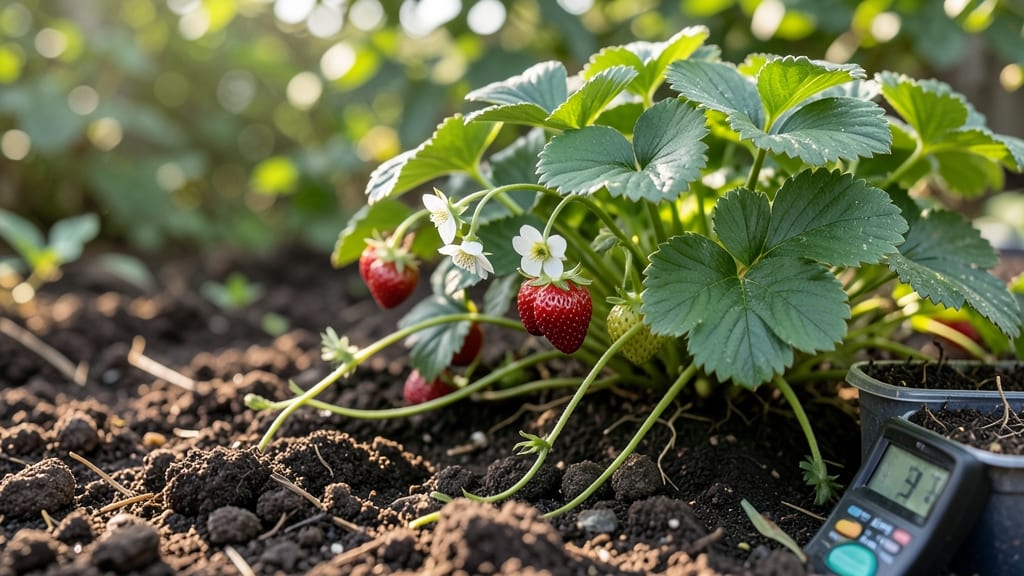
Strawberries like well-draining, slightly acidic loam soil rich in organic matter — the kind that holds moisture without drowning roots or leaching nutrients.
Picture this: you’ve spent weeks nurturing your 🍓 plants, only to watch them wilt or produce tiny, bland berries. The culprit? Soil that’s either too dense, too alkaline, or lacking the right texture.
Strawberries are fussy about their growing medium, and getting it right is the difference between a handful of sweet berries and a sad, struggling patch.
In USDA Zone 6a, where spring planting kicks off in March, the ideal soil for strawberries is loose, crumbly, and teeming with life. Think of it as a fluffy blanket for their roots—one that lets air and water flow freely while keeping nutrients within reach.
Without this foundation, even the hardiest varieties struggle to thrive.
Below, I’ll break down the exact soil mix strawberries crave, how to test your garden’s current conditions, and the simple amendments that can turn compacted clay or sandy soil into a berry-growing powerhouse. No guesswork, just results.
The ideal soil composition for strawberry plants: loam, pH, and texture breakdown
Strawberries are fussy about their growing conditions, and soil composition is the foundation of their success. If your soil is too heavy, compacted, or has the wrong pH balance, your plants will struggle with root rot, nutrient deficiencies, or poor fruit production.
The key to juicy, abundant strawberries starts with understanding what kind of soil strawberries like best—a well-draining, nutrient-rich loam soil with a slightly acidic pH.
Most gardeners overlook soil texture, but strawberries hate soggy roots. Their shallow root systems need air and water to move freely, which means avoiding clay-heavy or waterlogged soils. Instead, aim for a loamy texture—a balanced mix of sand, silt, and organic matter—that holds moisture without suffocating roots.
This ideal mix also prevents diseases like gray mold and root rot, which thrive in wet, compacted conditions.
| Soil Requirement | Specification | Notes |
|---|---|---|
| Soil Type | Well-draining loam | Mix of sand, silt, and organic matter (40% sand, 40% silt, 20% organic) |
| pH Level | 5.0–6.5 (slightly acidic) | Test with a soil pH kit; adjust with lime (to raise) or sulfur (to lower) |
| Organic Matter | 3–5% by volume | Add compost or well-rotted manure before planting |
| Drainage | Fast-draining (no standing water) | Avoid clay soil; amend with perlite or coarse sand |
| Texture | Crumbly, loose, and aerated | Avoid compacted or hardpan soil; till deeply before planting |
The pH level of your soil is just as critical as texture. Strawberries prefer a slightly acidic environment between 5.0 and 6.5. If your soil is too alkaline (above 7.0), nutrients like iron and manganese become unavailable, leading to yellow leaves and stunted growth.
If it’s too acidic (below 5.0), root damage and poor nutrient uptake occur. Testing your soil with a home pH kit (available at garden centers) is the first step to fixing imbalances.
To test your soil’s pH, collect samples from 6–8 inches deep in multiple spots around your garden. Mix them in a clean bucket, then follow the kit’s instructions. If your pH is off, you can adjust it with garden lime (to raise pH) or elemental sulfur (to lower pH).
For example, if your soil tests at 7.2, adding 1–2 pounds of lime per 100 square feet and retesting in 2–3 months will help bring it into the ideal range.
Another common mistake is ignoring organic matter content. Strawberries thrive when their soil has 3–5% organic matter, which improves moisture retention and provides essential nutrients. If your soil feels gritty or lacks richness, mix in 2–3 inches of compost or well-aged manure before planting.
This not only feeds the plants but also encourages beneficial soil microbes that break down nutrients into forms strawberries can absorb.
If your garden soil is naturally clay-heavy, don’t despair—amending it is easier than you think. Work in coarse sand or perlite to improve drainage, and add peat moss or coco coir to lighten the texture.
For example, a 50/50 mix of garden soil and compost creates an ideal loamy texture for strawberries. Raised beds are also a great solution, as they allow you to control the soil mix entirely and prevent compaction from foot traffic.
One of the biggest red flags is poor drainage, which leads to root rot and fungal diseases. To test drainage, dig a hole 12 inches deep and fill it with water. If the water drains within 1–2 hours, your soil is suitable.
If it takes longer, amend with sand or vermiculite to improve airflow. Mulching with straw or wood chips also helps by reducing evaporation and keeping roots cool, but avoid piling mulch directly against the plant stems to prevent rot.
Finally, remember that strawberries are perennial plants, meaning they’ll produce for multiple years. Investing time in soil preparation now pays off with larger yields and healthier plants in future seasons.
Whether you’re planting in containers, raised beds, or in-ground, prioritize well-draining, loamy soil with the right pH. Your strawberries—and your taste buds—will thank you!
How to improve your garden soil for strawberries: amendments and organic boosters
If you’ve ever planted strawberries only to watch your plants struggle with weak growth or poor fruit production, your soil is likely the culprit. Strawberries demand nutrient-rich, well-draining soil with just the right balance of organic matter and texture.
The good news? You don’t need expensive equipment or fancy products—just a few organic amendments and a little elbow grease to transform your garden bed into a strawberry paradise.
I’ve found that compost, peat moss, and perlite are my go-to soil boosters for strawberries, but the key is knowing how to mix them.
Whether you’re prepping a new bed or reviving an old one, these organic soil amendments will give your strawberries the perfect foundation for strong roots and sweet, juicy berries. Let’s dive into the step-by-step process to get your soil strawberry-ready!
- 1 Well-draining loam with 30-50% organic matter is ideal—strawberries hate soggy roots but need moisture retention.
- 2 pH between 5.5–6.5—test your soil with a kit or send it to a lab. Adjust with sulfur (to lower pH) or lime (to raise pH).
- 3 Avoid heavy clay or sandy soil—amend clay with peat moss or compost to loosen it; amend sand with compost or coconut coir to retain moisture.
- 4 Add 2–3 inches of compost before planting and top-dress annually with aged compost or worm castings for continuous nutrients.
- 5 Mulch with straw or wood chips to suppress weeds, retain moisture, and regulate soil temperature—critical for strawberry health.
Start by testing your soil’s current condition. If it’s clay-heavy, mix in 3 parts compost to 1 part peat moss to improve drainage and aeration. For sandy soil, blend equal parts compost and coconut coir to hold moisture without suffocating roots.
I’ve had the best success with a 50/50 mix of garden soil and compost, topped with a 1-inch layer of perlite or vermiculite for extra airflow.
For a quick fix, use composted manure (like cow or chicken manure) sparingly—it’s nutrient-dense but can burn plants if overused. Spread a 1-inch layer over the bed, then till it into the top 6 inches of soil.
If you’re planting in raised beds, fill them with a custom mix: 60% garden soil, 20% compost, 10% peat moss, and 10% perlite. This combo ensures optimal drainage and nutrient availability for strawberries.
Seasonal timing matters too. Spring is the best time to amend soil before planting, but you can also refresh beds in early fall for next year’s harvest. Avoid heavy amendments in summer when strawberries are fruiting—stick to light top-dressing with compost to prevent over-fertilization.
And always water deeply after amending to help nutrients settle into the soil.
Pro tip: If your strawberries are already planted and struggling, don’t panic. Side-dress with compost around the base of plants in early spring and mulch heavily to protect roots. Over time, your soil will improve, and your strawberries will reward you with larger, sweeter berries—worth the effort!