
How To
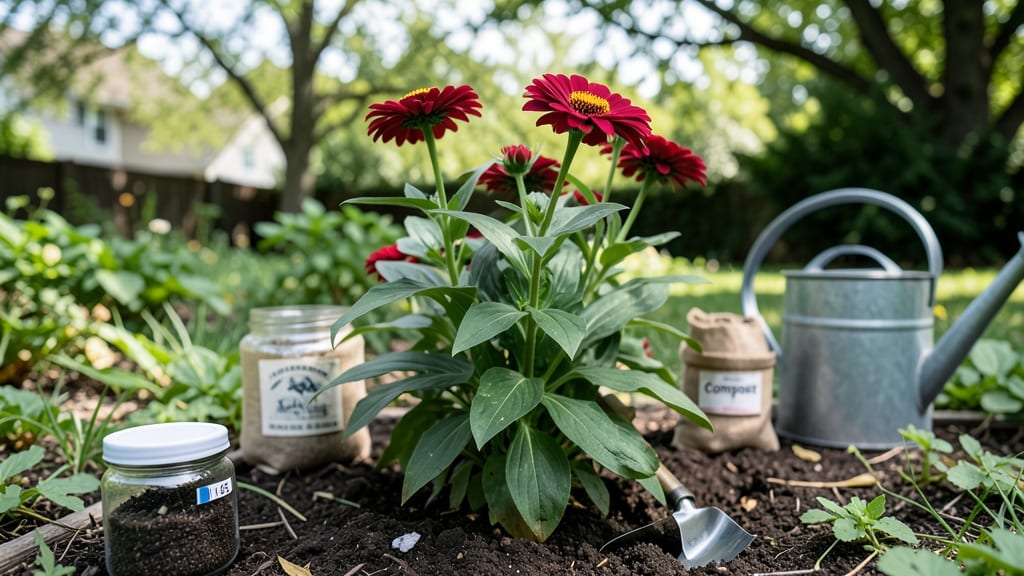
Growing zinnias with the right soil requirements is the key to bold, long-lasting blooms that keep your garden buzzing with color from June to October.
Picture this: you’ve just planted your 🌼 zinnias in well-loved garden soil, only to watch them flop over or produce sparse flowers by midsummer. That’s because zinnias aren’t picky, but they do demand a specific soil mix—one that drains well, stays loose, and feeds their roots without drowning them.
Skip the right prep, and you’ll spend the season chasing weak stems and faded petals instead of enjoying a nonstop floral show.
Here’s the good news: with the right soil mix—think sandy loam with a 6.0-7.0 pH and a boost of compost—your zinnias will reward you with taller stems, brighter blooms, and fewer pests.
We’ll break down exactly what “right” looks like, how to fix heavy clay or rocky soil, and why a little organic matter goes a long way toward keeping your plants thriving all season.
Whether you’re prepping a garden bed in USDA Zone 6 or filling a container, you’ll learn how to create the perfect foundation so your zinnias don’t just survive—they shine.
Ideal zinnias soil composition: pH, texture, and nutrient balance
Zinnias are sun-loving annuals that reward gardeners with bold, long-lasting blooms—but only when their soil requirements are met. The right soil composition ensures strong stems, vibrant flowers, and resistance to common diseases like powdery mildew.
Let’s break down the essential soil conditions for zinnias to thrive from seedling to full bloom.
First, zinnias demand a slightly acidic to neutral pH range of 6.0 to 7.0. Testing your soil’s pH is simple with a home testing kit or by sending a sample to your local extension office.
If your soil is too alkaline (above 7.0), zinnias may struggle to absorb key nutrients, leading to pale leaves and stunted growth. Adjusting pH with elemental sulfur (for alkaline soil) or lime (for acidic soil) can make all the difference.
| Soil Requirement | Specification | Adjustment Tips |
|---|---|---|
| pH Level | 6.0 – 7.0 | Test with kit; amend with sulfur (alkaline) or lime (acidic) |
| Soil Texture | Sandy loam | Add perlite or coarse sand to clay; mix in compost for sandy soil |
| Organic Matter | 30–40% | Work in 2–3 inches of compost before planting |
| Drainage | Well-draining | Raise beds or add gravel to heavy soil; avoid waterlogged spots |
| Key Nutrients | Phosphorus (P), Potassium (K) | Use balanced 5-10-5 fertilizer; avoid high-nitrogen mixes |
The texture of your soil is just as critical as pH. Zinnias prefer a sandy loam that drains quickly but retains enough moisture to prevent wilting. Heavy clay soil can suffocate roots, while pure sand offers no nutrients.
To achieve the perfect balance, mix in 2–3 inches of compost and, if needed, add perlite or coarse sand to break up compacted clay or improve drainage in sandy soil.
Organic matter is the secret weapon for zinnias, making up 30–40% of the ideal soil mix. Compost or well-rotted manure provides essential nutrients while improving soil structure. Think of it as a nutrient reservoir that feeds your zinnias slowly over time.
For container-grown zinnias, blend one-third compost into your potting mix to mimic this rich environment.
Zinnias are heavy feeders, especially when producing abundant blooms. While they don’t need frequent fertilization, they thrive with a balanced 5-10-5 NPK ratio applied every 4–6 weeks during the growing season.
Focus on phosphorus (P) to strengthen roots and potassium (K) to boost flower production. Avoid over-fertilizing with nitrogen (N), which promotes lush foliage at the expense of blooms.
One of the biggest mistakes gardeners make is ignoring drainage issues. Zinnias hate soggy roots, which can lead to root rot and fungal diseases. If your garden holds water after rain, consider planting zinnias in raised beds or amending the soil with gravel or vermiculite.
A simple test: Grab a handful of moist soil and squeeze—if it holds a tight ball, it’s too dense.
For container-grown zinnias, drainage becomes even more critical. Use a lightweight potting mix with added perlite or coconut coir to prevent compaction. Ensure pots have drainage holes and elevate them slightly to avoid water pooling.
Dwarf zinnia varieties like ‘Thumbelina’ are perfect for containers, but even taller varieties will perform well if their roots aren’t sitting in water.
Finally, don’t overlook the role of mulch. A 2–3 inch layer of organic mulch (like straw or shredded leaves) helps retain moisture, regulate soil temperature, and suppress weeds.
Just keep mulch 2 inches away from plant stems to prevent rot. This simple step can extend your zinnias’ blooming season by weeks, especially in hot, dry climates.
By focusing on these soil fundamentals—pH, texture, organic matter, and nutrients—you’ll set your zinnias up for a show-stopping summer display. Happy planting, and may your garden be overflowing with color! 🌼
How to amend your soil for zinnias: DIY mixes and common mistakes
If your zinnias are struggling with weak stems or fewer blooms, your soil might be the culprit. Zinnias need a well-draining, fertile mix to thrive. The good news?
You can easily amend your garden soil with simple, cost-effective solutions. Let’s break down how to create the perfect growing environment for these vibrant flowers.
Start by testing your soil’s texture and pH. Zinnias prefer a sandy loam with a pH between 6.0 and 7.0. Heavy clay soil can suffocate roots, while sandy soil drains too quickly. Both extremes need adjustments to hold moisture and nutrients without becoming waterlogged or barren.
Store-Bought Soil Mix
- Pros: Ready to use, consistent quality, balanced nutrients
- Cons: Can be expensive, may lack local organic matter
Homemade Soil Mix
- Pros: Cost-effective, tailored to your soil, promotes sustainability
- Cons: Requires effort, may need adjustments over time
Heavy Clay Soil
- Amend with: 50% compost, 30% perlite, 20% coarse sand
- Tip: Work amendments into the top 12 inches of soil
Sandy Soil
- Amend with: 40% compost, 30% peat moss, 30% coconut coir
- Tip: Add organic matter to retain moisture and nutrients
For heavy clay soil, mix in 50% compost, 30% perlite, and 20% coarse sand. This improves drainage while retaining essential nutrients. For sandy soil, blend 40% compost, 30% peat moss, and 30% coconut coir to boost moisture retention and fertility.
Avoid over-fertilizing, as this leads to leggy stems and fewer blooms. Zinnias need balanced nutrients, particularly phosphorus for roots and potassium for flowers. A light application of 5-10-5 fertilizer every 4-6 weeks is ideal during the growing season.
When comparing store-bought mixes to homemade blends, consider your budget and time. Store-bought options are convenient but may lack local organic matter. Homemade mixes let you customize the texture and fertility, but they require more effort. Either way, your zinnias will reward you with bold, long-lasting blooms.
Remember to mulch around your zinnias to conserve moisture and regulate soil temperature. A 2-3 inch layer of organic mulch, like straw or shredded leaves, keeps roots cool and prevents weeds from competing for nutrients.