
How To
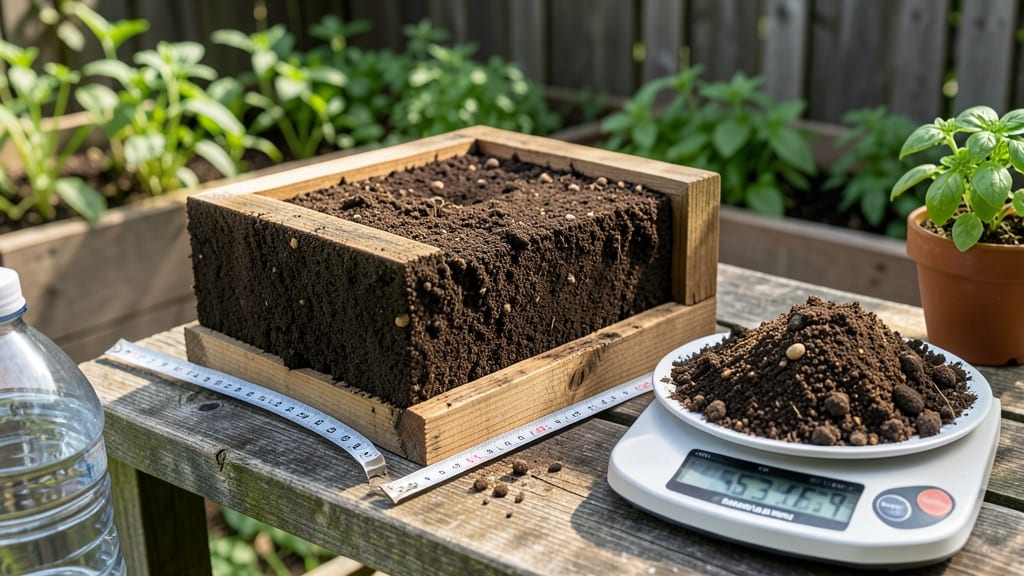
Determining the weight of one cubic foot of soil reveals a range of 40 to 60 pounds, influenced heavily by its makeup—sandy soils skew lighter (around 70–90 lbs per cubic yard), while clay-heavy or organic-rich soils can exceed 100+ pounds per cubic yard due to water absorption and particle density. The balanced loam mix, prized by gardeners, generally lands between 80–90 lbs per cubic yard.
The weight of soil per cubic foot isn't just about space—it's a direct reflection of what's inside. 🌱 Sandy soils pack less mass because their large particles leave air gaps, while clay and organic soils hold more moisture and compact tightly, increasing their heft.
This variation matters whether you're calculating how much soil to buy for raised beds or estimating the load for wheelbarrow transport. For example, a single cubic yard of clay soil could weigh nearly twice as much as the same volume of sand!
Understanding these differences helps you avoid overloading containers or underestimating project needs. When mixing amendments like compost, remember they can add 10–20 pounds per cubic foot—so always account for the extra weight in your calculations.
The key is checking soil composition first: dig a small sample, squeeze it, and observe how it behaves. Clay feels sticky, sand gritty, and loam holds together like a damp sponge.
💡 In This Article
- How Soil Composition Affects Weight per Cubic Foot
- Practical Ways to Estimate Soil Weight for Gardening Projects
How soil composition affects weight per cubic foot
The weight of soil per cubic foot is fundamentally determined by its particle density and moisture content. Sandy soil, with its large, loosely packed grains, typically weighs 70–90 pounds per cubic yard—that's about 7–9 pounds per cubic foot—because air fills the spaces between particles.
In contrast, clay soil's tiny, tightly packed particles create a dense matrix that can reach 100+ pounds per cubic yard (or 10+ pounds per cubic foot50% of its weight in water.
Organic matter plays a dramatic role too. Compost-amended soil can add 10–20 pounds per cubic foot compared to mineral soil alone, since decomposed plant material has a bulk density of just 0.2–0.4 grams per cubic centimeter—far lighter than sand (1.6 g/cm³) or clay (2.6 g/cm³).
This is why gardeners often mix organic amendments: they lighten the overall weight while improving fertility. The porosity factor matters too—sandy soil has 40–50% air space while clay has just 30–40%, making clay heavier even when dry.
Moisture creates the biggest swing in weight. Dry clay soil might weigh 80 pounds per cubic yard, but when fully saturated, it can balloon to 120+ pounds—a 50% increase in just a few hours. This is why clay soils feel heavier after rain.
For gardeners, this means calculating soil weight for projects like raised beds requires accounting for seasonal moisture variations. A 10-foot-long raised bed filled with loam typically contains 2–3 cubic yards of soil, weighing 160–270 pounds dry—but could exceed 300 pounds when wet.
Compaction further alters weight. Foot traffic or machinery can reduce air pockets in soil by 20–30%, increasing its density and weight. For example, a cubic foot of tilled loam might weigh 50 pounds, but the same volume after compaction could reach 60–70 pounds.
This is why professional landscapers use soil density tests—measuring weight per cubic foot before and after compaction—to ensure proper drainage and plant support.
Here's a quick comparison of common soil types:
- Sand: 70–90 lbs/cubic yard (7–9 lbs/cubic foot) – Low moisture retention, high air space
- Silt: 80–100 lbs/cubic yard (8–10 lbs/cubic foot) – Moderate compaction, moderate moisture
- Clay: 100–130 lbs/cubic yard (10–13 lbs/cubic foot) – High moisture capacity, tight particle packing
- Loam (ideal mix): 80–90 lbs/cubic yard (8–9 lbs/cubic foot) – Balanced composition
- Organic-rich: 40–60 lbs/cubic yard (4–6 lbs/cubic foot) – Lightweight but nutrient-dense
The takeaway? Always test your soil's moisture and composition before estimating weight—especially for heavy lifting tasks like wheelbarrow transport or container gardening. A simple dig-and-squeeze test can reveal whether you're dealing with lightweight sand or dense clay, helping you plan accordingly. 🌱