
How To
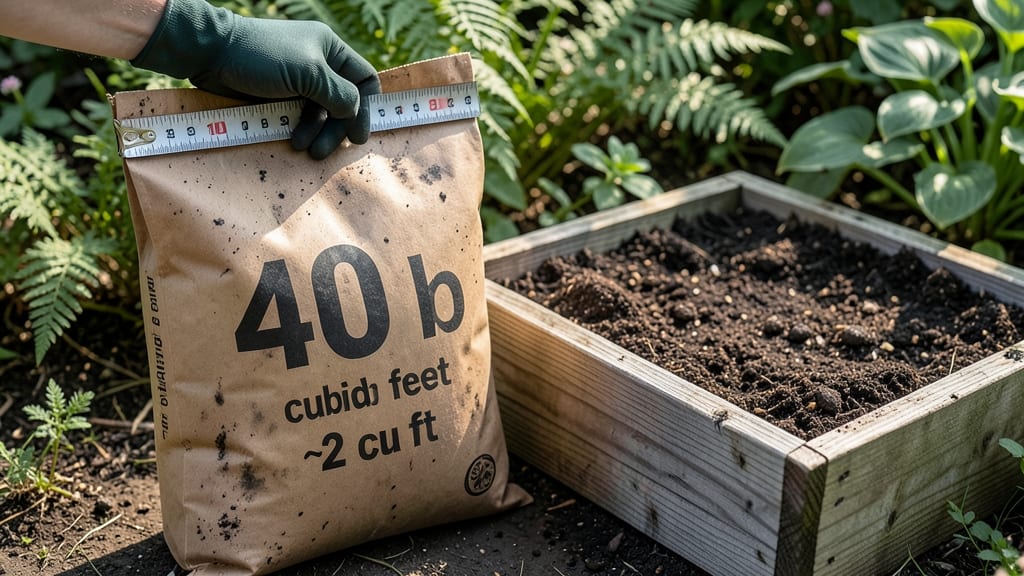
A 40 lb bag of soil contains 0.75 to 1.25 cubic feet, depending on the soil type—light potting mix yields more volume than dense garden soil or clay-heavy blends. Always check the manufacturer’s density rating for precision.
A 40 lb bag of soil's cubic feet varies dramatically based on its composition. Lightweight potting mixes expand to nearly 1.25 cubic feet due to added perlite and peat, while dense garden soil barely reaches 0.75 cubic feet because of heavier mineral content. 🌱 This difference matters when planning projects—one bag of potting mix covers more square footage than the same weight of clay-heavy soil.
For accuracy, always verify the manufacturer's density specifications before purchasing, especially for large-scale gardening needs.
Understanding these variations helps avoid over- or under-purchasing. For example, a 4-foot by 4-foot raised bed filled to 12 inches deep requires 1.33 cubic feet—meaning you'd need at least two 40 lb bags of lightweight potting mix, but potentially four bags of dense garden soil.
Always account for soil settling over time, which can reduce usable volume by 10-15% after watering.
💡 In This Article
- How Soil Density Affects Cubic Feet in a 40 lb Bag
- Calculating Cubic Feet for Gardening Projects
How soil density affects cubic feet in a 40 lb bag
Soil density is all about how tightly packed the particles are—and this directly impacts how much space your 40 lb bag actually occupies. Potting mixes typically contain 30-50% organic matter like peat moss or coconut coir, which creates air pockets and makes them 30-50% lighter per cubic foot than mineral-heavy soils.
For example, a bag of Miracle-Gro potting mix might weigh only 10-12 lbs per cubic foot, while garden soil averages 75-85 lbs per cubic foot. 🌱 This explains why potting soil bags feel "fluffy" while garden soil feels dense and compact.
The science lies in particle size distribution and porosity. Clay soils have tiny particles that pack tightly (high density), while sandy soils have larger particles with more air space (lower density).
Organic components like compost add even more variability—wet compost can weigh 40-50 lbs per cubic foot, but when dry, it may drop to 20-30 lbs per cubic foot.
This is why a 40 lb bag of compost might expand to nearly 1.5 cubic feet when fresh, while the same weight in clay soil would barely reach 0.5 cubic feet.
Moisture content plays a critical role too. Wet soil weighs significantly more due to water absorption—up to 20% more by weight. A bag labeled "40 lbs" might actually contain 35-38 lbs of dry soil plus 5 lbs of water when freshly bagged.
This explains why soil volume can shrink 10-15% after initial watering as particles settle. For precision gardening, always check the "dry weight" specification on bags, as moisture content can vary by 15-25% between brands.
Here's how common soil types compare in a 40 lb bag:
- Potting Mix: 1.0-1.25 cubic feet (lightweight, high organic content)
- Garden Soil: 0.75-0.9 cubic feet (balanced mineral/organic mix)
- Compost: 1.25-1.5 cubic feet (varies wildly with moisture)
- Clay Soil: 0.5-0.75 cubic feet (heavy, compact particles)
- Sandy Soil: 0.9-1.1 cubic feet (larger particles, more air space)
For gardeners, this means a 4-foot by 8-foot raised bed filled to 12 inches deep needs 3.2 cubic feet—so you'd need 4 bags of potting mix but 5-6 bags of clay soil for the same project.
Always account for 15% settling after watering to avoid running short. 💡 Pro tip: Mixing soil types (like adding perlite to clay) can optimize both weight and volume for your specific needs.