
Container Gardens
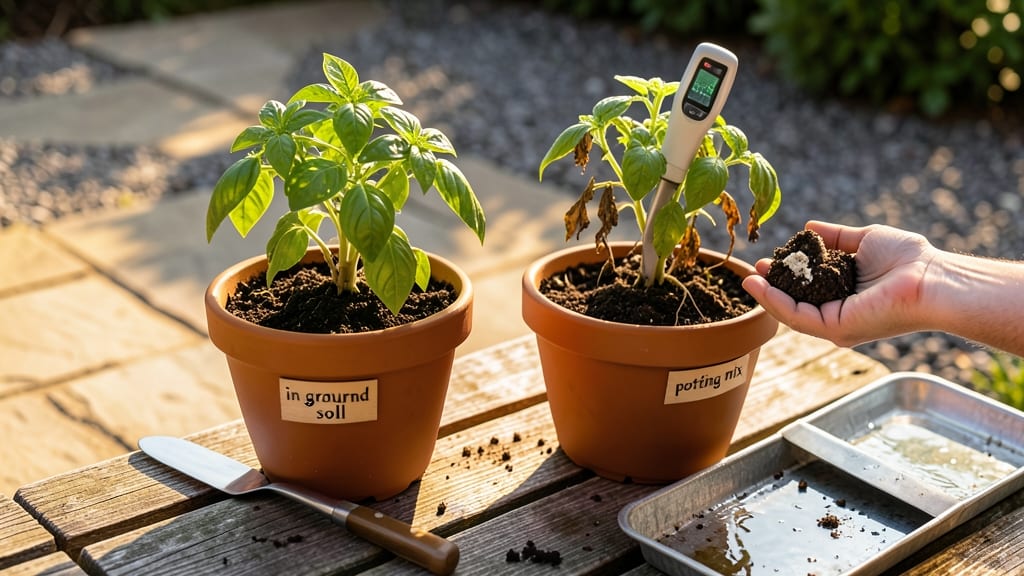
You shouldn't use in-ground soil for pots because it compacts easily, drains poorly, and suffocates roots. Instead, opt for lightweight potting mixes with perlite, vermiculite, or coconut coir to improve aeration and moisture control for container gardening success.
In-ground soil is heavy and clay-based, which means it doesn't allow air or water to move freely through the pot.
This creates a suffocating environment for roots, leading to rot and poor growth. 🌱 For container plants, you need soil that stays loose and well-draining—think of it as giving your plants' roots room to breathe.
Many gardeners make their own mixes by combining equal parts potting soil, perlite, and compost, which creates the perfect balance for healthy root development.
Another key issue with garden soil is its nutrient imbalance for containers. In-ground soil often contains too many minerals or lacks the right organic matter for potted plants. Lightweight mixes with added perlite or coconut coir help prevent compaction while providing the right structure for water retention without drowning roots.
💡 In This Article
- Why In-Ground Soil Fails in Pots
- Best Potting Soil Mixes for Container Plants
Why in-ground soil fails in pots
In-ground soil is designed for large garden beds where roots can spread freely, but when packed into pots, it creates a suffocating environment.
The problem starts with compaction: clay-heavy garden soil weighs about 80-100 lbs per cubic foot, while ideal potting soil weighs only 30-40 lbs per cubic foot. This dense weight crushes air pockets between soil particles, starving roots of the oxygen they need to grow.
Without proper aeration, roots suffocate, leading to stunted plants or even death.
Poor drainage is another critical issue. Garden soil often contains 10-20% clay particles, which absorb water like a sponge but release it slowly—too slowly for container plants. When water sits in the pot for more than 24 hours, roots begin to rot due to lack of oxygen.
This is why pots filled with garden soil often develop a foul, sour smell from anaerobic bacteria thriving in waterlogged conditions. 🌱 Even plants labeled as "drought-tolerant" struggle in compacted soil because their roots can't access moisture efficiently.
The nutrient imbalance in garden soil makes it even worse for containers. In-ground soil contains high levels of minerals like iron and aluminum, which can become toxic in concentrated doses.
Meanwhile, essential nutrients like nitrogen and phosphorus—crucial for leafy greens and flowering plants—are often bound tightly to clay particles, making them unavailable to roots. Potted plants, which have limited soil volume, can quickly exhaust these nutrients, leading to yellowing leaves or poor flowering.
Think of it like this: garden soil is like a heavy, waterlogged blanket suffocating your plants, while potting mix is more like a breathable, lightweight fabric that allows roots to stretch and grow.
The key difference lies in the soil's porosity—the tiny air and water channels that allow roots to thrive. In-ground soil has 5-10% porosity, while a well-made potting mix can reach 30-50% porosity, giving roots the space they need to breathe and access nutrients.
For example, if you plant basil in garden soil, its roots will struggle to expand, and the plant may wilt within weeks despite regular watering. In contrast, the same basil in a 50/30/20 mix of potting soil, perlite, and compost will thrive, producing lush leaves and fragrant stems.
The difference isn't just about watering—it's about creating the right environment for roots to function.
One common misconception is that adding sand to garden soil will improve drainage. While sand does increase porosity, it can also create larger gaps that prevent water from staying near roots long enough for plants to absorb it.
This is why perlite or vermiculite are better choices—they add the right amount of air space without washing away nutrients. 💫