
Blooming
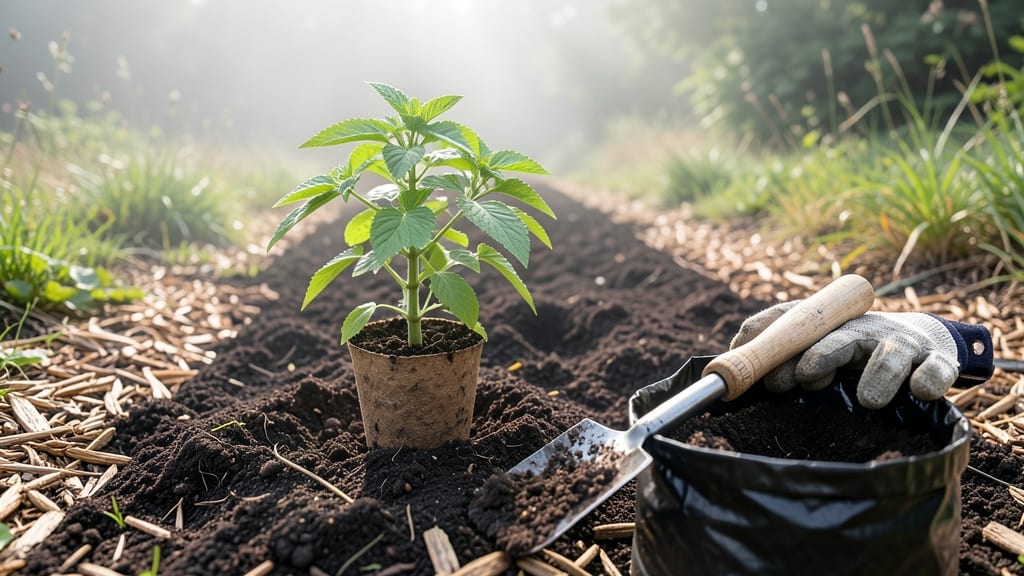
You can put potting soil in the ground, but only in small amounts or mixed with native soil—it lacks essential nutrients and proper drainage for long-term plant health. Use it temporarily for seedlings or amending poor soil patches.
Potting soil is designed for containers, where it stays contained and can be replenished easily.
When you add it directly to garden beds, it creates a dense layer that blocks water and air from reaching plant roots. 🌱 This disrupts the natural soil ecosystem, which relies on organic matter and microbial activity that potting mixes simply don't provide.
I've seen gardens suffer when people use potting soil as a quick fix—plants may sprout fine at first, but they often struggle later due to poor nutrient availability and compaction.
That said, there are smart ways to use potting soil outdoors. Mixing it with your existing soil in small quantities (about one part potting soil to four parts native soil) can improve drainage in heavy clay patches.
It's also perfect for creating mini raised beds or transplanting young seedlings—just remember to transition them to regular garden soil as they grow. The key is treating it as a supplement, not a replacement.
💡 In This Article
- Why Potting Soil Fails in Garden Beds
- Safe Ways to Use Potting Soil Outside
Why potting soil fails in garden beds
Potting soil is engineered for containers, where it stays confined and can be replaced or amended easily. The problem starts with its composition—it typically contains 50-70% peat or coconut coir, which holds moisture but breaks down quickly, and 20-30% perlite or vermiculite for aeration.
While this works for short-term container growing, it lacks the organic matter and microbial life found in garden soil. Native soil contains decomposed leaves, roots, and microorganisms that create a balanced ecosystem, while potting mixes are essentially sterile. 🌱
The real issue is compaction. When you bury potting soil in garden beds, it creates a dense layer that blocks water and air from reaching deeper soil layers. Roots struggle to penetrate this barrier, and beneficial fungi like mycorrhizae can't establish their symbiotic relationships with plants.
I've noticed this most dramatically in clay-heavy soils—adding potting soil on top creates a waterproof seal that causes root rot in moisture-loving plants like tomatoes or peppers. The lack of essential nutrients becomes apparent within 4-6 weeks as plants show yellowing leaves or stunted growth.
Another critical factor is the pH balance. Potting mixes are often slightly acidic (pH 5.5-6.5) to suit container plants, while most garden soils have a neutral to slightly alkaline pH (6.0-7.5). This mismatch can stress plants that prefer their native soil conditions, like blueberries which thrive in acidic environments.
The sudden pH shift disrupts nutrient uptake, particularly for micronutrients like iron and manganese. This is why I always recommend testing your garden soil before considering any amendments—it helps identify exactly what your plants are missing.
Consider what happens when you mix potting soil with native soil: the structure changes dramatically. Garden soil contains 2-5% organic matter by volume, while potting soil might have only 1-2%. This organic matter is crucial for water retention, nutrient storage, and microbial activity.
When you add potting soil, you're essentially creating a low-nutrient, high-compaction zone that can suffocate plant roots over time. The visual difference is striking—healthy garden soil crumbles easily between your fingers, while potting soil often forms a dense clump that resists breaking apart. ✨
One common misconception is that potting soil will "improve" garden soil just by adding more organic material. In reality, it creates an imbalance. The perlite and peat don't break down to contribute to soil structure—they simply take up space where beneficial organic matter should be.
For example, a 5-gallon bucket of potting soil might contain enough peat to hold 3-4 gallons of water, but when mixed with garden soil, this excess moisture can lead to anaerobic conditions where roots suffocate.
The solution lies in understanding that potting soil is a temporary fix, not a long-term solution.