
Plants
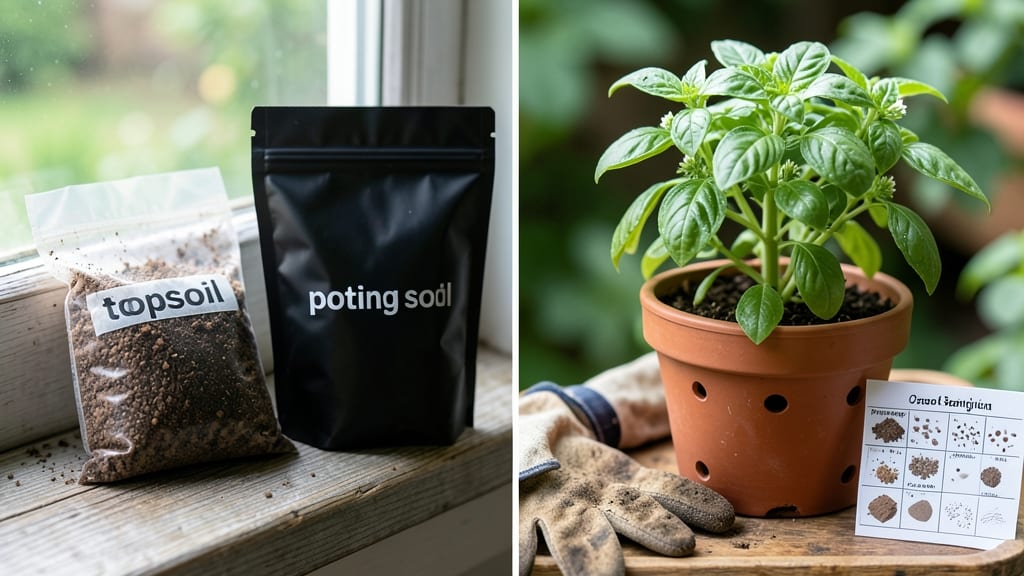
You shouldn't use garden soil for potting plants because it compacts easily, drains poorly, and may contain pests or diseases. Instead, opt for lightweight potting mixes with perlite, vermiculite, or compost for better aeration and root health.
Garden soil is heavy and dense, which means it doesn't allow water and air to move through it properly—leading to root suffocation and fungal issues. 🌱 Many garden soils also contain weeds, pathogens, or larvae that can harm your potted plants.
For container gardening, I always recommend a mix designed specifically for potting, as it's formulated to stay loose and provide the right balance of moisture retention and drainage.
If you're looking for a budget-friendly option, you can create your own mix by combining coconut coir, perlite, and a small amount of compost. This combination mimics the airy structure of commercial potting soil while being more sustainable.
Always choose a mix that matches your plant's specific needs—some tropical plants, for example, prefer a mix with higher moisture retention.
💡 In This Article
- Why Garden Soil Fails as Potting Mix
- Best Potting Soil Alternatives for Healthy Plants
Why garden soil fails as potting mix
Garden soil is packed with minerals and organic matter from years of decomposition, but its dense structure creates a suffocating environment for potted plants. When you compress garden soil in containers, its particles—typically 20-30% clay—bind tightly, reducing pore space by up to 50% compared to potting mixes.
This compaction forces roots to compete for oxygen, leading to stunted growth or even root rot when overwatered. 🌱 The problem isn't just density; it's the imbalance between water retention and aeration that garden soil simply can't provide in confined spaces.
Poor drainage is another critical issue. Garden soil holds water like a sponge, often taking hours to drain compared to potting mixes that release excess moisture within 10-15 minutes. This slow drainage creates waterlogged conditions at the bottom of pots, where roots can't escape.
The result? Fungal diseases like Phytophthora thrive in these anaerobic zones, while beneficial microbes—essential for nutrient uptake—struggle to survive. Even well-draining garden soils from sandy areas lack the structural integrity to support delicate root systems in containers.
Pests and pathogens are the silent invaders lurking in garden soil. Weed seeds, nematode eggs, and fungal spores hitchhike into your pots, creating an invisible time bomb.
For example, cutworms or aphids can transfer from garden soil to potted plants, while Verticillium wilt pathogens lie dormant until stressed roots provide entry.
The closed ecosystem of a pot amplifies these risks, as there's no natural dilution or predation that occurs in open garden beds. 🚨 This is why professional growers sterilize potting mixes—it's not just about nutrients, but about creating a sterile canvas for your plants to thrive.
Nutrient availability also becomes a gamble with garden soil. While it may seem rich, its nutrients are locked in mineral complexes that plants can't access quickly. Potting mixes, on the other hand, are formulated with slow-release fertilizers or organic amendments that break down predictably.
Garden soil's nutrient release is erratic—sometimes too fast (causing burns), other times too slow (leading to deficiencies). For instance, nitrogen in garden soil might leach out entirely within 6-8 weeks in a pot, leaving your plants starving while looking lush on the surface.
Consider the texture: garden soil feels heavy and gritty when dry, while potting mixes are light and fluffy—almost like crumbled styrofoam. This difference isn't just about feel; it's about root penetration resistance.
Roots in garden soil must exert 3-5 times more energy to push through compacted particles, whereas potting mixes with perlite or vermiculite offer resistance similar to walking on a cloud. This energy drain weakens plants, making them more susceptible to stress from temperature fluctuations or transplant shock. 🌿
The science behind this is rooted in soil physics. Garden soil's bulk density (weight per volume) often exceeds 1.3 g/cm³, while ideal potting mixes stay below 0.8 g/cm³.
This lower density creates a network of air pockets that roots can explore, while garden soil's high density collapses these spaces. Think of it like trying to grow in concrete versus a sponge—one suffocates, the other breathes.
For container gardening, this structural difference is the deciding factor between thriving and struggling plants.