Neem Oil
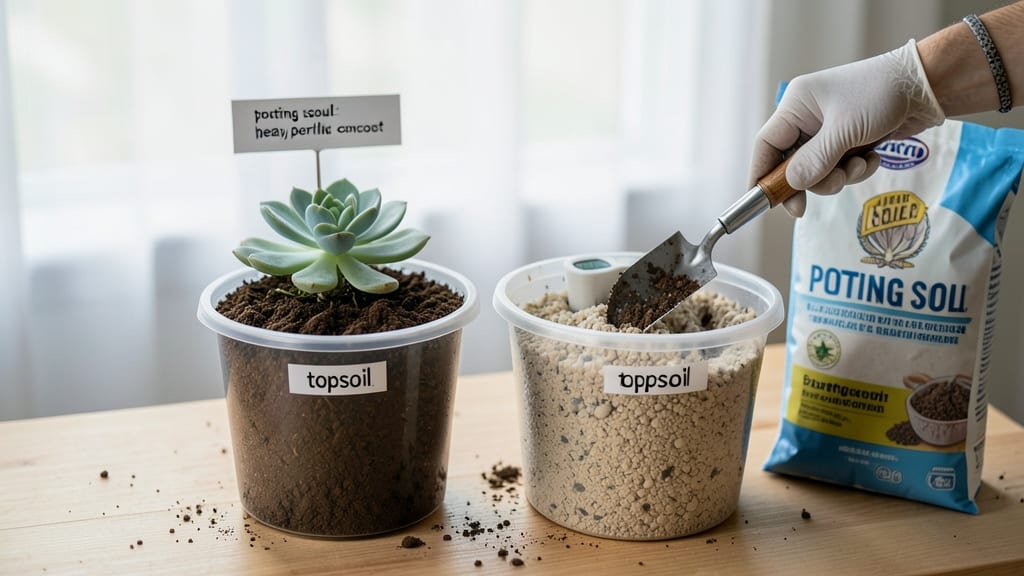
You shouldn't use topsoil for potting soil because it compacts easily, drains poorly, and promotes root rot. Instead, opt for lightweight potting mixes with perlite, vermiculite, or coconut coir for aeration and moisture control.
Topsoil's heavy texture creates a dense, waterlogged environment that suffocates roots and blocks oxygen flow. 🌱 Unlike garden soil, potting mixes are specifically formulated to stay loose and drain efficiently—critical for container-grown plants.
I've seen many gardeners make this mistake, only to watch their plants struggle with yellowing leaves or stunted growth within weeks. The key difference lies in the organic matter content: potting mixes contain 30-50% compost or coconut coir, while topsoil rarely exceeds 5%.
This extra organic material creates the air pockets roots need to thrive.
For most houseplants, a blend containing 20% perlite or 10% orchid bark works wonders by preventing compaction. If you're growing succulents, increase the perlite to 40% for maximum drainage.
The good news? You can easily upgrade your topsoil by mixing in 25% coconut coir and 15% perlite—this simple adjustment transforms it into a functional potting medium.
💡 In This Article
- Why Topsoil Fails as Potting Soil: Soil Composition and Plant Health
- Best Potting Soil Blends for Different Plant Types
Why topsoil fails as potting soil: soil composition and plant health
Topsoil's primary problem lies in its particle composition, which typically contains 40-60% clay and 20-30% silt. These fine particles pack tightly together when moist, creating a dense matrix that blocks oxygen from reaching roots.
In containers, this compaction becomes irreversible without mechanical aeration, unlike garden beds where roots can spread freely. The result? Roots suffocate, leading to stunted growth and yellowing leaves within 2-4 weeks of planting.
This dense structure also disrupts water movement. Topsoil holds moisture in microscopic pockets that don't drain efficiently - a 1-gallon container of topsoil might retain 30-40% more water than proper potting mix, creating anaerobic conditions where harmful bacteria thrive.
The science is clear: plants need both oxygen and water, but topsoil's water retention comes at the cost of oxygen availability. 🌱 Think of it like trying to breathe through a wet sponge - the roots simply can't get enough air.
Nutrient availability becomes another critical issue. Topsoil contains natural organic matter over time, but in containers, this matter decomposes rapidly (within 6-12 months), leaving plants nutrient-starved. The pH balance also shifts unpredictably - garden soil often ranges from 6.0-7.5, while many container plants prefer 5.5-6.5.
Without amendments, essential micronutrients like iron and manganese become locked out of root uptake, causing deficiency symptoms that mimic overwatering.
Fungal growth becomes rampant in these conditions. The combination of poor drainage and high organic matter decomposition creates the perfect environment for Phytophthora and Pythium pathogens, which cause root rot. I've seen this firsthand with ferns and calatheas - plants that love moisture but can't tolerate soggy roots.
The telltale signs are black, mushy roots and wilting despite damp soil, a classic indicator of fungal infection from improper soil composition.
Consider this comparison: A proper potting mix contains 20-30% organic matter (like compost or coconut coir) that breaks down slowly, plus 15-25% perlite or vermiculite to create air pockets. This structure maintains 40-60% porosity, allowing both water and oxygen to move freely.
The difference in root health is dramatic - plants in proper mixes show 30-50% more vigorous growth compared to those in unamended topsoil, as demonstrated in university horticulture studies.
The solution lies in understanding that container gardening creates a micro-environment where soil behaves differently than in open beds.
Without amendments, topsoil becomes a recipe for disaster - compacted, waterlogged, and nutrient-poor. 💫 The good news is that with just a few simple additions, you can transform topsoil into a functional growing medium that supports healthy root development and plant growth.