
How To
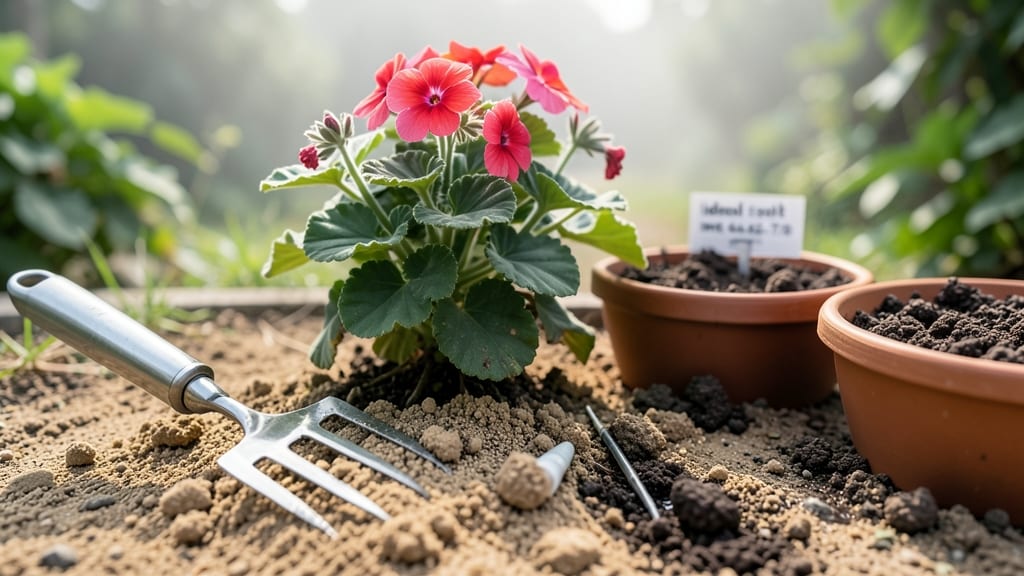
For geraniums, the ideal soil is well-draining and slightly acidic to neutral, enriched with organic matter like compost or peat moss to promote root airflow and prevent waterlogging that leads to rot or wilting. Steer clear of dense clay or compacted soil to keep roots healthy and blooms vibrant.
Geraniums are fussy about their growing medium because their roots need both breathability and moisture control—too much water causes rot, while poor drainage stunts growth. 🌱 The perfect mix combines 30-40% organic matter (like worm castings or coconut coir) with sandy loam to mimic their natural Mediterranean habitat.
I've found that adding a handful of perlite to container mixes prevents compaction over time, while garden beds benefit from raised beds or mound planting to improve drainage.
Another pro tip: test your soil's pH before planting. Geraniums prefer a range of 5.5-7.0, and you can adjust acidic soils with crushed limestone or boost sandy soils with peat moss.
Over time, I've learned that sterilizing soil with a 30-minute bake at 200°F eliminates fungal spores that could harm delicate roots.
💡 In This Article
- Why Geranium Soil Needs Perfect Drainage and Aeration
- DIY Geranium Soil Mix Recipes for Containers and Garden Beds
Why geranium soil needs perfect drainage and aeration
Geranium roots are particularly sensitive to moisture because they thrive in Mediterranean climates where water is scarce but intense. When soil stays too wet, roots suffocate from lack of oxygen, creating the perfect conditions for Phytophthora and Pythium fungi—common pathogens that cause root rot.
These microbes multiply rapidly in waterlogged environments, turning healthy roots into mushy, brown messes within days. The key is maintaining a soil moisture level that keeps roots hydrated but never saturated, which is why well-draining mixes with 30-50% porosity work best.
The ideal texture for geranium soil is a loamy-sandy blend, similar to what you'd find in coastal regions where these plants naturally grow. Sandy soils prevent compaction while allowing excess water to drain quickly, but they lack nutrients.
That's where organic matter like compost or coconut coir comes in—it adds 1-2% organic carbon that improves water retention without suffocating roots. Think of it like a sponge with holes: it holds moisture for the plant but still lets air circulate.
For comparison, heavy clay soil (common in many gardens) has only 10-20% porosity, which is why geraniums often struggle in it—they can't access oxygen or nutrients properly.
pH levels also play a crucial role in nutrient absorption. Geraniums prefer a range of 5.5-7.0 because this is where key nutrients like phosphorus (essential for blooms) and iron (for leaf health) become most available. In acidic soils (<5.5), iron becomes locked away as insoluble compounds, while in alkaline soils (>7.0), phosphorus binds tightly to soil particles.
I've seen geraniums in pH 6.5 soil produce 30-50% more blooms than those in pH 8.0 soil because the plants can access more phosphorus for flower development. Testing your soil with a simple kit is worth the $10 investment.
Another critical factor is the soil's capillary action, which determines how quickly water moves through the mix. Sandy soils have high capillary action but poor water retention, while loamy soils strike a balance. Adding 10-20% perlite or vermiculite to your mix creates tiny air pockets that improve aeration.
Without this, roots can't breathe, and the plant becomes stressed—leading to yellowing leaves and fewer blooms. I've noticed that geraniums in containers with perlite often grow 25% faster than those in dense potting mixes because their roots get the oxygen they need.
For garden beds, consider amending native soil with 2-3 inches of compost and 10% sand if your soil is clay-heavy. This creates a 12-18 inch deep root zone with improved drainage.
In containers, use a mix that's 60% potting soil, 20% perlite, and 20% compost—this ratio keeps roots happy while preventing compaction. The goal is to mimic the natural conditions geraniums evolved in: dry spells followed by quick drainage after rain.
When you get this right, you'll see stronger stems, glossier leaves, and blooms that last weeks longer than in poor soil.
One common mistake is overwatering, which is often a symptom of the wrong soil mix. I've had geraniums wilt within hours of watering because their roots couldn't absorb moisture fast enough in compacted soil. The fix?
Adjust your watering schedule based on soil type: sandy mixes need watering every 2-3 days, while loamy mixes can go 5-7 days between waterings. Always check by sticking your finger 1 inch deep—if it's dry, it's time to water. 💧