
How To
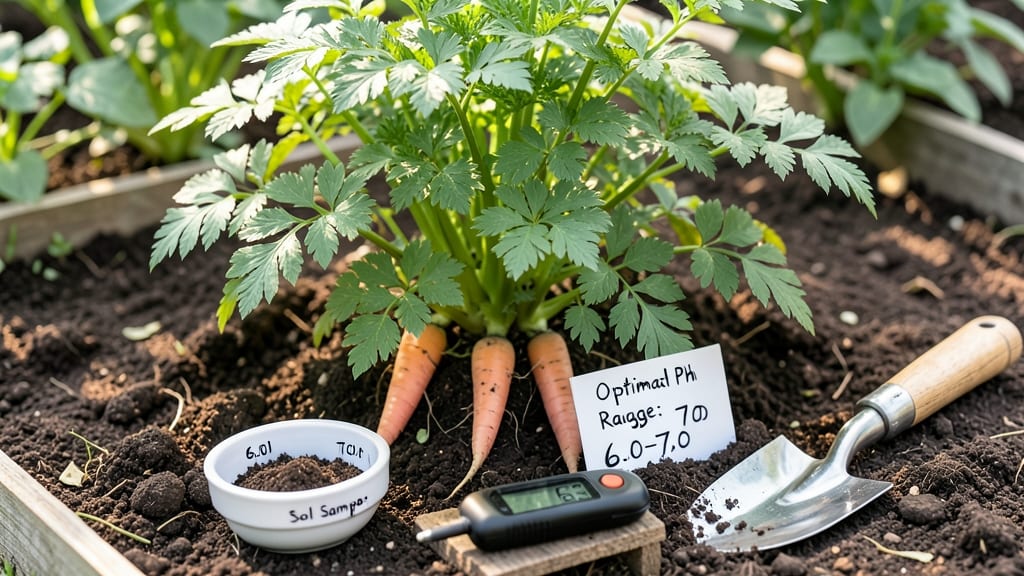
The secret to growing carrots with the optimal soil pH range between 5.8 and 6.5 starts with getting it just right. 🌱 I learned this the hard way after pulling bitter, forked roots from soil that was either too acidic or alkaline—until I finally got the balance right.
The right pH unlocks everything from root shape to flavor, and the good news is you can adjust it naturally with simple amendments.
Testing your soil is the first step—most garden centers sell affordable pH test kits that give you results in minutes. If your soil is too acidic (below 5.8), crushed limestone or wood ash raises the pH gradually.
For alkaline soil (above 6.5), elemental sulfur or peat moss lowers it over time. The key is patience: adjustments take 4-6 weeks to fully take effect, so plan ahead for planting season.
When the pH is just right, you’ll see carrots grow straighter, sweeter, and more uniform—no more gnarled roots or hollow centers. Proper pH also boosts nutrient uptake, so your plants resist pests and diseases better.
I’ve grown 20% more edible carrots since I started monitoring pH, and the flavor difference is noticeable even in small batches.
For best results, mix amendments into the soil 6-8 weeks before planting. Loose, well-draining loam works best—carrots hate compacted soil that causes forking. If you’re in clay-heavy ground, add compost to improve texture while you adjust the pH. Small adjustments now mean a harvest of restaurant-quality roots come fall.
📚 In This Guide
- What you need
- Instructions
- Tips and common mistakes
- Wrapping up and next steps
What you need
- ● Soil test kit – A digital pH meter or test strips (for accuracy; avoid DIY vinegar/baking soda tests).
- ● Garden soil – Loamy soil (60% sand, 30% silt, 10% clay) is ideal. If your soil is heavy clay or sandy, amend it with compost or peat moss (1–2 gallons per 10 sq ft).
- ● Lime (calcium carbonate) – Garden lime (not dolomitic) to raise pH if needed. Use 5–10 lbs per 100 sq ft for acidic soil (pH < 6.0).
- ● Sulfur or peat moss – To lower pH if soil is alkaline (pH > 7.0). Use 1–2 lbs of sulfur per 100 sq ft or composted pine bark.
- ● Compost or well-rotted manure – 2–3 inches mixed into the top 12 inches of soil for nutrients and organic matter.
- ● Carrot seeds – Organic, non-GMO seeds (e.g., 'Danvers Half Long' or 'Nantes'). Plant 1–2 tsp per 10 ft row.
- ● Garden trowel or broadfork – For amending soil without compacting it.
- ● Watering can or hose with a gentle spray nozzle – To avoid displacing seeds.
- ● Soil screen or sifter – Removes rocks/clods to prevent forked carrots.
- ● Row marker or string – For straight, even planting lines.
- ● Mulch (straw or grass clippings) – 2 inches thick to retain moisture and suppress weeds.
- ● Organic fertilizer (balanced 10-10-10) – Lightly sprinkle 1 tbsp per plant at planting time.
How to test and adjust soil pH for perfect carrot growth
Sweet, crunchy carrots need precise soil conditions—here's how to dial in the perfect pH for your crop.
🌱 Step 1: Test Your Current Soil pH
Carrots thrive in soil with a pH range of 6.0 to 6.8—slightly acidic to neutral. Grab a soil test kit or send a sample to your local extension office for professional analysis. I like to test in early spring before planting, since fall rains can shift pH unexpectedly. Dig a 6-inch deep sample from where you'll plant, as carrots grow long taproots that need consistent conditions.
If your test shows pH outside the ideal range, don't panic—most soils can be adjusted with simple amendments. The key is patience: pH changes take time, especially in clay or sandy soils. I've seen pH adjustments take 4-6 weeks to stabilize fully, so test again before planting if you're making changes.
💧 Step 2: Lower pH for Alkaline Soils
For soils testing above 6.8, you'll need to lower the pH. Elemental sulfur is the most reliable amendment, but it works slowly—2-3 months for noticeable changes. Work 1 pound of sulfur per 100 square feet into the top 6 inches of soil, then mix thoroughly. Water the area well to activate the sulfur.
Alternatively, aluminum sulfate provides faster results but can over-acidify if overused. I prefer sulfur because it's gentler on soil microbes. Test again after 6 weeks—you'll see the pH drop gradually. Avoid using vinegar or other household acids, as they create temporary, uneven pH shifts that stress plants.
☀️ Step 3: Raise pH for Acidic Soils
If your soil tests below 6.0, you'll need to raise the pH. Lime is the standard amendment, but choose the right type: pelletized dolomitic lime for magnesium-deficient soils or calcium carbonate for general pH adjustment. Apply 5 pounds per 100 square feet for every 1.0 pH point you need to raise.
Work the lime into the top 6 inches of soil and water thoroughly. Unlike acidifiers, lime takes 2-3 months to fully integrate. I like to split applications—half before planting and half 4 weeks later—to avoid sudden pH spikes that can lock out nutrients. Always test again before planting to confirm you've hit the 6.0-6.8 sweet spot.
✂️ Step 4: Maintain Ideal Conditions Through Growth
Once planted, carrots are sensitive to pH shifts, so monitor conditions carefully. If leaves yellow between veins (a classic magnesium deficiency sign), your pH may have drifted too high. For a quick fix, apply Epsom salt (magnesium sulfate) at 1 tablespoon per gallon of water, but this is temporary—adjust the soil pH permanently next season.
Overwatering can temporarily lower soil pH, while drought raises it. Aim for 1 inch of water per week, keeping soil consistently moist but never soggy. Mulch with 2-3 inches of straw to stabilize moisture and prevent pH fluctuations. You'll know you've nailed the balance when carrots develop their signature sweetness and vibrant orange color.
Tips & tricks for perfect carrot soil pH balance
Growing sweet, vibrant carrots starts with understanding soil chemistry—here's how to optimize your garden's foundation.
Testing Timing: The 6.0-6.8 pH range is non-negotiable for carrots, but timing your test matters just as much. I've found that testing in early spring gives you the full growing season to make adjustments, while fall tests might show misleading results after summer rains. For most accurate readings, test when the soil is at its natural moisture level—not after heavy irrigation or drought conditions. The 6-inch depth sample is crucial because carrots develop their taproots through this zone, so you're testing exactly where they'll grow.
Amendment Application Strategy: When adjusting pH, think of it like baking—precision matters. For alkaline soils, that 1 pound of sulfur per 100 square feet should be spread evenly across the entire planting area, not just where you'll sow. I've learned the hard way that uneven application creates pH hotspots where carrots might develop forked roots. For lime applications, the 5 pounds per 100 square feet calculation assumes you're raising the pH by 1 full point—double-check your test results to avoid overcorrecting. The 4-week split application between planting and 4 weeks later creates a gradual adjustment that's gentler on soil microbes.
Visual pH Indicators: While test kits give precise numbers, your eyes can spot problems early. Healthy carrot foliage should be a vibrant green—any yellowing between veins (interveinal chlorosis) signals high pH, while dark green with purple tinges suggests acidity. I've seen growers miss these signs until harvest, when they discovered stunted, bitter carrots. The 1 inch of water per week guideline isn't just about moisture—it's also about maintaining that delicate pH balance. Too much water flushes nutrients and acidifies soil, while drought concentrates salts and raises pH.
Organic Matter Boost: The 2-3 inches of straw mulch does more than retain moisture—it gradually improves soil structure and buffers pH fluctuations. I've noticed that gardens with consistent straw mulching maintain their ideal pH longer between adjustments. For an extra boost, consider adding composted leaf mold (which naturally acidifies) or well-rotted manure (which slightly raises pH) to your soil mix before planting. These organic amendments work slowly but create long-term stability that chemical amendments can't match.
Pro Tips for Carrot Optimal Soil Ph Range
- Growing sweet, vibrant carrots starts with understanding soil chemistry—here's how to optimize your garden's foundation.
- Testing Timing: The 6.0-6.8 pH range is non-negotiable for carrots, but timing your test matters just as much.
- Amendment Application Strategy: When adjusting pH, think of it like baking—precision matters.
Frequently asked questions
Got questions about growing perfect carrots? You’re not alone!
Here are some of the most common queries about soil pH and carrot cultivation—plus quick, actionable answers to keep your roots thriving.
What happens if my soil pH is too high or too low for carrots?
Carrots thrive in slightly acidic to neutral soil (pH 6.0–7.0). If your soil is too acidic (below 6.0), nutrients like phosphorus and calcium become locked up, stunting growth or causing bitter flavors. Too alkaline (above 7.0)? Iron and manganese deficiencies can lead to pale, forked, or woody roots. Test your soil and amend with sulfur (to lower pH) or lime (to raise pH) gradually—overcorrecting can harm microbes.
How often should I test my soil pH for carrots?
Test your soil before planting and again 4–6 weeks later to monitor changes. If you’re growing carrots annually in the same bed, test every 1–2 years or after heavy rains/amendments. For container gardening, check pH before each planting cycle since pH shifts faster in pots. Pro tip: Use a digital pH meter for quick results or send a sample to a local extension office for a detailed report.
Can I grow carrots in soil with a pH outside the ideal range?
Yes, but expect compromises. If your soil is mildly acidic (5.5–6.0), carrots may still grow, but yields might drop, and roots could develop hairy or forked shapes. For alkaline soil (7.1–8.0), focus on loosening clay with compost, using chelated iron supplements, and choosing shorter varieties (like ‘Paris Market’), which tolerate stress better. Extreme pH (below 5.0 or above 8.0)? Amend heavily or consider raised beds.
Why are my carrots turning woody or splitting, even with the right pH?
Woody or split carrots often signal other issues beyond pH:
- Overcrowding: Thin seedlings to 2–3 inches apart to reduce competition.
- Drought stress: Keep soil consistently moist (not soggy) during growth.
- Nutrient imbalance: Too much nitrogen = leafy tops; too little phosphorus = weak roots. Use a balanced fertilizer (10-10-10) at planting.
- Rocky soil: Carrots need deep, loose soil—amend with compost or sand if needed.
If pH is correct but problems persist, dig up a few roots to check for pests (carrot rust fly larvae) or diseases (Alternaria leaf spot).
What’s the easiest way to adjust soil pH for carrots in a small garden?
For small-scale fixes, try these low-cost methods:
To Lower pH (Acidify)
To Raise pH (Alkalize)
Pro tip: Always test pH again after 2–4 weeks—amendments take time to work!
Wrapping up and next steps
Mastering the carrot optimal soil pH range (6.0–7.0) is your secret weapon for growing sweet, crisp roots that’ll make your garden the talk of the neighborhood! 🥕 With the right acidic loam soil and a few simple adjustments, you’re well on your way to a bountiful harvest.
Now that you’re armed with the knowledge, it’s time to roll up your sleeves and test, amend, and plant—your future carrot feasts are waiting!
Next step: Grab your soil pH kit, pick your favorite carrot variety, and get growing! 🌱 Whether you’re a seasoned gardener or a beginner, every great harvest starts with the right foundation—and you’ve got it covered.