
How To
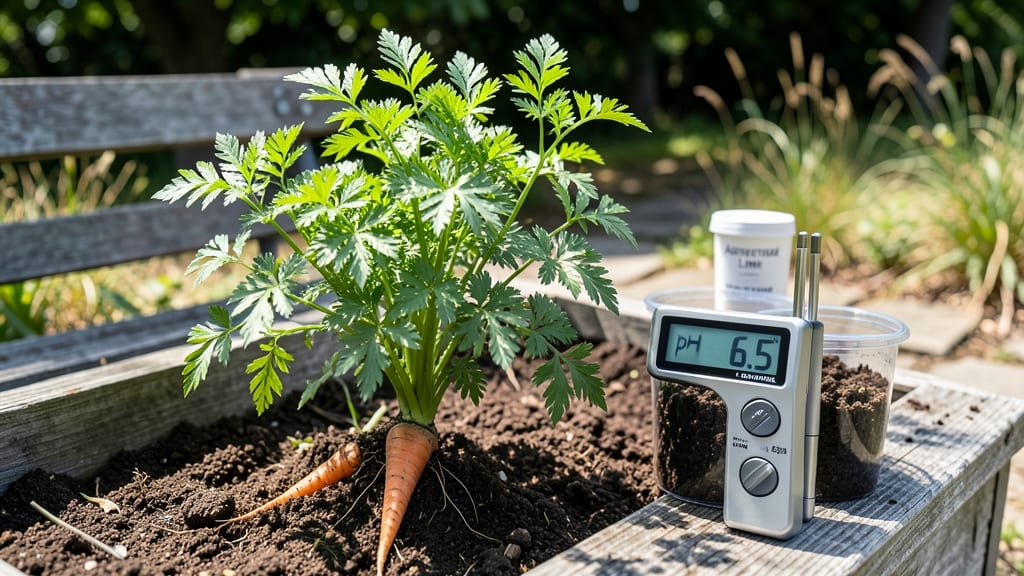
Growing perfect 🥕 carrots depends on one often-overlooked factor: your soil’s pH tolerance for carrots, which thrives in a narrow sweet spot between 6.0 and 7.0.
Struggling to grow perfect carrots? Your soil’s pH level could be the hidden culprit behind stunted roots, bitter flavors, or poor yields—even if you’re watering and fertilizing correctly.
Carrots are finicky about their growing conditions, and pH isn’t just about numbers—it’s about unlocking the nutrients they need to develop those crisp, sweet roots you crave.
In this guide, I’ll break down the ideal pH range, how to test and adjust your soil, and why even a slight shift can mean the difference between a bountiful harvest and a disappointing one.
Optimal carrot soil pH range: what growers must know
Growing perfect carrots starts with understanding your soil pH. Carrots thrive in a slightly acidic to neutral range, between 6.0 and 7.0. This ideal range ensures proper nutrient uptake, especially for phosphorus, calcium, and magnesium, which directly impact root development and flavor.
Even small deviations can lead to stunted growth, forking, or bitter-tasting roots—regardless of how well you water or fertilize.
Why does pH matter so much? The soil’s acidity or alkalinity determines which nutrients are available to your carrots. At pH 6.0–7.0, essential minerals like phosphorus (critical for root growth) and calcium (prevents forking) are most accessible.
Outside this range, carrots struggle to absorb these nutrients, leading to poor yields or deformed roots. For example, a pH below 5.5 can cause aluminum toxicity, while a pH above 7.5 locks out phosphorus, stunting growth.
Testing your soil’s pH is simple and essential. Use a soil pH test kit (available at garden centers) or a digital pH meter for accuracy. Collect samples from multiple spots in your garden bed, mix them, and follow the kit’s instructions.
For best results, test in early spring before planting or after adjusting the soil. Remember, pH can fluctuate seasonally, so regular checks ensure your carrots get the best conditions.
A pH of 6.0–7.0 isn’t just about nutrients—it also affects disease resistance. Carrots grown in slightly acidic soil (6.0–6.5) are less prone to root rot and fungal diseases, while alkaline soils (7.0–7.5) can increase susceptibility to leaf blight.
Even a 0.5 pH shift can alter your carrots’ sweetness and texture, making them less crisp or more fibrous. For example, Danvers carrots (a popular variety) perform best at 6.2–6.8, while heirloom types like Purple Haze tolerate a broader range.
| pH Range | Nutrient Availability | Growth Impact | Disease Risk |
|---|---|---|---|
| Below 5.5 (Acidic) | Aluminum toxicity; phosphorus locked out | Stunted roots, poor yield, bitter flavor | High (fungal diseases) |
| 5.5–6.0 (Slightly Acidic) | Good phosphorus, calcium uptake | Moderate growth; slight forking risk | Moderate (some fungal risk) |
| 6.0–7.0 (Ideal) | Optimal phosphorus, calcium, magnesium | Best root development, sweet flavor, crisp texture | Low (minimal disease risk) |
| 7.0–7.5 (Slightly Alkaline) | Phosphorus limited; iron deficiency | Slower growth, fibrous roots, reduced sweetness | Moderate (leaf blight risk) |
| Above 7.5 (Alkaline) | Severe phosphorus deficiency; micronutrient lockout | Poor yield, deformed roots, poor flavor | High (bacterial/fungal diseases) |
Carrots have three critical growth stages where pH plays a role: germination, root elongation, and maturation. During germination (weeks 1–2), a pH below 5.5 can delay sprouting due to aluminum toxicity, while a pH above 7.5 may prevent seeds from absorbing enough phosphorus to break through the soil.
In the root elongation phase (weeks 3–6), the ideal 6.0–7.0 pH ensures steady calcium uptake, preventing forking—a common issue when soil is too alkaline.
As carrots mature (weeks 7–10), their flavor and texture are directly tied to pH. A slightly acidic soil (6.0–6.5) enhances sweetness by promoting natural sugar development, while alkaline conditions (7.0+) can make roots taste bitter or woody.
For example, Nantes carrots, known for their sweetness, perform best at 6.2–6.8. Even a 0.3 pH shift can alter your harvest’s quality, so maintaining consistency is key.
If your soil tests outside the 6.0–7.0 range, don’t panic—adjustments are straightforward. For acidic soil (below 6.0), add lime (calcium carbonate) or wood ash to raise pH gradually. For alkaline soil (above 7.0), incorporate sulfur, peat moss, or pine needles to lower pH over time.
Always amend the soil 2–3 months before planting to allow pH levels to stabilize naturally. Regularly monitor progress with follow-up tests to avoid over-correcting, which can harm microbial activity in the soil.
One common mistake growers make is assuming all carrots tolerate the same pH. While most varieties prefer 6.0–7.0, some heirloom types like Black Nebula can handle 5.8–7.2 due to their genetic resilience. However, even these varieties yield better in the ideal range. For example, Ch
Adjusting soil pH for carrots: step-by-step fixes
Got stunted carrots or bitter-tasting roots despite your best efforts? Your soil’s pH balance might be the sneaky villain. Carrots thrive in slightly acidic to neutral soil (pH 6.0–7.0), but even small deviations can sabotage growth.
The good news? Fixing it is simpler than you think—with the right amendments and timing.
Before diving into fixes, grab a soil pH test kit (digital meters or lab tests work best). I’ve used Luster Leaf kits for years—they’re affordable and accurate. Test your soil 2–3 weeks before planting to give amendments time to work.
Pro tip: Test in multiple spots if your garden has varied conditions, like shady vs. sunny patches.
Adjusting Soil pH for Carrots
Lowering pH (Acidifying)
- 🔹 Peat moss: Adds acidity slowly; mix 2–3 inches into topsoil.
- 🔹 Pine needles: Sprinkle 1–2 inches as mulch; decomposes over time.
- 🔹 Sulfur: Fast-acting; apply 1–2 lbs per 100 sqft and water in.
Raising pH (Alkalizing)
- 🔹 Garden lime: Fastest option; apply 5–10 lbs per 100 sqft.
- 🔹 Wood ash: Use sparingly (1–2 cups per 10 sqft); can make soil too alkaline.
- 🔹 Crushed eggshells: Slow-release; grind and mix into soil.
Timing matters! Apply amendments 3–4 months before planting for best results. For example, if you’re growing spring carrots, amend in late fall. I once rushed and added lime just 2 weeks before sowing—my carrots still struggled with uneven growth.
Patience pays off! Mix amendments into the top 6–8 inches of soil using a garden fork or tiller.
Monitor progress with weekly pH checks after amending. Aim for a 0.5–1.0 pH shift per month. Over-correcting throws off your soil’s balance, leading to nutrient lockout or toxic buildup.
For instance, adding too much lime can tie up iron and manganese, causing yellowing leaves—even if your pH is "perfect."
Uneven application is another rookie mistake. Divide amendments into small batches and spread them evenly. I use a spreadsheet to track amounts per square foot—it’s overkill, but it works!
Water thoroughly after applying to help amendments integrate. For container gardens, mix amendments directly into potting soil or top-dress and water in.
Still unsure? Start with organic matter. Compost or well-rotted manure (like alfalfa pellets) buffers pH naturally while improving soil structure. It’s my go-to for mild adjustments—just don’t expect dramatic shifts.
Pair it with targeted amendments for faster results, and you’ll be harvesting crunchy, sweet carrots in no time.