
How To
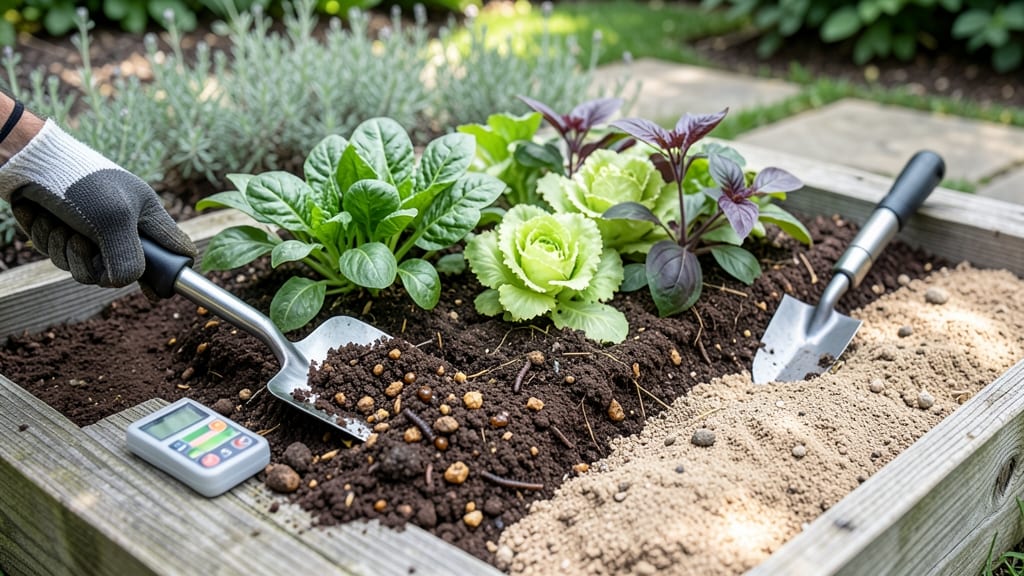
Rich soil loam is the ideal garden foundation—a perfect mix of 40% sand, 40% silt, and 20% clay with abundant organic matter that promotes root growth by balancing moisture, aeration, and nutrient availability. You'll recognize it by its dark, crumbly texture that holds together when moistened but breaks apart easily.
This balanced composition is what makes loam soil so valuable for plant health.
The silt particles create a sponge-like structure that holds moisture without suffocating roots, while the clay component retains essential nutrients. 🌱 What sets loam apart is its ability to drain excess water quickly yet maintain enough moisture for plants during dry spells—something sandy or clay-heavy soils struggle with.
I've found that adding 2-3 inches of compost annually helps maintain this ideal texture, especially in heavy clay soils that need aeration.
For gardeners working with existing soil, a simple jar test can reveal your current composition. Just fill a clear jar with dry soil, add water, and shake vigorously—after settling, you'll see distinct layers that reveal your sand, silt, and clay ratios.
This hands-on method helps determine whether you need to amend your soil with organic matter or adjust the texture to achieve that perfect loam balance.
💡 In This Article
- How to Test and Classify Loam Soil Composition
- Organic Amendments to Enhance Loam Soil Fertility
How to test and classify loam soil composition
The jar test is the most accurate way to determine your soil's particle composition. Start by collecting a dry soil sample from your garden, removing any debris or rocks. Fill a clear quart-sized jar about halfway with this soil, then add water until it's about three-quarters full.
Seal the jar and shake vigorously for 2-3 minutes—this breaks apart all soil aggregates. After letting it settle for 24 hours, you'll see distinct layers: sand settles first (heaviest particles), followed by silt, and finally clay (finest particles) at the top.
A true loam will show roughly equal proportions of these layers, with sand at the bottom and clay barely visible at the top.
The ribbon test reveals soil's clay content through a simple tactile check. Take a moistened handful of soil between your thumb and forefinger, then gently squeeze and pull apart. If the soil forms a 1-inch ribbon that breaks easily, it's loam.
Clay-heavy soils create longer ribbons (>1.5 inches) that may crack, while sandy soils crumble instantly. The squeeze test adds another dimension: press moist soil firmly—loam should hold shape briefly but crumble under gentle pressure, unlike clay which stays compacted.
These tests combined give you a clear picture of your soil's structure and how close it is to that ideal 40-40-20 ratio.
Organic matter percentage is where loam truly excels for plant growth. Healthy loam contains 3-5% organic matter, which improves water retention by 20-30% compared to mineral soil alone. You can test this by burning a small soil sample—organic matter burns off, leaving behind mineral particles.
The darker the original soil, the higher its organic content. For gardeners, this means better root penetration, microbial activity, and nutrient availability. I've seen vegetable gardens with loam soil produce yields 30% higher than those in pure clay or sand due to this organic boost.
Seasonal variations can affect your test results. After heavy rains, clay particles may temporarily bind together, making soil appear heavier than it is. Conversely, drought conditions can make sandy soils seem more dominant. Always test when soil is at field capacity (fully moist but not saturated) for consistent results.
For container gardening, mix 1 part compost with 3 parts native soil to achieve loam-like properties in potted plants, where drainage and aeration are critical.
Advanced gardeners can use a hydrometer for precise measurements, though it requires more equipment. The key insight is that loam's magic lies in its porosity—about 50% pore space that balances air and water.
This structure explains why loam can hold 2-3 times more water than sand while still allowing oxygen to reach roots, creating the perfect growing medium. Understanding these ratios helps you amend your soil scientifically rather than guessing.
For visual learners, imagine soil particles as a three-layer cake: the bottom layer (sand) provides drainage, the middle (silt) holds moisture, and the top (clay) stores nutrients.
Loam's beauty is how these layers work together—like a well-designed plumbing system where water flows efficiently but gets stored where plants need it most. This balance is why loam supports everything from delicate herbs to heavy root crops.