
How To
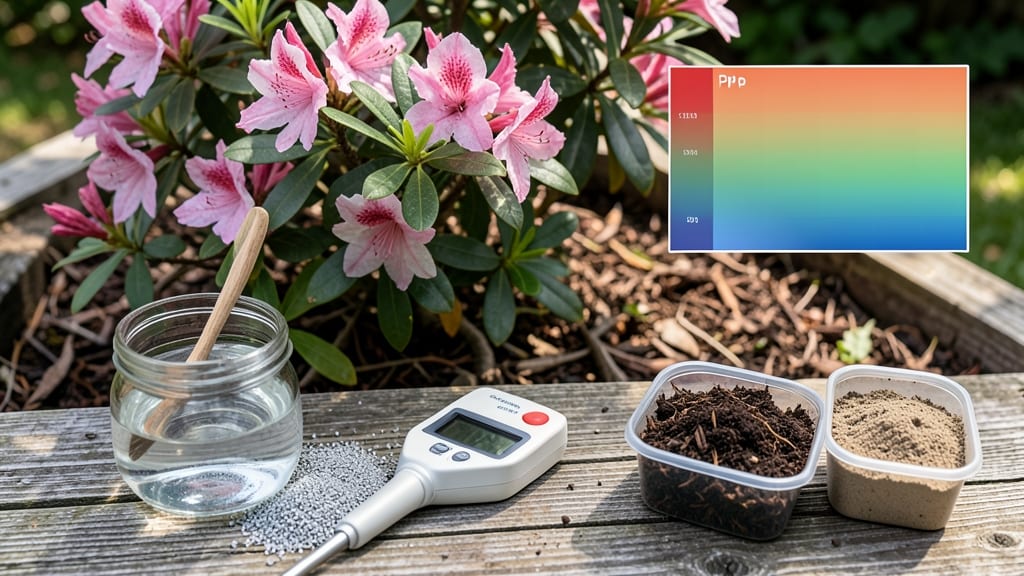
Wood ash doesn't make soil acidic—it actually increases soil pH, making it more alkaline due to its calcium carbonate content. While it can help neutralize overly acidic soil, using too much can create conditions that harm acid-loving plants like blueberries and azaleas.
Wood ash works as a natural soil amendment because its calcium carbonate content reacts with hydrogen ions in acidic soil, effectively raising the pH. 🌱 Think of it like adding a pinch of baking soda to neutralize vinegar—it balances the acidity but can swing the pH too far in the other direction if overused.
For most gardeners, a light application (about 1 pound per 100 square feet) is enough to make a difference without risking alkalinity problems.
This pH shift matters because many plants thrive in specific ranges. While alkaline-loving plants like lavender and rosemary benefit, acid-loving varieties need alternative solutions like peat moss or sulfur. Always test your soil first—most garden centers offer affordable kits to check pH before making amendments.
💡 In This Article
- How Wood Ash Alters Soil Chemistry and pH Levels
- Best Plants for Wood Ash Amended Soil and Application Rates
How wood ash alters soil chemistry and pH levels
Wood ash primarily contains calcium carbonate (CaCO₃), which reacts chemically with hydrogen ions (H⁺) in acidic soil. When dissolved in water, calcium carbonate dissociates into calcium (Ca²⁺) and carbonate (CO₃²⁻) ions. The carbonate ions then react with hydrogen ions through a neutralization process: CO₃²⁻ + H⁺ → HCO₃⁻ (bicarbonate).
This reaction consumes acidity, effectively raising the pH level. For example, soil with a pH of 5.5 (moderately acidic) might shift to 6.5 (slightly acidic) after a light application of wood ash.
The pH scale runs from 0 (most acidic) to 14 (most alkaline), with 7 being neutral. Wood ash typically raises soil pH by 0.5 to 1.5 points depending on soil type and ash quantity.
Sandy soils, with lower buffering capacity, show more dramatic shifts than clay soils, which hold onto pH changes more slowly. The particle size of wood ash also matters—finer ash dissolves faster, releasing alkalinity more quickly, while coarse ash takes longer to break down and affect pH.
This chemical process isn't just about raising pH—it also improves soil structure. Calcium ions from wood ash help bind soil particles, creating larger aggregates that improve aeration and drainage. The magnesium and potassium in wood ash further enhance nutrient availability.
However, the effects aren't permanent. Rainfall can wash away soluble components, so repeated applications may be needed to maintain desired pH levels. 🌱
Overapplication creates problems because soil pH above 7.5 can become toxic to many plants. For instance, aluminum and manganese—essential nutrients at lower pH levels—become less available in alkaline conditions.
This is why blueberries, which require pH <5.5, suffer when wood ash is used excessively. The key is balance: enough to neutralize acidity without swinging too far toward alkalinity.
Soil testing provides precise guidance. A simple home test kit can reveal your current pH, while lab tests offer detailed mineral analysis. For example, if your soil tests at pH 5.0 and you want to reach 6.0, you might need 1-2 pounds of wood ash per 100 square feet.
Always work in small batches and retest after 2-3 months to monitor changes. The goal is to create an environment where plants can access nutrients efficiently without stress.
Consider this analogy: Wood ash is like a pH thermostat. It can cool down overly acidic soil, but left on too long, it can overheat the system.
The difference between a thriving garden and a struggling one often comes down to finding that sweet spot—where the soil chemistry supports, rather than hinders, plant growth. 🌿