
Blooming
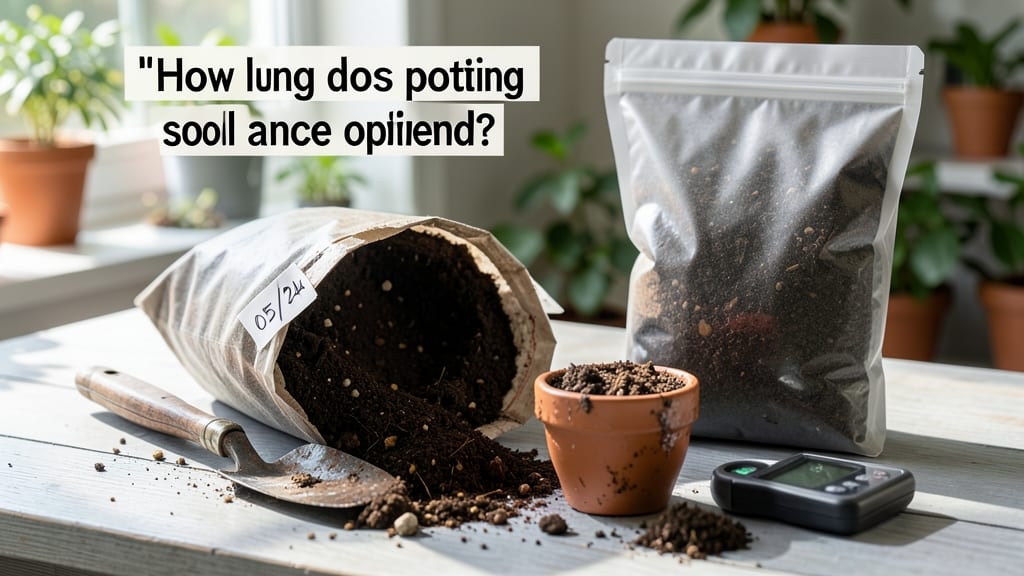
Once opened, potting soil typically lasts 6 months to 1 year if kept dry in a sealed container, though tropical humidity or excess moisture can cut that timeline by half. Check for mold, clumping, or a sour smell—these are clear signs it's time to refresh with compost or perlite before planting.
Your potting soil's shelf life depends on how well you preserve its core ingredients.
Organic matter like peat moss or compost breaks down faster when exposed to air or dampness, which is why sealing it tightly in a dry, cool place is key. 🌱 Even with perfect storage, soil loses its ideal structure over time—think of it like stale bread, where moisture and microbes turn fresh ingredients into something less effective for your plants.
For long-term storage, I recommend splitting large bags into smaller, airtight containers to minimize exposure.
If you notice your soil feeling dense or smelling off, don't toss it entirely—mixing in perlite or vermiculite can restore aeration, while a light compost top-dressing revives nutrients. Just avoid using heavily degraded soil for moisture-sensitive plants like ferns or seedlings, as their roots need loose, fertile medium to thrive.
💡 In This Article
- Factors That Shorten or Extend Potting Soil Shelf Life
- Best Practices for Storing and Refreshing Old Potting Soil
Factors that shorten or extend potting soil shelf life
Potting soil's lifespan hinges on its organic components—peat moss, compost, and bark—all of which break down through microbial activity. When exposed to air, these materials oxidize and lose structure within 3-6 months, especially in warm (75°F+) or humid environments where fungi and bacteria thrive.
The moisture content is critical: soil with 30-40% water retention degrades twice as fast as drier mixes, because excess water triggers anaerobic conditions that produce foul odors and mold.
Storage conditions make all the difference. Airtight containers with desiccant packets (like silica gel) can preserve soil for up to 18 months, while leaving it in the original bag—even if unopened—reduces shelf life by 30-50% due to oxygen exposure.
Freezing soil for 24 hours kills most pathogens, but thawing it too slowly can reintroduce moisture. 💫 The texture also changes over time: fresh soil has a light, crumbly feel, while degraded soil becomes compacted and repels water.
Humidity accelerates spoilage by 50-70% in tropical climates, where fungal spores like Rhizoctonia spread rapidly. You'll notice this as a musty smell or visible mold growth on the surface. Even in dry climates, soil loses its ideal 50-60% porosity as organic matter compresses, making it harder for roots to penetrate.
This is why professional growers often use sterilized soil mixes with extended shelf lives—heat treatment at 180°F+ kills microbes without cooking the soil.
Signs of expired soil include clumping that doesn't break apart, a sour or ammonia-like odor, and visible green/black mold. These indicate microbial overgrowth and nutrient depletion.
For example, soil used for seedlings should be fluffy and dark brown, while soil for succulents might tolerate slightly longer storage due to its mineral-heavy composition. The key is matching soil quality to plant needs—compacted soil strangles roots, while fresh soil provides the loose, aerated structure plants crave.
Temperature swings also play a role: soil stored near heating vents or in basements with 50°F+ fluctuations degrades faster than soil kept in a consistent 60-70°F environment. This is why gardeners in colder climates often store soil in insulated bins or even buried in cool, shaded areas.
The goal is to slow microbial activity without creating conditions where harmful pathogens can thrive.
One often-overlooked factor is the pH balance. Fresh potting soil typically sits at 5.5-7.0, but over time, organic acids can push it toward 4.5 or below, making it unsuitable for acid-sensitive plants like azaleas.
Testing pH with a simple kit can reveal whether your soil still supports healthy growth or needs lime or sulfur to restore balance.
For long-term storage, consider pre-mixing soil with perlite or coconut coir, which extends its usable life by 20-30% while maintaining structure.
This is particularly useful for gardeners who buy soil in bulk—splitting it into smaller, sealed containers prevents the "first-in, first-out" waste that happens when you forget about the back of a storage bin. 🌱