
Landscaping
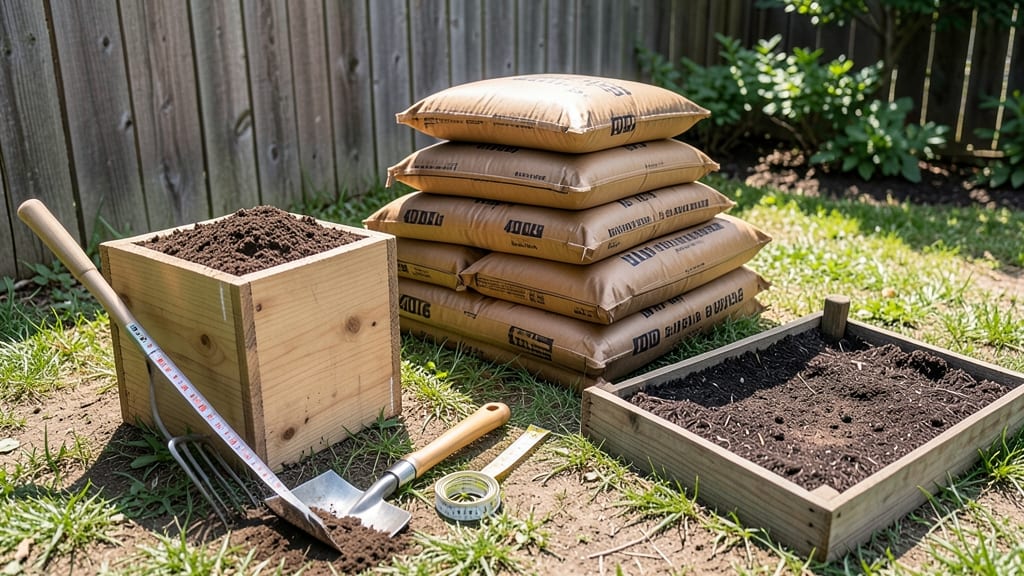
To determine how many 40lb bags of topsoil fit in a yard, you’ll need 27 bags for a standard yard (27 cubic feet), assuming each bag covers about 0.8 cubic feet when spread loosely. Always account for soil type and project depth, as coverage can vary significantly.
Understanding this calculation starts with recognizing that a cubic yard equals 27 cubic feet—this is your baseline volume. However, the weight of topsoil bags (like 40lb) doesn’t directly translate to volume because soil density varies.
For example, peat moss is lighter per cubic foot than clay-based topsoil, so the same weight might cover less area. I always recommend buying 10-15% extra to account for settling and uneven spreading. 🔥
For irregular project shapes, break the area into smaller rectangles or triangles, calculate each section’s volume separately, then sum them up. This method ensures you don’t over- or under-buy.
For instance, a 10’x10’ garden bed with 4” of topsoil depth needs about 1.34 cubic yards (36 bags), not the 27 you’d need for a full yard. Precision here saves money and prevents wasted trips to the store.
💡 In This Article
- Calculating Topsoil Volume: Cubic Feet vs. Bags
- Topsoil Bag Buying Guide: Weight, Coverage, and Project Needs
Calculating topsoil volume: cubic feet vs. bags
Here's what's actually happening when you calculate topsoil volume: a cubic yard equals 27 cubic feet (3 feet × 3 feet × 3 feet), but this doesn't directly translate to bag count because soil weight and volume aren't one-to-one.
A 40lb bag of topsoil typically covers about 0.8 cubic feet when loosely spread, but this varies by soil type. For instance, sandy loam spreads more easily than dense clay-based topsoil, which compacts and covers less area. 🔥
The key factor is soil density—peat moss might weigh only 20-30 lbs per cubic foot, while clay can exceed 100 lbs. This means a 40lb bag of peat covers more volume than the same weight of clay.
Always check the manufacturer's coverage rate on the bag, as this accounts for real-world spreading conditions. For example, a 10’x10’ raised bed with 6” of topsoil depth needs about 4.17 cubic feet, which would require 5 bags of 40lb topsoil if spread at 0.8 cubic feet per bag.
What most people don't realize is how project depth affects calculations. A 3” layer of topsoil over a 100 sq ft area equals 2.5 cubic feet (100 sq ft ÷ 12 sq ft per cubic foot × 0.25 ft depth), requiring just 3 bags.
However, deeper layers or uneven terrain demand more soil. For irregular shapes, divide the area into rectangles or triangles, calculate each section's volume separately, then sum them up. This method prevents over- or under-buying and ensures you have enough for the entire project.
Consider these real-world factors that influence coverage:
- Soil type: Peat moss spreads easier than clay (coverage varies by 20-30%)
- Compaction: Foot traffic or machinery can reduce coverage by 15-25%
- Depth: A 4” layer needs 33% more soil than a 3” layer for the same area
- Bag density: Bulk soil may settle more than pre-bagged options
For example, a 500 sq ft garden with 4” of topsoil requires 16.67 cubic feet (500 ÷ 30.45 × 0.33), or about 21 bags of 40lb topsoil. Always round up to the nearest whole bag to avoid shortages.
The science behind this involves understanding how soil particles settle and compress under pressure—something often overlooked in DIY projects. ✨
Pro tip: When buying topsoil, ask for the "loose cubic feet" coverage rate rather than just weight. This tells you exactly how much volume each bag provides before settling. For large projects, consider renting a soil screener to reduce bag count by up to 40% while improving consistency.
This is especially useful for leveling uneven terrain or creating smooth garden beds.