
Plants
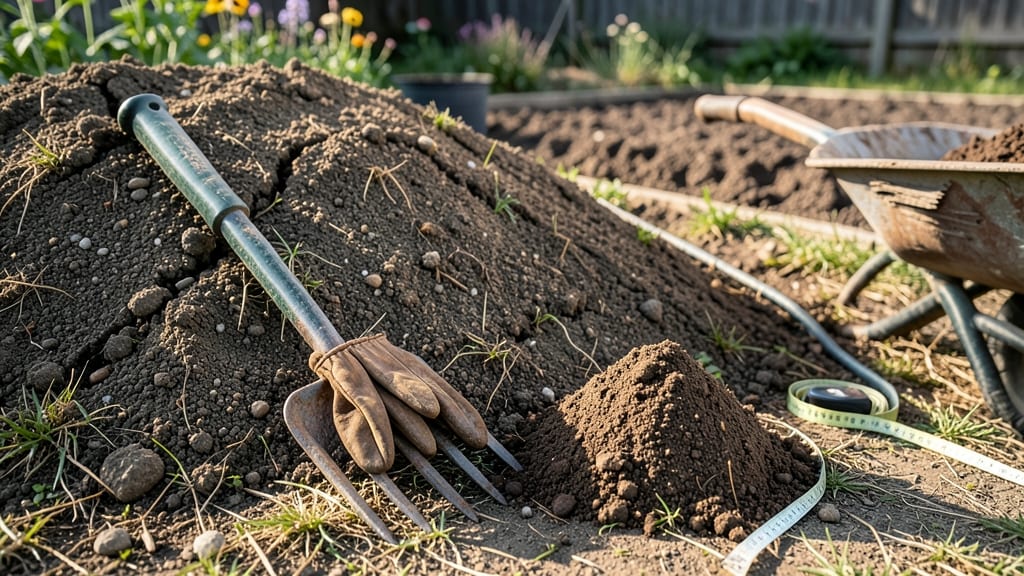
A yard of topsoil isn’t some mysterious bulk bag—it’s a 3-cubic-foot pile of loose, dark brown soil that looks like a small, rounded mound about 2 feet wide and 1.5 feet tall. 🌱 Picture a wheelbarrow full of soil, then triple that volume, and you’re close.
This much topsoil covers roughly 100 square feet at a 3-inch depth, which is perfect for a small raised bed or a single in-ground planting area. The key to visualizing it? Compare it to everyday objects: a standard dresser drawer (about 2 cubic feet) or a large cooler.
If you’re spreading it for a garden, remember that 1 yard equals 27 cubic feet—so a full truckload is 27 of those wheelbarrow-sized piles. For a 4x8-foot raised bed (32 sq ft), you’d need about 1/3 yard at 3 inches deep.
What you’ll notice immediately is how light and fluffy it feels compared to compacted garden soil. It’s the perfect canvas for seeds and transplants, holding moisture while still draining well.
Just don’t confuse it with screened topsoil—this version has small rocks and organic matter, which is ideal for most planting projects. For larger gardens, break it down: 1 yard covers ~100 sq ft at 3 inches, but adjust depth for bigger plants. Need to estimate?
Grab a shovel, scoop a 3-inch layer, and walk it off—how many shovelfuls fit in your space? That’s your guide. No guesswork, just good old-fashioned soil math.
📚 In This Guide
- What you need
- Instructions
- Tips and common mistakes
- Wrapping up and next steps
What you need
- ● Topsoil: 1 yard (3 cubic feet) – Loose, dark brown, and free of debris. Pre-bagged (18–20 lb bags) or bulk delivery.
- ● Wheelbarrow: 1–2 medium-sized (2–3 cubic feet capacity) – For hauling soil to your project area.
- ● Shovel: 1 flat-edged or round-point shovel – Essential for spreading and leveling soil.
- ● Rake: 1 sturdy garden rake – Smooths out the topsoil and removes clumps.
- ● Measuring tape or string line: – Ensures even distribution of soil.
- ● Gloves & safety glasses: – Protect your hands and eyes from dust and debris.
- ● Soil tester kit: – Checks pH and nutrient levels if you’re picky about soil quality.
- ● Compost or fertilizer: – Mix in 1–2 gallons to boost nutrients for plants.
- ● Level or laser guide: – For precise grading, especially on slopes or large areas.
- ● Kneeling pad: – Saves your knees during long projects!
Visual guide: how to picture a yard of topsoil
Here's how to imagine that "yard" measurement—it's bigger than you think, but not as massive as delivery trucks make it seem.
📏 Step 1: Measure the Dimensions of a Cubic Yard
A cubic yard isn't just length or width—it's all three dimensions combined. Picture a square box where each side measures 3 feet long × 3 feet wide × 3 feet tall. That's your cubic yard. If you stack four standard-sized concrete blocks (about 16 inches each), you'd almost reach that height.
This isn't a flat layer—it's a three-dimensional pile. A common mistake is visualizing a yard of topsoil as a flat, circular mound. Instead, think of it as a cube. That's why a single bag of topsoil (usually 40 pounds) only contains about 0.5 cubic feet—you'd need 64 bags to equal one cubic yard.
🪴 Step 2: Compare to Common Yard Items
Imagine a standard wheelbarrow—most hold about 2 cubic feet of material. To visualize a cubic yard, picture 15 full wheelbarrows of topsoil. That's a lot of shoveling! For a more precise comparison, think of a small pickup truck bed. A cubic yard fills roughly one-third of a typical truck bed when piled high.
Here's a real-world trick: A standard dresser drawer (about 2 feet deep × 3 feet wide × 3 feet tall) holds approximately 1.5 cubic feet. So two dresser drawers' worth of soil equals half a cubic yard. That's your mental benchmark for estimating smaller quantities.
⚖️ Step 3: Understand Weight and Volume Relationships
A cubic yard of topsoil weighs between 2,000-2,700 pounds—about the weight of a small car. That's why delivery trucks use heavy-duty equipment to handle it. When loose, it fills space easily, but when compacted (like in your garden after spreading), it shrinks by about 25-30%.
This is why loose, fluffy topsoil looks like it takes up more space than it actually does when settled. When you see a pile at the garden center, it's not yet compacted. That's why they often sell it by the cubic yard rather than by weight—volume is easier to measure in bulk.
🌱 Step 4: Visualize How It Spreads in Your Garden
For a 10×10 foot garden bed with a 4-inch deep layer of topsoil, you'll need about 1.5 cubic yards. That's roughly 50 wheelbarrow loads or three truckloads of soil. Most homeowners underestimate how quickly the volume adds up when spreading over large areas.
Think of it this way: If you spread a cubic yard evenly over a 10×10 foot area, the layer would be 3 inches deep. That's about the thickness of a standard 2×4 board. It's not a thin dusting—it's a substantial layer that dramatically improves soil quality for planting.
📐 Step 5: Check Against Delivery Pile Shapes
When soil is delivered, it's often piled in a conical shape (like an upside-down ice cream cone). The base measures about 8 feet in diameter, and the peak reaches 4 feet high. That single pile contains exactly one cubic yard of material. The wider the base, the taller the peak—this is how suppliers measure their deliveries.
Here's the trick: The volume of a cone is ⅓ of a cylinder. So when you see that pyramid-shaped pile, you're actually looking at three cubic yards of material (since the cone shape only uses a third of the total volume). That's why delivery drivers use measuring tools to verify their loads—what looks like one pile might actually be two or three cubic yards.
Tips & tricks for visualizing a yard of topsoil
Real talk: Understanding cubic yards is where most people stumble—here's how to make it click.
The Three-Dimensional Reality: That "yard" isn't flat! The instructions mention a 3×3×3-foot cube—this is why visualizing it as a flat circle leads to massive miscalculations. Think of it like this: If you stacked four 16-inch concrete blocks vertically, you'd be looking at the height of one cubic yard. That's taller than most people realize, which is why delivery piles look so deceptively small.
Wheelbarrow Math: Most wheelbarrows hold just 2 cubic feet, so you'd need 15 full loads to equal one cubic yard. Here's the pro move: When you see a delivery pile, imagine dividing it into 15 equal sections—each section represents what fits in a wheelbarrow. This mental trick prevents underestimating how much you actually have.
Truck Bed Trick: A cubic yard only fills about one-third of a typical pickup truck bed when piled high. The next time you see a delivery, picture that empty space—the remaining two-thirds is what you're missing in your mental calculations. This is why many homeowners end up needing two deliveries when they only ordered one.
Garden Bed Reality Check: For that 10×10-foot garden bed with a 4-inch layer of topsoil, you're looking at 1.5 cubic yards—that's 50 wheelbarrow loads. The key here is understanding that 3-inch depth over a large area adds up faster than you'd expect. Always double-check your square footage calculations before ordering.
Pro Tips for What Does A Yard Of Topsoil Look Like
- Real talk: Understanding cubic yards is where most people stumble—here's how to make it click.
- The Three-Dimensional Reality: That "yard" isn't flat!
- Wheelbarrow Math: Most wheelbarrows hold just 2 cubic feet, so you'd need 15 full loads to equal one cubic yard.
Frequently asked questions
Got questions about topsoil? You’re not alone! Here are some of the most common queries—plus clear, no-fluff answers to help you plan like a pro.
How much area does a yard of topsoil cover?
A yard of topsoil (3 cubic feet) covers roughly 100 square feet at 3 inches deep. For deeper layers (like 6 inches), you’ll need half a yard per 100 sq ft. Always check your project’s depth needs—overestimating saves you from running short mid-project!
Can I use topsoil in rain or snow?
Nope! Topsoil is heavy when wet and can compact or wash away in rain. Aim for dry, mild weather (50–70°F) to spread it evenly. If rain’s forecasted, lay down a tarp or work in shifts. Pro tip: Morning spreads dry faster than afternoon heat!
Is topsoil the same as garden soil or potting mix?
Not quite! Topsoil is coarse, nutrient-light, and great for amending existing soil or leveling beds. Garden soil blends topsoil with compost for planting, while potting mix is sterile and fluffy for containers. Think of topsoil as the “base layer” of your soil sandwich.
What if my topsoil has rocks or weeds?
Screen it! Use a ½-inch hardware cloth or rent a soil sifter to remove debris. For weeds, lay down landscape fabric before adding topsoil to block regrowth. If rocks are a recurring issue, ask for screened topsoil at the supplier—it’s worth the extra cost!
How do I know if I’m getting a full yard?
Ask for a weight check—a true yard weighs ~2,000 lbs! If delivered loose, use a 4’x4’x3” cube as your reference. Scams happen, so measure the pile’s dimensions (length × width × depth) and multiply. When in doubt, buy an extra bag—you can always return unused soil.
Wrapping up and next steps
Now that you know what a yard of topsoil looks like—a loose, dark brown pile roughly 3 cubic feet—you’re ready to tackle your gardening or landscaping project with confidence! 🌱 Whether you’re prepping a flower bed, filling a raised garden, or leveling a yard, visualizing the volume makes ordering and spreading topsoil a breeze. Pro tip: Always check the bag’s weight for accuracy, and don’t forget to account for settling over time.
Your next step? Grab a shovel, measure your space, and get growing! For extra peace of mind, compare topsoil types (like compost-blended or clay-heavy) to match your plants’ needs. Happy digging! 🚜✨