
Lawn
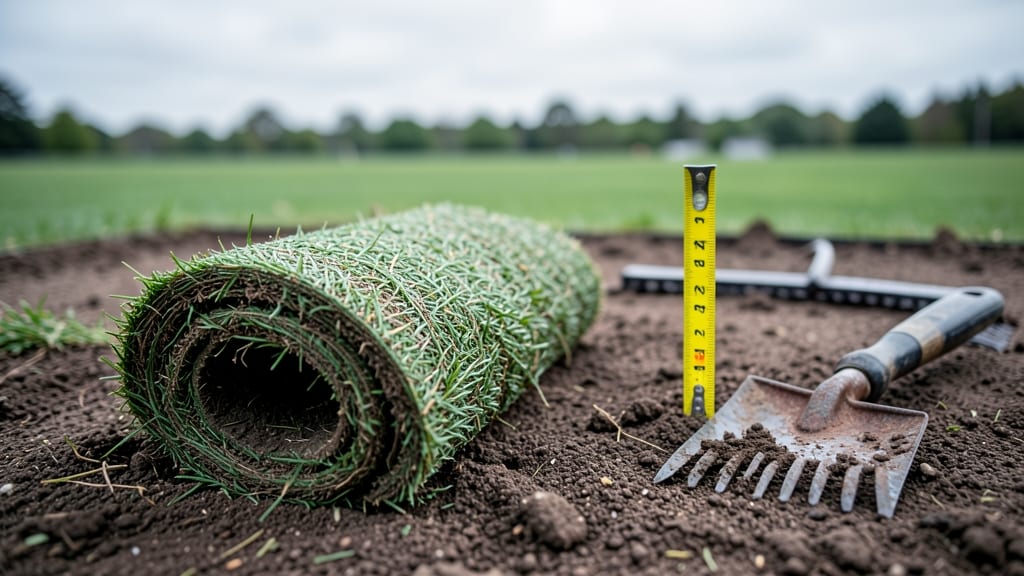
To install sod properly, you'll need 3 to 4 inches of topsoil spread evenly across your prepared lawn area. This depth promotes strong root growth and proper drainage while preventing erosion.
This depth range isn't arbitrary—it's what sod roots need to establish firmly without suffocating. 🌱 A 3-inch layer works for most lawns, while 4 inches is better for sandy soils or areas with heavy foot traffic.
The key is creating a loose, aerated layer that allows moisture and nutrients to reach the roots while preventing compaction. I always recommend testing your soil's drainage first—if water pools after 30 minutes, you may need to add sand or organic matter to improve structure.
Before adding topsoil, remove any rocks, debris, or weeds from the area. Spread the topsoil evenly using a rake, then use a level or straightedge to ensure it's perfectly flat. This prevents low spots where water could pool or high spots that might cause uneven growth.
Once leveled, lightly compact the soil with a roller—just enough to create a stable base without making it too dense for roots to penetrate.
💡 In This Article
- Why Proper Topsoil Depth Matters for Sod Growth
- Step-by-Step Guide to Prepping Soil for Sod
Why proper topsoil depth matters for sod growth
The 3-4 inch topsoil layer isn't just a random measurement—it's the perfect balance for sod roots to establish without suffocating. Grass roots need 1-2 inches of loose soil to penetrate and spread horizontally, which is why this depth creates an ideal "root zone."
Shallower layers (2 inches) restrict growth, while deeper layers (> 4 inches) can lead to compaction and poor drainage. The topsoil's loose structure allows oxygen to reach roots while retaining moisture—critical for the first 2-3 weeks when sod is most vulnerable.
Soil composition plays a huge role here. Sandy soils drain too quickly, requiring the 4-inch depth to hold moisture longer, while clay soils benefit from 3 inches plus organic matter to prevent compaction.
The topsoil's texture should resemble crumbled cake—not powdery sand or dense clay. 🌱 When you press it, it should hold shape but crumble easily. This structure prevents erosion while allowing roots to access nutrients from decomposed organic material naturally present in good topsoil.
Moisture retention is another critical factor. A 3-4 inch layer maintains consistent soil moisture at the root level, preventing both drought stress and waterlogging. The topsoil acts like a sponge, absorbing water during irrigation and releasing it gradually.
This is why you'll see professional landscapers emphasize "even distribution"—uneven layers create dry spots where sod can die or wet spots that suffocate roots. The ideal moisture level should feel like a damp sponge when squeezed, not dripping wet or bone dry.
Don't overlook the role of soil temperature. The 3-4 inch layer helps moderate ground temperature fluctuations, keeping roots in the optimal 60-75°F range for establishment. In summer, this layer insulates against heat stress, while in winter it protects against freezing.
The depth also creates space for beneficial soil microbes to thrive—these tiny organisms break down organic matter into nutrients your grass needs to grow strong. Without proper depth, these microbial communities can't establish effectively.
For areas with heavy foot traffic or pets, the 4-inch depth provides extra cushioning and stability. The additional soil volume helps absorb impact without compacting the root zone. This is why sports fields and high-use lawns often require deeper topsoil layers.
The extra depth also allows for better recovery after disturbances, as roots have more space to regenerate. In contrast, thin layers (2 inches) become compacted quickly, leading to poor drainage and shallow root systems that struggle to support heavy use.
One common mistake is assuming all topsoil is equal. Many people use fill dirt or subsoil, which lacks the organic matter and structure needed for sod. Quality topsoil should contain 5-10% organic matter and have a pH between 6.0-7.0.
The organic matter provides essential nutrients while improving water retention and soil structure. Without proper topsoil, even with correct depth, your sod may struggle to establish properly, leading to patchy growth or increased weed competition.
Remember, the goal is to create an environment where sod can establish roots within 2-3 weeks. With proper 3-4 inch depth and quality topsoil, you'll see roots growing 1-2 inches deep within that timeframe.
This rapid establishment is what gives sod its reputation for quick lawn transformation compared to seeding. The depth isn't just about the numbers—it's about creating the perfect growing conditions for your grass to thrive from day one. 💛