
Light Requirements
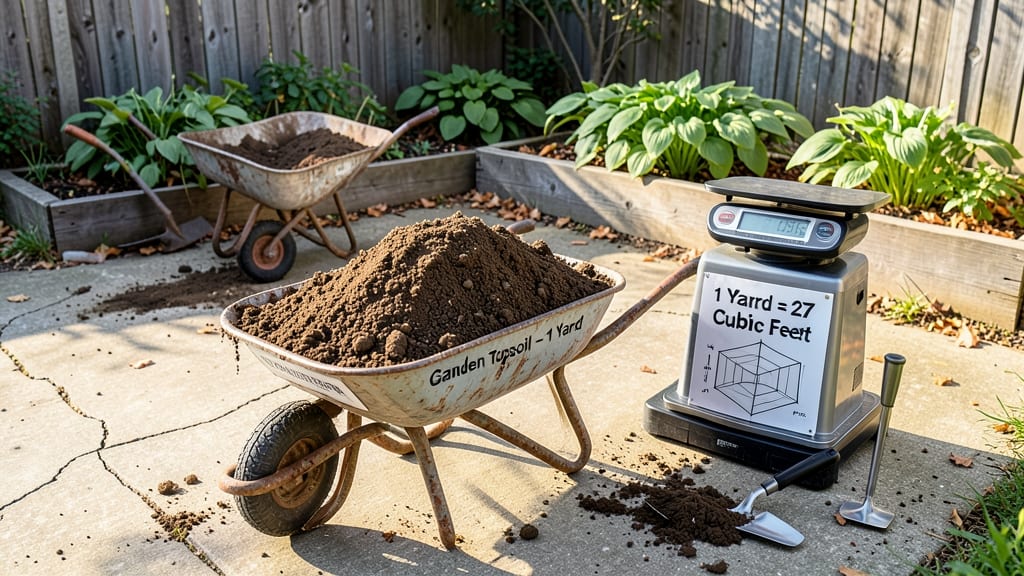
To determine how much 1 yard of soil weighs, expect between 1,800 to 2,200 pounds, with sandy soil weighing closer to 1,800 lbs and clay-heavy or loamy soil often exceeding 2,200 lbs. Factors like organic content and moisture can push the weight higher, so precise measurements are key for projects like landscaping or heavy lifting.
Understanding soil weight starts with its composition—sand, silt, and clay particles pack differently, dramatically affecting density. 🌱 For example, sandy soil drains quickly but stays lighter, while clay-heavy mixes hold more water and weigh significantly more.
Even small variations in moisture can add 100-200 lbs per yard, so checking soil before transport is crucial. I’ve seen projects underestimated this by 30% when they didn’t account for wet conditions.
For practical applications, like filling raised beds or wheelbarrow loads, topsoil averages 2,000 lbs per yard when dry. But if you’re mixing in compost or peat moss, the weight drops—peat moss alone can be half as dense as standard soil.
Always verify with your supplier, as their delivery trucks are calibrated for these ranges. Pro tip: Use a soil density calculator or test a small sample by weighing it in a known volume container for accuracy.
💡 In This Article
- Soil Density Types and Their Weight Variations
- Practical Weight Considerations for Gardening Projects
Soil density types and their weight variations
Soil weight varies dramatically based on particle size and composition. Sand particles are large and angular, creating air pockets that reduce density—this is why sandy soil typically weighs around 1,800 lbs per yard when dry.
In contrast, clay particles are flat and plate-like, packing tightly together and absorbing moisture like a sponge, which can push clay-heavy soil to 2,500 lbs per yard or more. Silt, with its fine, powdery texture, falls between the two, usually landing in the 2,000-2,200 lbs range. 🌍 The key difference?
Clay holds 30-50% more water than sand, adding significant weight.
Organic matter plays a surprising role too. Compost or peat moss blends can cut soil weight by 20-30% because their fibrous structure traps air. A mix of 50% topsoil and 50% compost might weigh closer to 1,600 lbs per yard—lighter but less nutrient-dense.
Meanwhile, loamy soil (the ideal gardening mix) balances sand, silt, and clay with 5-10% organic content, typically weighing 2,100-2,300 lbs per yard. The moisture factor is critical: saturated clay soil can weigh 50% more than its dry equivalent, while sandy soil only gains 10-15%.
Here’s how these variations play out in real-world scenarios:
- Sandy soil (beaches, desert gardens): 1,800-2,000 lbs/yard—ideal for drainage but heavy to move when wet
- Clay soil (riverbanks, heavy garden plots): 2,200-2,500 lbs/yard—sticky when wet, nearly immovable without machinery
- Loamy soil (most garden centers): 2,100-2,300 lbs/yard—gold standard for plants but requires precise weight estimates
- Potting mixes (peat/perlite blends): 1,200-1,600 lbs/yard—lighter but expensive for large projects
Moisture is the wild card. A 10% moisture increase in clay soil can add 200+ lbs per yard, while sandy soil barely budges.
This is why contractors always specify "dry weight" in contracts—wet soil can double the effort (and cost) of moving it. 💦 For example, a 10-cubic-foot bag of potting soil might weigh 40 lbs dry but swell to 50 lbs after watering.
Understanding these variations helps avoid costly mistakes. For instance, a 10-yard delivery of clay soil could tip the scales at 22,000 lbs (over a ton!), straining delivery trucks or requiring multiple trips.
Meanwhile, the same volume of sandy soil might only weigh 18,000 lbs. Always ask suppliers for moisture-adjusted weights—they’ll often provide this if you specify your project’s needs.
Pro tip: If you’re mixing soils, calculate the bulk density (weight per cubic foot). A simple test is to fill a 1-foot³ container with soil, weigh it, and multiply by 27 (since 1 yard = 27 cubic feet).
This gives you a precise number to work with for your project. 🔍