
Landscaping
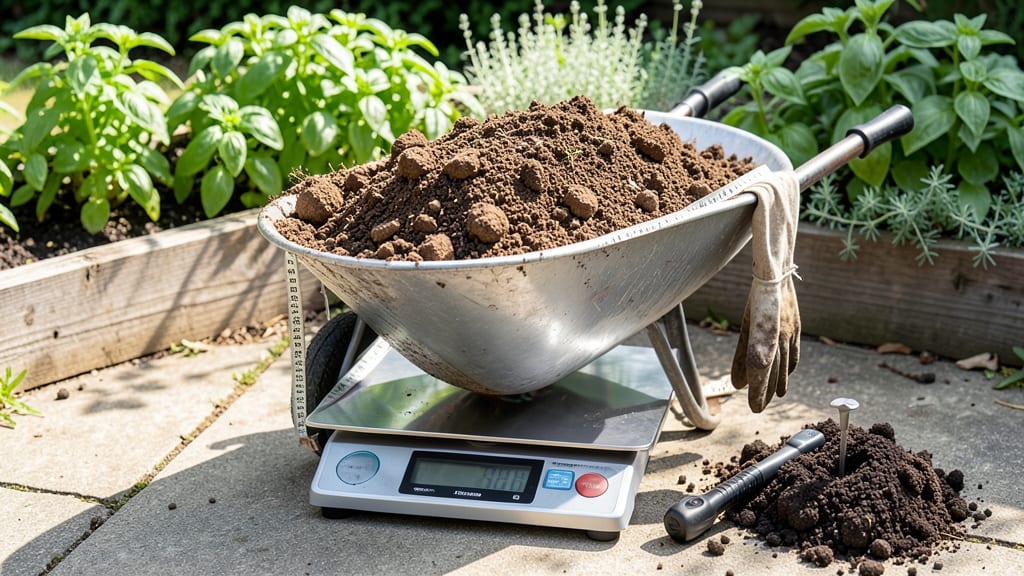
Understanding the 1 yard soil weight reveals it typically ranges from 1,800 to 2,200 pounds, with variations based on soil type—topsoil averages 2,000 lbs, clay soil can reach 2,500 lbs, and sandy soil drops to around 1,500 lbs—while moisture levels can shift the weight by up to 300 lbs per yard.
Understanding soil weight is key for landscaping projects, especially when planning deliveries or calculating project costs. The weight differences stem from particle density—clay holds more moisture and compacts tightly, while sand stays loose and lighter.
For example, a truckload of clay soil might weigh nearly 500 lbs more than sandy soil per cubic yard, impacting transportation logistics. 🔥 Moisture plays a surprising role too: saturated soil can add hundreds of pounds, making it critical to account for recent rainfall or irrigation before ordering.
When estimating soil needs for gardens or erosion control, always factor in compaction—disturbed soil weighs less than undisturbed layers. Most landscapers recommend ordering 10-15% extra to account for settling and moisture variations. For raised beds, lighter topsoil blends work better, while heavy clay suits erosion control projects where stability matters.
Pro tip: check with your supplier about moisture content—they often adjust weights based on seasonal conditions.
💡 In This Article
- How Soil Composition Affects Yard Weight
- Calculating Soil Weight for Landscaping Projects
How soil composition affects yard weight
Soil weight varies dramatically because of its three main components: minerals, organic matter, and pore space. Mineral particles—sand, silt, and clay—create the bulk of the weight. Clay particles are flat and plate-like, packing tightly to create dense soil that can weigh up to 2,500 lbs per cubic yard when saturated.
In contrast, sand particles are round and angular, leaving more air pockets that reduce weight to around 1,500 lbs per yard. Think of clay soil like tightly packed marbles versus sand as loose, airy beads.
The organic fraction—compost, decomposed leaves, and roots—adds weight but also increases moisture retention. Topsoil, rich in organic matter, typically weighs 2,000 lbs per yard due to this balance.
Moisture is the wild card: dry clay soil might weigh 1,800 lbs, but when fully saturated, it can swell to 2,500 lbs or more.
This is why spring deliveries often feel heavier—soil absorbs rainwater like a sponge. 💫 For comparison, mulch weighs only 400-800 lbs per yard because it's mostly air and decomposing plant matter.
Compaction plays a hidden role too. Undisturbed subsoil can weigh 2,200-2,800 lbs per yard due to natural compression over years, while freshly tilled garden soil might weigh 1,500-1,800 lbs because of increased pore space. This explains why excavation projects often require heavier equipment—subsoil's density demands more force to move.
The science here involves particle surface area: clay's high surface area attracts more water molecules, increasing both weight and stickiness.
Let's break down the numbers with real-world examples. A standard pickup truck can carry about 2,000 lbs of payload, meaning it could haul one cubic yard of sandy loam but struggle with clay soil. For landscapers, this translates to needing larger trucks for clay-based projects.
The weight difference also affects erosion control: heavy clay soil resists water flow better than light sandy soil, making it ideal for slopes where stability matters most.
What most people overlook is how soil weight changes seasonally. In winter, frozen soil can weigh 10-15% more due to ice crystals filling pore spaces. Conversely, drought conditions can reduce weight by 200-300 lbs per yard as moisture evaporates.
This seasonal fluctuation is why professional suppliers often provide weight ranges rather than fixed numbers—it accounts for nature's variability. 🔥
For practical applications, consider this rule of thumb: every 1% increase in organic matter adds about 20-30 lbs per cubic yard, while every 10% increase in clay content adds 100-150 lbs.
This explains why garden soil blends (designed for planting) weigh less than native subsoil—manufacturers intentionally reduce clay and organic content to create lighter, more workable mixes.