
Light Requirements
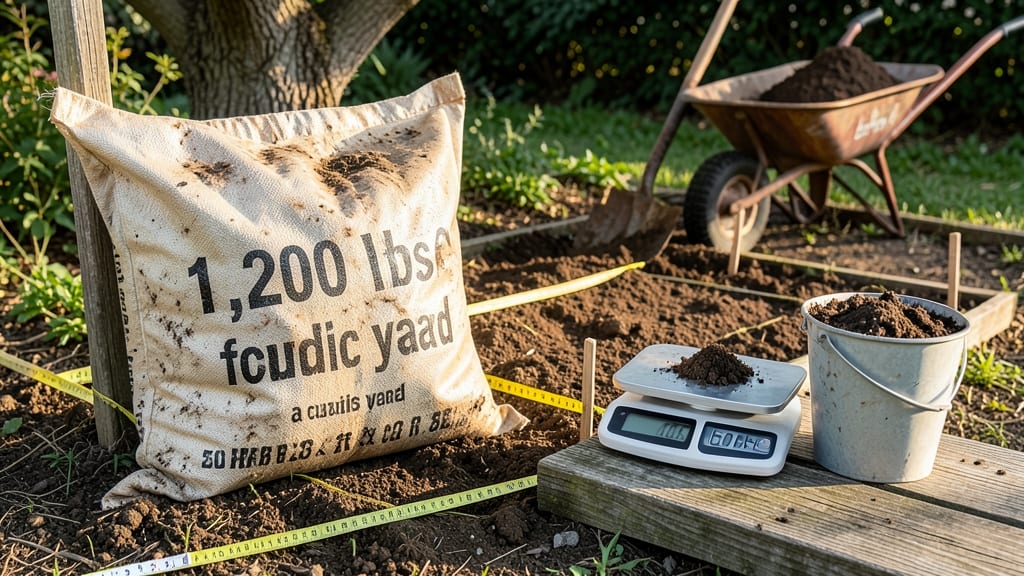
A yard of soil weighs between 1,800 to 2,200 pounds depending on its composition—loamy soil typically hits 2,000 pounds, while sandy soil is lighter (~1,600–1,800 lbs) and clay-heavy soil can exceed 2,500 lbs when saturated. Always double-check with your supplier for accurate project planning.
A yard of soil's weight isn't just about volume—it's a science of moisture content and particle density. 🌱 Sandy soil feels light because its coarse grains leave air pockets, while clay holds water and compacted particles, making it heavier.
Even a small change in moisture can swing weights by hundreds of pounds, which is why landscaping pros always test soil before ordering. For example, a wheelbarrow full of dry loam might weigh 50–70 lbs, but the same volume when damp could push 100 lbs or more.
Understanding these variations helps avoid costly over- or under-ordering. Organic matter like compost also plays a role—adding it can reduce weight slightly by increasing porosity. Always factor in your project's needs: heavy clay may settle unevenly, while sandy soil drains faster but requires more frequent replenishment.
💡 In This Article
- Soil Weight Variations by Type and Moisture
- Calculating Soil Weight for Landscaping Projects
Soil weight variations by type and moisture
Soil weight varies dramatically based on its particle composition and moisture levels. Sandy soil, with its large grains, has high porosity, allowing air and water to occupy up to 40% of its volume—this makes it lighter, typically weighing 1,600–1,800 lbs per cubic yard when dry.
In contrast, clay soil's tiny particles pack tightly, leaving little space for air, and its ability to hold water (up to 50% by volume) makes it heavier, often exceeding 2,500 lbs per cubic yard when saturated. 🌧️
The moisture content is the wild card—adding just 10% water by weight can increase a cubic yard of loam by 200–300 lbs.
For example, dry loamy soil might weigh 1,800 lbs, but after a rain, that same volume could hit 2,200 lbs due to absorbed water filling pore spaces.
This is why professionals always specify "dry weight" in contracts—wet soil is heavier to transport and harder to work with, which can lead to delivery delays or extra charges.
Organic matter, like decomposed leaves or compost, also affects weight. A soil mix with 10% compost by volume can reduce overall density by up to 15% because organic material is less dense than mineral particles.
However, this lighter weight comes with trade-offs: compost-rich soil drains faster and may require more frequent watering. For raised beds, this means you'll need to order slightly more cubic yards to compensate for the reduced bulk density.
Compaction plays a sneaky role too. When soil is tilled or walked on, particles shift closer together, increasing density. A freshly tilled garden bed might lose 10–20% of its volume through compaction, meaning what you ordered as 1 cubic yard could effectively become 0.8–0.9 cubic yards in place.
This is why professional landscapers recommend ordering 10–15% more soil than calculated to account for settling and moisture variations.
Here’s a quick breakdown of how particle size impacts weight:
- Sand: Large grains, low surface area → 1,600–1,800 lbs per cubic yard (dry)
- Silt: Medium grains, moderate water retention → 1,800–2,000 lbs per cubic yard (dry)
- Clay: Tiny grains, high water absorption → 2,000–2,500+ lbs per cubic yard (wet)
- Loam (ideal mix): Balanced texture → 2,000 lbs per cubic yard (average)
For gardeners, this means testing your soil’s texture before ordering. The ribbon test** works: roll a moist sample between fingers—if it forms a brittle ribbon, it’s clay-heavy; if it crumbles easily, it’s sandy. Adjust your cubic yard estimates accordingly to avoid running out mid-project. 🌱