
Light Requirements
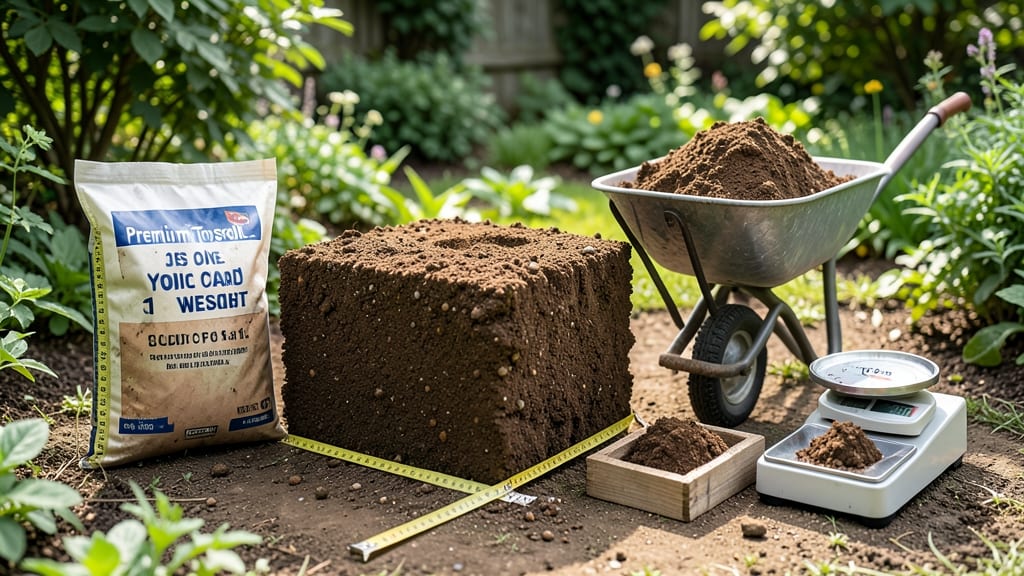
To determine how much one yard of soil weighs, expect between 1,800 to 2,200 pounds depending on composition—topsoil (1,800–2,000 lbs), clay-heavy soil (2,200+ lbs), or sandy soil (1,500–1,700 lbs)—while moisture can add up to 30% more weight. Always confirm exact measurements with your supplier before ordering.
Understanding soil weight is crucial for landscaping, gardening, and construction projects.
The variations stem from different particle sizes and moisture retention—clay holds more water and feels heavier, while sandy soil drains quickly and stays lighter. 🌱 For example, a cubic yard of wet clay soil can tip the scales at over 2,500 pounds, while dry sandy soil might only reach 1,500 pounds.
This weight difference directly impacts how much you'll need to transport and the equipment required for moving it around your property.
When planning your project, consider how soil weight affects your budget and labor needs. Heavy clay soil may require a tractor or forklift, while lighter topsoil can often be managed with wheelbarrows or a pickup truck.
Always factor in a 10-15% buffer for moisture variations—especially if working in rainy climates or during spring thaw when soil holds maximum water. Knowing these specifics helps prevent costly surprises during delivery or installation.
💡 In This Article
- Soil Weight Variations by Composition and Density
- Calculating Soil Weight for Landscaping Projects
Soil weight variations by composition and density
Soil weight varies dramatically based on its composition—particle size, organic matter, and mineral content. Clay soil, with its tiny, tightly packed particles, can reach 2,200+ pounds per cubic yard when dry, but this jumps to 2,500+ pounds when saturated. The reason?
Clay particles (less than 0.002mm) attract and hold water molecules through electrostatic forces, creating a dense, heavy matrix. In contrast, sandy soil—composed of larger particles (0.05-2mm)—weighs just 1,500–1,700 pounds per cubic yard because its loose structure traps less water and air.
The organic matter in topsoil (10-30% by volume) also plays a critical role. Humus and decomposed plant material add bulk while reducing overall density, which is why topsoil typically weighs 1,800–2,000 pounds per cubic yard.
For comparison, loamy soil—the ideal gardening mix—falls in the middle at 1,900–2,100 pounds per cubic yard due to its balanced clay, silt, and sand ratio.
What’s fascinating is how compaction changes the equation: A single foot of clay soil can weigh 60–80 pounds per square foot when tilled, but compressing it (like in construction) can double that weight.
Moisture content is the wild card that can swing weights by 30% or more. Water’s density (62.4 pounds per cubic foot) means even a 10% moisture increase in clay soil adds 220 pounds per cubic yard.
This is why spring deliveries often feel heavier—soil absorbs water from snowmelt or rain. For gardeners, this means planning for seasonal variations: A 10x10-foot raised bed (3 cubic yards) might require 5,400–6,600 pounds of soil in summer vs. 7,000+ pounds in spring.
Here’s how particle size breaks down the weight spectrum:
- Clay: <0.002mm particles → 2,200–2,500 lbs/yd³ (dry/wet)
- Silt: 0.002–0.05mm → 1,900–2,100 lbs/yd³
- Sand: 0.05–2mm → 1,500–1,700 lbs/yd³
- Organic (topsoil): 10–30% humus → 1,800–2,000 lbs/yd³
For hands-on gardeners, this means testing soil texture first: Rub a moist sample between fingers—clay feels slick and sticky, sand gritty, and loam crumbles easily. This simple test helps estimate weight before ordering, saving time and transport costs. 🌱
The science behind density also explains why clay feels heavier in your hands: Its particles are so fine they create more surface area for water adhesion, effectively "gluing" the soil together.
In contrast, sandy soil’s larger particles allow water to drain quickly, keeping the weight lighter. This is why clay-heavy areas often require heavier equipment—like a skid steer—to move without sinking.