
Light Requirements
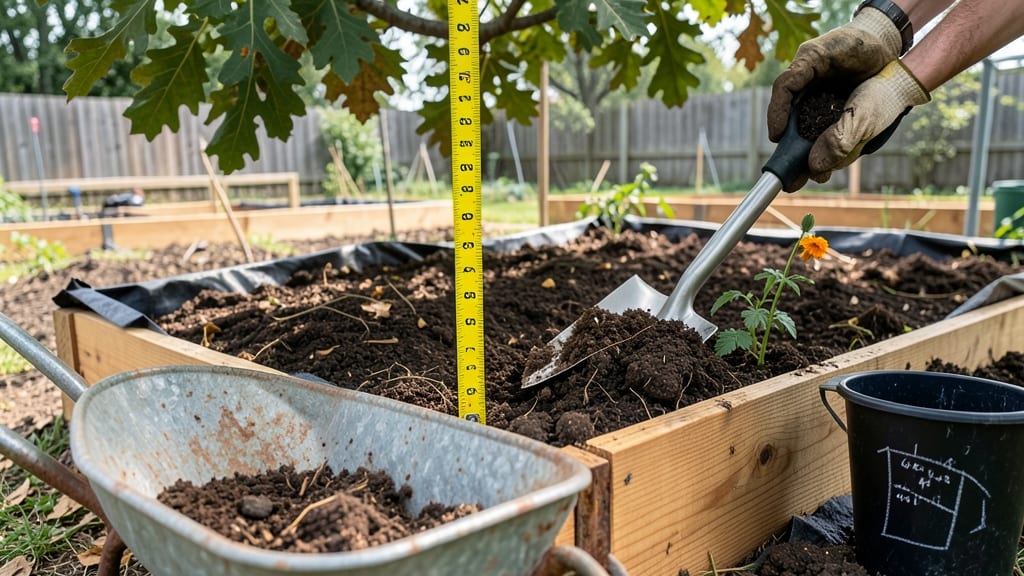
To determine how much soil you need, calculate container volume by multiplying diameter by height (in inches), then use 1 cubic foot of soil for every 12-18 inches of plant height, adjusting for wider root zones in larger pots.
This method accounts for both the container's physical dimensions and the plant's mature root system. 🌱 For example, a 12-inch diameter pot with 12-inch height needs about 1 cubic foot of soil, but if you're planting a shrub that grows 3 feet tall, you'll need roughly 3 cubic feet to accommodate its deeper roots.
The key is balancing drainage with root space—adding a 2-3 inch gravel layer at the bottom helps prevent waterlogging while still providing enough growing medium for healthy development.
For larger projects like garden beds, multiply the area's square footage by the desired depth (in feet) to estimate total cubic yards needed. Always account for compaction—soil settles over time, so buying 10-15% more than your calculation ensures you won't run short mid-project. 🔥
💡 In This Article
- Soil Volume Math for Containers: Formula and Root Space Rules
- Plant-Specific Soil Calculations: From Seedlings to Mature Trees
Soil volume math for containers: formula and root space rules
The foundation of soil volume calculation lies in understanding how roots spread and grow. Most plants develop root systems that extend roughly 12-18 inches deeper than their mature height, with lateral roots spreading outward in a cone shape.
This means a 3-foot-tall shrub will need soil depth of at least 3-4 feet to establish properly. The cubic-foot rule comes from this biological reality—each cubic foot provides about 12 inches of vertical root space and 12 inches of horizontal spread for medium-sized plants.
Container shape dramatically affects soil volume needs. A cylindrical pot's volume equals πr²h (π × radius squared × height), while rectangular containers use length × width × height.
For example, a 14-inch-diameter pot with 12-inch height holds about 1.2 cubic feet of soil, but a 12×12-inch square pot of the same height contains 1.7 cubic feet.
The wider surface area in square pots allows more lateral root growth, which is why they're ideal for plants with sprawling root systems like tomatoes or peppers. 🌱
Drainage layers consume valuable space—typically 2-3 inches at the bottom—which must be factored into your calculations. A 10-inch-deep pot with a 2-inch gravel layer only leaves 8 inches for soil, reducing usable volume by 20%.
This is why deep containers (like 18-inch-tall pots) are essential for larger plants—they provide the necessary root zone while maintaining proper drainage. The 1:1 ratio of soil depth to mature plant height works best when containers have at least 12 inches of soil depth.
Soil compaction is another critical factor. Fresh soil settles 10-25% after watering, so always round up your calculations. For instance, a 2-cubic-foot calculation should use 2.2-2.5 cubic feet of soil to account for this natural compression.
The texture matters too—sandy soils compact less than clay-heavy mixes, which can shrink up to 30% when dry. This is why professional growers often blend 30% perlite or vermiculite into potting mixes to maintain structure.
For multi-tiered systems (like hanging pots or stacked planters), calculate each level separately and add 10% extra for structural support materials.
A 3-tier hanging basket system with 10-inch pots might need 0.8 cubic feet per pot, but you'll want 2.7 cubic feet total to account for drainage layers and compaction across all tiers.
The key is visualizing the root zone as a 3D cone—wider at the base (lateral roots) and tapering upward (taproot).
Advanced gardeners use the "root ball method" for mature plants: measure the plant's root ball diameter and multiply by 1.5× for soil volume. A 6-inch root ball (common for small shrubs) would need 0.35 cubic feet of fresh soil when transplanted.
This method accounts for the plant's existing root structure rather than guessing at future growth. 💫