
Vegetables
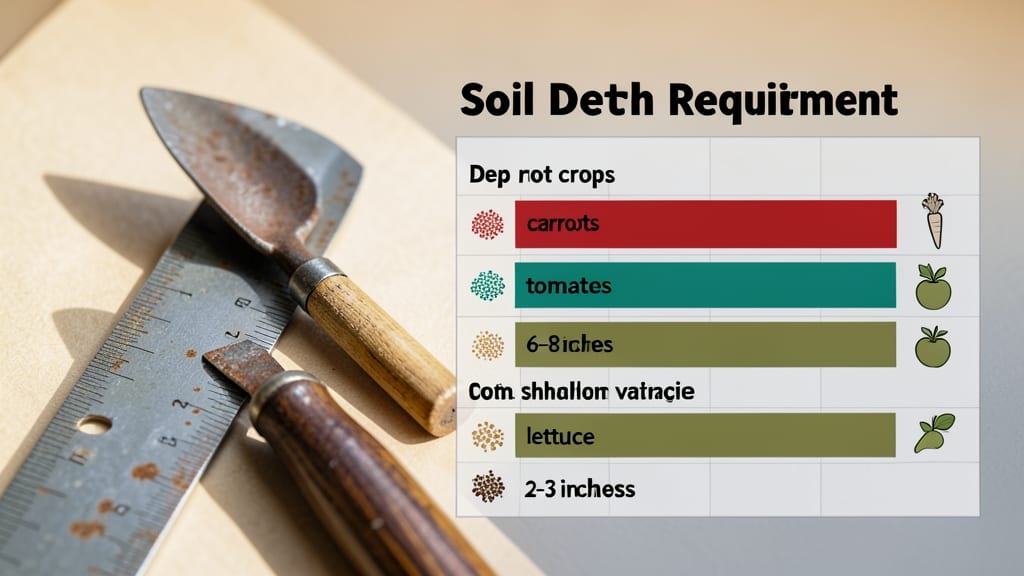
A soil depth chart for vegetables shows that root crops like carrots and potatoes need at least 12+ inches of loose soil, while leafy greens and herbs thrive in just 6-8 inches. Proper depth prevents root binding and maximizes nutrient access.
A vegetable's root system dictates its soil depth needs—taproots (like beets) require deeper soil to store nutrients, while shallow roots (like lettuce) only need topsoil. 🌱 The key is maintaining loose, well-draining soil to prevent compaction, which can stunt growth.
For example, tomatoes need 12-18 inches of depth, while radishes only require 6 inches. Most gardeners amend soil with compost to improve structure and fertility, especially for heavy-rooted plants.
Seasonal adjustments matter too—spring planting often needs deeper soil prep since winter compaction is common. Test your soil by digging a hole: if roots hit hardpan before reaching the recommended depth, add organic matter like peat moss or aged manure. This ensures roots can spread freely, leading to healthier harvests.
💡 In This Article
- How Root Systems Determine Soil Depth Needs
- Vegetable Soil Depth Guide by Plant Category
How root systems determine soil depth needs
The depth of soil your vegetables need is directly tied to their root structure. Plants with taproots—like carrots, beets, and parsnips—require deeper soil (12-18 inches) because their single, thick root stores nutrients and water.
These roots grow vertically, pushing through soil layers to access moisture and minerals below the surface. In contrast, fibrous-rooted plants (such as lettuce, spinach, or onions) only need 6-8 inches of soil, as their shallow, web-like roots spread horizontally to absorb nutrients from the topsoil layer.
Nutrient absorption happens in the root zone, where tiny root hairs (just 1-2 millimeters long) interact with soil microbes and organic matter. For deep-rooted plants, this zone extends far below the surface, while shallow-rooted plants rely on the top 6 inches.
Soil compaction—often caused by foot traffic or heavy machinery—restricts root growth, forcing plants to compete for limited space. For example, compacted soil can reduce carrot yields by up to 40% if roots can’t penetrate deeply enough. 🌱 Loose, aerated soil allows roots to expand freely, improving water and nutrient uptake.
Plant maturity also influences soil depth needs. Seedlings of deep-rooted crops start with shallow roots but develop deeper systems as they grow. For instance, tomato plants begin with roots in the top 6 inches but eventually need 12-18 inches to support their heavy fruit load.
Gardeners often amend soil with compost or sand to create a root-friendly environment, especially in clay-heavy soils where compaction is common. This prep work ensures roots can access the full depth they need without resistance.
Another critical factor is the soil horizon—the layers of soil with different textures and compositions. The top 6 inches (A-horizon) is rich in organic matter, while deeper layers (B-horizon) contain minerals like calcium and iron.
Deep-rooted plants tap into these lower layers, while shallow-rooted ones focus on the nutrient-dense topsoil. For example, potatoes thrive in loose, sandy loam with at least 12 inches of depth to prevent their tubers from deforming or splitting.
Seasonal changes also affect soil depth. After winter, soil often becomes compacted from freeze-thaw cycles, reducing porosity. To counteract this, gardeners till or aerate the soil in early spring, creating space for roots to establish.
For instance, planting radishes in compacted soil may result in woody, undersized roots because they can’t expand properly. By contrast, loose soil allows roots to grow to their full potential, ensuring healthier harvests. 💫
Understanding these root dynamics helps you tailor your garden’s soil depth to each plant’s needs. Whether you’re growing delicate herbs or hearty root vegetables, the right soil structure makes all the difference in yield and quality.