
Light Requirements
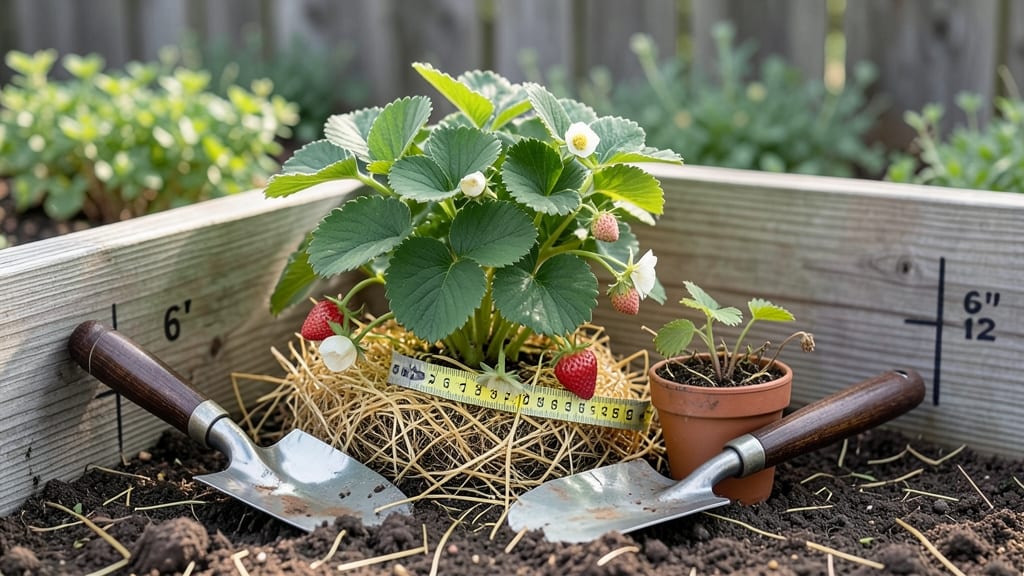
Strawberries need 6 to 12 inches of loose, well-draining soil to thrive, with deeper soil (up to 18 inches) ideal for perennial varieties to boost fruit production and disease resistance. Amending heavy or sandy soil with compost improves moisture control and root health.
Strawberries develop a shallow but extensive root system that spreads horizontally, making proper soil depth critical for their health. 🌱 The upper 6 inches of soil are where most roots grow, absorbing water and nutrients efficiently.
For container-grown strawberries, ensure the pot has at least 12 inches of depth—shallower containers restrict root expansion and reduce yields. In-ground plantings benefit from deeper soil layers, especially in clay-heavy areas where drainage is poor.
Amending soil with organic matter like compost not only improves aeration but also creates a balanced environment for microbial activity that strawberry roots rely on. 💫 Heavy clay soils can be lightened with perlite or coarse sand, while sandy soils benefit from peat moss to retain moisture.
Always maintain a slightly acidic pH (5.5–6.5) for optimal nutrient uptake.
💡 In This Article
- Strawberry Root System: Why Soil Depth Matters for Fruit Production
- Preparing the Perfect Strawberry Planting Bed: Soil Mix and Depth Tips
Strawberry root system: why soil depth matters for fruit production
The strawberry plant's root system is a delicate balance between shallow spread and depth, designed to maximize nutrient and water uptake while minimizing energy expenditure. Most commercial varieties develop 80% of their roots in the top 6 inches of soil, where oxygen, water, and organic matter are most abundant.
These fibrous roots spread horizontally, creating a dense network that stabilizes the plant and absorbs nutrients efficiently. 🌱 What's fascinating is how this shallow system actually benefits from deeper soil layers—up to 12-18 inches—because it allows roots to access moisture during dry spells while still maintaining their primary growth zone near the surface.
Here's where soil depth becomes critical: deeper soil profiles (especially in perennial varieties) provide buffer zones against temperature fluctuations and drought. When summer temperatures rise above 85°F, shallow-rooted plants in compacted soil struggle to access moisture, leading to wilting and reduced fruit set.
The deeper the root zone, the more resilient the plant becomes—studies show that strawberries with access to 18 inches of soil can maintain 30% higher yields during drought conditions compared to those in 6-inch-deep beds.
This deeper rooting also improves disease resistance by allowing roots to escape saturated surface layers where fungal pathogens thrive.
The biological mechanism behind this involves oxygen availability—strawberry roots are highly sensitive to waterlogged conditions. In heavy clay soils, even with adequate depth, poor drainage creates anaerobic zones where roots suffocate.
This is why amending soil with 30-40% organic matter (like compost or well-rotted manure) transforms compacted clay into a loamy texture that retains moisture while allowing oxygen to penetrate.
The ideal soil structure creates tiny air pockets that support beneficial microbial activity—these microbes form symbiotic relationships with strawberry roots, enhancing nutrient absorption by up to 25%.
Container-grown strawberries present a different challenge: their root systems become restricted by pot depth, which directly impacts fruit production. A 12-inch-deep pot gives roots room to establish, but anything shallower (like 6-inch pots) forces roots to compete aggressively for limited resources.
This restriction leads to smaller berries and reduced plant vigor. 🌿 For container growing, always use pots with drainage holes and a soil mix that combines 50% peat moss or coconut coir, 30% compost, and 20% perlite to maintain the right balance of moisture retention and aeration.
Seasonal variations also play a role in soil depth requirements. In spring, when new crowns emerge, they need at least 4 inches of loose soil to prevent crown rot—a common fungal disease that attacks when soil stays too wet.
During winter in colder climates, deeper soil acts as an insulator, protecting roots from freezing temperatures that can extend 2-3 inches below the surface. This insulation is particularly crucial for everbearing varieties, which produce multiple harvests per season and require consistent root health throughout the growing period.
One common misconception is that deeper soil automatically means better growth. In reality, quality matters more than quantity—a 6-inch layer of rich, well-amended soil will outperform 18 inches of poor, compacted dirt. The key is creating a root-friendly zone where moisture, nutrients, and oxygen are balanced.
For in-ground plantings, conduct a simple test: dig a hole, fill it with water, and time how long it takes to drain. If water remains after 30 minutes, your soil is too dense and needs amendment. 💫