
Light Requirements
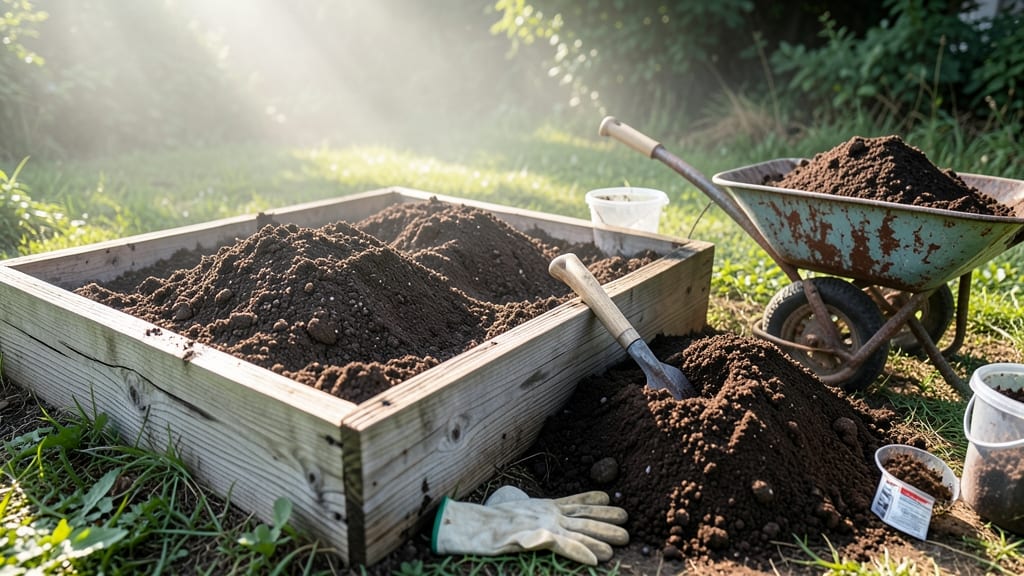
To calculate how much soil for a 4x2x1 raised bed, you'll need 16 cubic feet (4'L × 2'W × 1'D). For a 2-foot-tall bed, double to 32 cubic feet, and add 10-15% extra for settling. Plan for 8-16 bags of 2-3 cubic foot soil.
Figuring out how much soil your raised bed needs starts with simple math: multiply length, width, and depth.
A 4x2x1 bed holds exactly 16 cubic feet of soil, but real-world factors like settling and drainage often mean you'll need a bit more. 🌱 For example, if you're planting heavy root crops like carrots or potatoes, you might want to go deeper—adding an extra 2-3 inches of soil can make all the difference in yield.
Many gardeners opt for pre-mixed bags of 2-3 cubic feet, which makes it easy to calculate how many you'll need without overbuying.
Don't forget that soil quality matters just as much as quantity. A mix of topsoil and compost creates the ideal environment for roots to spread, while pure topsoil can compact over time.
I always recommend testing your soil's drainage before filling the bed—if water pools after a rain, adding a layer of coarse sand or perlite at the bottom helps prevent root rot.
💡 In This Article
- Calculating Soil Volume for Raised Garden Beds
- Choosing the Right Soil Mix and Bag Sizes
Calculating soil volume for raised garden beds
The cubic feet formula (length × width × height) is your starting point, but real-world gardening adds layers of complexity. A 4x2x1 bed's 16 cubic feet calculation assumes perfect compaction, but soil settles over time—especially organic mixes—which is why experts recommend adding 10-15% extra.
For example, a 2-foot-tall bed jumps to 32 cubic feet (4' × 2' × 2'), but the actual usable space shrinks by 10-20% after settling, particularly in clay-heavy soils where particles compress under plant weight. 🌱
Depth plays a critical role in root development. Most vegetables thrive with 12-18 inches of soil depth, but heavy feeders like tomatoes or squash benefit from 24+ inches to support their sprawling roots.
The 1-foot depth in a 4x2x1 bed works for leafy greens and herbs but may require supplemental containers for deeper-rooted plants. Think of it like building a skyscraper—roots need both width and depth to access nutrients and water efficiently.
Here's how to adjust for custom bed sizes: Multiply length (L) by width (W) by desired depth (D) in feet, then add 10-15% extra for settling. For instance, a 5x3x1.5 bed needs 22.5 cubic feet (5×3×1.5) plus 3-4 cubic feet extra (15% of 22.5), totaling about 26-27 cubic feet.
Always measure your bed's interior dimensions—not the frame's outer edges—to avoid overestimating.
Soil type affects volume too. Sandy soils settle less than loamy or clay-heavy mixes, which can shrink by up to 30% after watering. I've seen gardeners use a simple test: Fill a 5-gallon bucket (about 0.35 cubic feet) with your soil mix, then compact it by hand.
If the volume drops by 15-20%, that's your settling factor. Multiply this percentage by your total cubic feet to get the extra soil needed.
Pro tip: Layer your soil for better drainage and root penetration. Start with 2-3 inches of coarse material (gravel, perlite, or composted wood chips) at the bottom, then add 6-12 inches of topsoil, and top with 2-4 inches of compost.
This stratification mimics natural soil profiles and prevents compaction at the base. For a 4x2x1 bed, this means using about 1-2 cubic feet of coarse material and 14-15 cubic feet of the topsoil-compost mix. ✨
Don't overlook the "fluff factor" when buying bags. Pre-mixed garden soil bags often list their volume as "loose," which can be 20-30% less when compacted. Always check the label for "compacted volume" and adjust your calculations accordingly.
For a 4x2x1 bed, this might mean buying 10-12 bags of 2-cubic-foot soil instead of the 8 bags you'd calculate from the loose volume.