
Landscaping
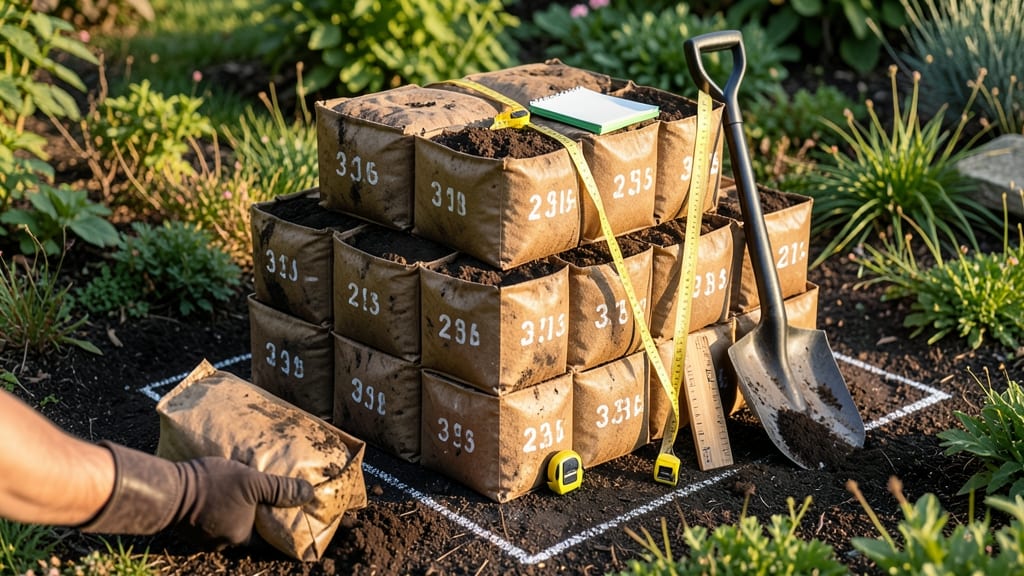
To determine how many bags of topsoil equal a yard, remember that one cubic yard equals 27 cubic feet, so you'll need about 27 bags of 1 cubic foot topsoil or 9 bags of 3 cubic foot topsoil. Always verify bag sizes, since moisture and compaction can alter volume.
Understanding this conversion is key for any landscaping project. A cubic yard is essentially a 3-foot cube, which breaks down into 27 smaller cubes of 1 cubic foot each—hence the 27-bag rule.
However, real-world factors like soil moisture and how tightly it's packed can change the actual volume you get per bag.
For example, a bag labeled "40 pounds" might not equal 1 cubic foot if it's heavily compacted. 🌱 I always recommend buying an extra bag or two to account for these variations, especially when working with larger areas.
This math becomes even more practical when planning specific projects. A typical raised garden bed might need 3-5 cubic yards of topsoil, while patching a lawn could require just 1-2 cubic yards.
Knowing these conversions helps you avoid overbuying or running short mid-project. Always double-check the manufacturer's cubic foot measurement on the bag—some brands use weight-based estimates that don't directly translate to volume.
💡 In This Article
- Calculating Topsoil Volume: Cubic Feet vs. Cubic Yards Explained
- Topsoil Bag Size Guide: What to Buy for Your Garden Project
Calculating topsoil volume: cubic feet vs. cubic yards explained
Here's what's actually happening when we talk about cubic yards versus cubic feet: a cubic yard is a three-dimensional measurement representing a space that's 3 feet long, 3 feet wide, and 3 feet tall.
When you multiply these dimensions (3 × 3 × 3), you get 27 cubic feet—that's the key conversion you need to remember. This means one cubic yard of topsoil will occupy the same volume as 27 one-cubic-foot bags.
The math is straightforward, but real-world applications get more complex because soil isn't always packed uniformly. 🔥
The volume of topsoil in a bag isn't just about the labeled size—moisture content plays a huge role. Freshly dug topsoil can contain up to 30-50% water by weight, which increases its bulk and reduces the actual usable soil volume.
For example, a bag labeled as 1 cubic foot might only deliver 0.75 cubic feet of usable soil if it's saturated. Compaction during transport or storage can shrink the volume further, sometimes by 10-20%. That's why garden centers often recommend buying 10-15% more than your calculations suggest.
What most people don't realize is that bag sizes don't always align with cubic feet measurements. Many bags are sold by weight (like 40 pounds) rather than volume, and the cubic foot measurement can vary by brand.
A 40-pound bag might contain about 0.75 cubic feet of topsoil, not the full cubic foot you'd expect. This discrepancy happens because soil density varies—sandy soils weigh less per cubic foot than clay-heavy soils.
Always check the manufacturer's specifications, as a 1 cubic foot bag from one brand could weigh significantly more or less than another. ✨
Let's talk about how this plays out in practical terms. If you're spreading topsoil for a garden bed that's 4 feet wide × 8 feet long × 6 inches deep, you'd calculate the volume as 1.33 cubic yards (or 36 cubic feet).
Using 2 cubic foot bags, you'd need about 18 bags, but buying 20 bags gives you a buffer for compaction and moisture.
For larger projects like lawn restoration, where you might need 5+ cubic yards, ordering by the yard from a bulk supplier becomes more cost-effective, even after accounting for delivery fees. 💫
Another critical factor is how the soil settles after spreading. Loose topsoil can compact by 20-30% once you've raked or tilled it, meaning the volume you start with shrinks significantly. This is why professional landscapers often recommend adding an extra 10-20% topsoil to ensure full coverage.
For instance, if your project requires 10 cubic feet of topsoil, buying 12 cubic feet worth of bags ensures you won't run short halfway through. The extra effort now saves headaches later.
For those working with precise measurements, like vegetable gardeners or horticulturists, understanding the bulk density of topsoil is essential. Bulk density measures how much soil mass fits into a given volume, and it typically ranges from 0.8 to 1.6 grams per cubic centimeter depending on organic matter content.
A higher bulk density means less volume per pound, which can throw off your bag calculations. For example, a bag labeled 1 cubic foot with high organic content might actually weigh 50 pounds, while the same volume of sandy soil could weigh only 30 pounds. 🌱
Finally, consider the tools you use for spreading. A standard shovel holds about 0.02 cubic feet per scoop, so you'd need roughly 1,350 scoops to spread one cubic yard. This is why wheelbarrows or broadcast spreaders become indispensable for larger projects—they help distribute soil evenly and reduce compaction.
Always spread in thin layers (about 1-2 inches at a time) and water lightly to help the soil settle uniformly before adding more. This method ensures you're using the topsoil efficiently and minimizes waste.