
Light Requirements
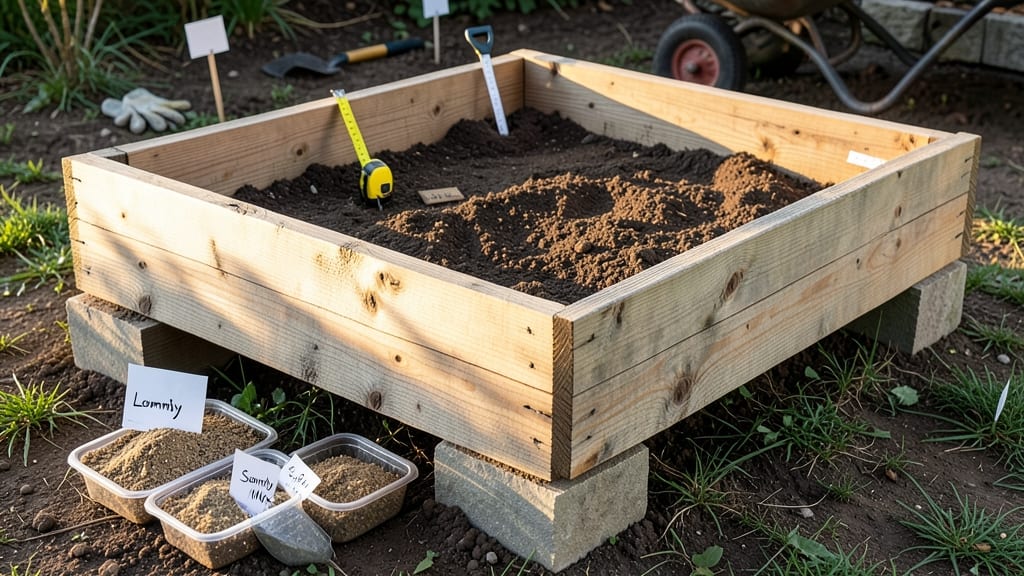
Calculating how much soil for a raised bed means multiplying length × width × depth (in feet), then dividing by 27 to convert cubic feet to cubic yards. For instance, a 4’x8’x12” bed requires 1.78 cubic yards of soil, but always factor in drainage layers and soil compaction when estimating totals.
Raised beds need precise soil calculations because every inch of depth affects plant roots and drainage. 🌱 The standard formula converts your bed’s dimensions into cubic yards, but real-world adjustments are key—most gardeners add 10-20% extra to account for settling and moisture loss.
For deeper beds (18”+), consider layering coarse materials like gravel at the bottom to improve drainage before adding nutrient-rich topsoil.
Pro tip: Measure your bed’s interior dimensions—not the frame’s outer edges—since soil volume shrinks when compacted. If you’re working with heavy clay soil, mix in 20-30% compost or sand to improve aeration and prevent waterlogging. The right soil blend makes all the difference in plant health and yield.
💡 In This Article
- Calculating Soil Volume for Raised Garden Beds
- Best Soil Mixes and Layering Techniques for Raised Beds
Calculating soil volume for raised garden beds
The cubic feet formula (length × width × depth ÷ 12) works because it converts all measurements to a consistent unit before scaling up.
For example, a 4’x8’x12” bed translates to 32 cubic feet (4 × 8 × 1 = 32), then dividing by 27 gives you 1.19 cubic yards—but this ignores real-world factors. 🌱 The formula assumes loose, uncompacted soil, yet garden soil settles 10-20% after watering, reducing usable space over time.
Depth directly impacts root growth and drainage efficiency. A 6”-12” bed suits shallow-rooted plants like lettuce or herbs, while deeper beds (18”-24”) support root crops like carrots or tomatoes. The extra depth improves moisture retention and reduces competition for nutrients.
For instance, a 4’x8’x18” bed jumps to 2.67 cubic yards—nearly 150% more soil than a 12” version, but critical for heavy feeders like squash.
Here’s how dimensions affect your soil order: A 4’x8’x12” bed needs 1.78 cubic yards (accounting for 15% compaction), while a 6’x12’x18” bed soars to 8.64 cubic yards.
Always round up to the nearest 0.5 cubic yards—bagged soil is sold in 0.5-1 cubic yard increments, and shortchanging yourself by 0.25 cubic yards can leave your bed half-empty after settling. 💫
Pro tip: Measure your bed’s interior dimensions—not the frame’s outer edges—since soil volume shrinks when compacted. For example, a 4’x8’ frame might have a 3.5’x7.5’ interior space, cutting your soil needs by 25%. This precision avoids costly overbuying or last-minute trips to the nursery.
Drainage layers (like 3-4” of gravel or landscape fabric) also eat into usable soil volume. If your bed has a bottom layer, subtract its depth from your total before calculating.
For a 12” deep bed with 4” of drainage, your soil depth shrinks to 8”, reducing your 4’x8’ bed’s soil needs from 1.78 to 1.2 cubic yards. Always verify local building codes—some areas restrict bed heights to 12” without permits.
For raised beds on slopes, add 5-10% extra soil to account for uneven settling. The extra material ensures consistent depth across the bed, preventing water pooling in low spots.
For example, a 4’x8’x12” bed on a 5° slope might need 1.95 cubic yards instead of 1.78**. Test-fit your bed’s frame before purchasing soil to avoid surprises.